
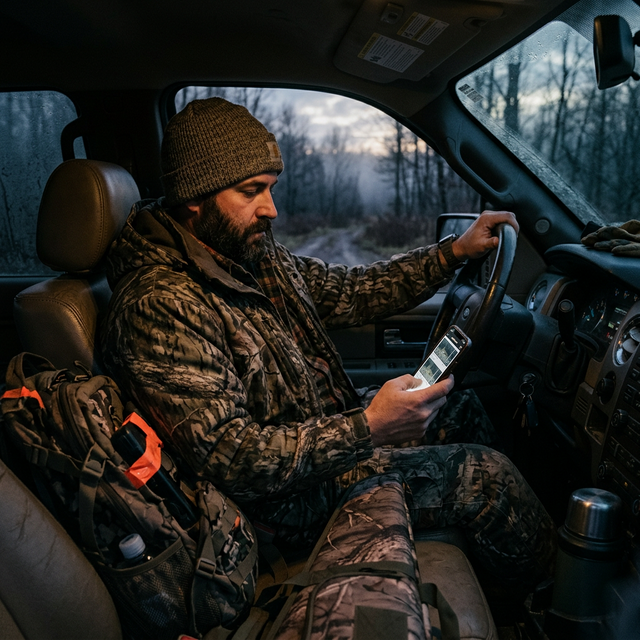
How Cellular Trail Cameras Are Revolutionizing Hunting Strategy
Cut entirely through the marketing hype. Learn the true strategic advantages of cellular trail cameras and how they enable hunters to execute zero-intrusion forensics.
The cellular trail camera is arguably the most profoundly misunderstood piece of technology in the modern hunting industry.
If you look at the aggressive marketing campaigns, the entire focus is on the novelty of the “real-time ping”—the dopamine hit of receiving a blurry photo of an antler on your smartphone while you are sitting in a business meeting. But the true, devastating value of a cellular camera isn’t the instant gratification.
At Wildsnap, we leverage cell cameras for one specific, highly lethal purpose: Zero-Intrusion Forensics. It is absolutely not about desperately seeing what a buck is doing right now; it is about the ability to stay completely out of his bedroom sanctuary until the exact, calculated moment you are ready to kill him.
1. The Zero-Intrusion Strategic Advantage
Before the cellular era, traditional SD-card trail cameras were essentially ticking “scent bombs” scattered across your hunting property.
- The Scent Contamination Cycle: Every single time you walked into the timber to swap an SD card to check your photos, you were physically leaving a massive trail of heavy human dander, boot rubber odor, and crushed vegetation. If you checked a camera located near a bedding area every two weeks, you were actively educating every mature buck in the vicinity that humans regularly patrolled that specific trail.
- The Sanctuary Play: Cellular cameras completely erase this massive handicap. By hiking in during the summer (August) and hanging a cellular camera overlooking a primary scrape or a deep-timber funnel, you literally never have to visit that spot again until opening day. The camera beams the data to the cloud. This allows the core of the timber to remain a 100% unadulterated “safe zone” for a paranoid buck.
- Acoustic Management: You are no longer snapping dry twigs, revving ATV engines, or aggressively bumping deer out of their beds at 2:00 PM on a Saturday just to “see what’s on the card.” Your physical noise footprint on the property drops to absolute zero.
2. Establishing the “Macro Kill Window”
The biggest mistake new cellular users make is reacting too quickly. If a giant buck sends a photo at 4:00 PM on a Tuesday, the amateur hunter will immediately rush to sit in that stand on Wednesday. The buck is almost never there.
You must not react to individual, isolated photos. Instead, use the aggregated data over several weeks to establish concrete Macro-Trends.
1. The Wind Trigger Correlation
Use the timestamps on the photos to correlate specific buck movement with highly specific wind directions.
- The Data: If a 5-year-old buck only ever shows up on camera during daylight when there is a stiff North-West wind, do not hunt that specific stand on any other wind direction, ever. The cellular data is mathematically proving that he only feels safe entering that funnel when the wind is hitting his nose from the NW.
2. The Signal-to-Noise Ratio Filter
Modern cell cam apps (like Tactacam or Spypoint) easily generate thousands of photos a month. You must rigidly filter out the “noise” (endless photos of raccoons, fawns, and sub-dominant yearling bucks) to focus exclusively on target-class movement.
- The Discipline: If you let your phone buzz every time a squirrel moves a branch, you will become a neurotic slave to the technology and ultimately burn out your best hunting spots through sheer over-excitement and unnecessary stand entries. Silence your push notifications and only review the data once a day over morning coffee to maintain analytical discipline.
EQUIPMENT SAFETY: Target Theft and Battery Corrosion
Because they transmit high-value data, cellular cameras are expensive investments—and they are massive, high-value targets for equipment thieves on heavily trafficked public land.
- Security Deterrence: We strongly recommend encasing your camera in a Heavy Steel Security Box secured to the tree with a massive Python cable lock. While it won’t stop a determined thief with a battery-powered grinding wheel, it stops 99% of crimes of opportunity.
- The Acid Leak Hazard: Cellular cameras actively transmit massive data files over weak cellular networks, which drains standard batteries at a catastrophic rate. At Wildsnap, we’ve seen countless internal motherboards completely destroyed by Battery Acid Leaks caused by cheap alkaline batteries bursting under heavy power draw.
- The Power Solution: You must absolutely bite the bullet and exclusively use high-quality Lithium AA batteries (which do not leak fluid like alkalines) or run a dedicated, external 12-volt lead-acid solar power pack to safely protect your $200 investment from cooking itself from the inside out.
Wireless technology is a magnifying glass for your woodsmanship, not a shortcut to replace it. A cell camera cannot hunt the wind for you or pull the trigger. Respect the sanctity of the animal’s sanctuary, control your scent, and let the long-term data tell you exactly when the trap is ready to be sprung.