
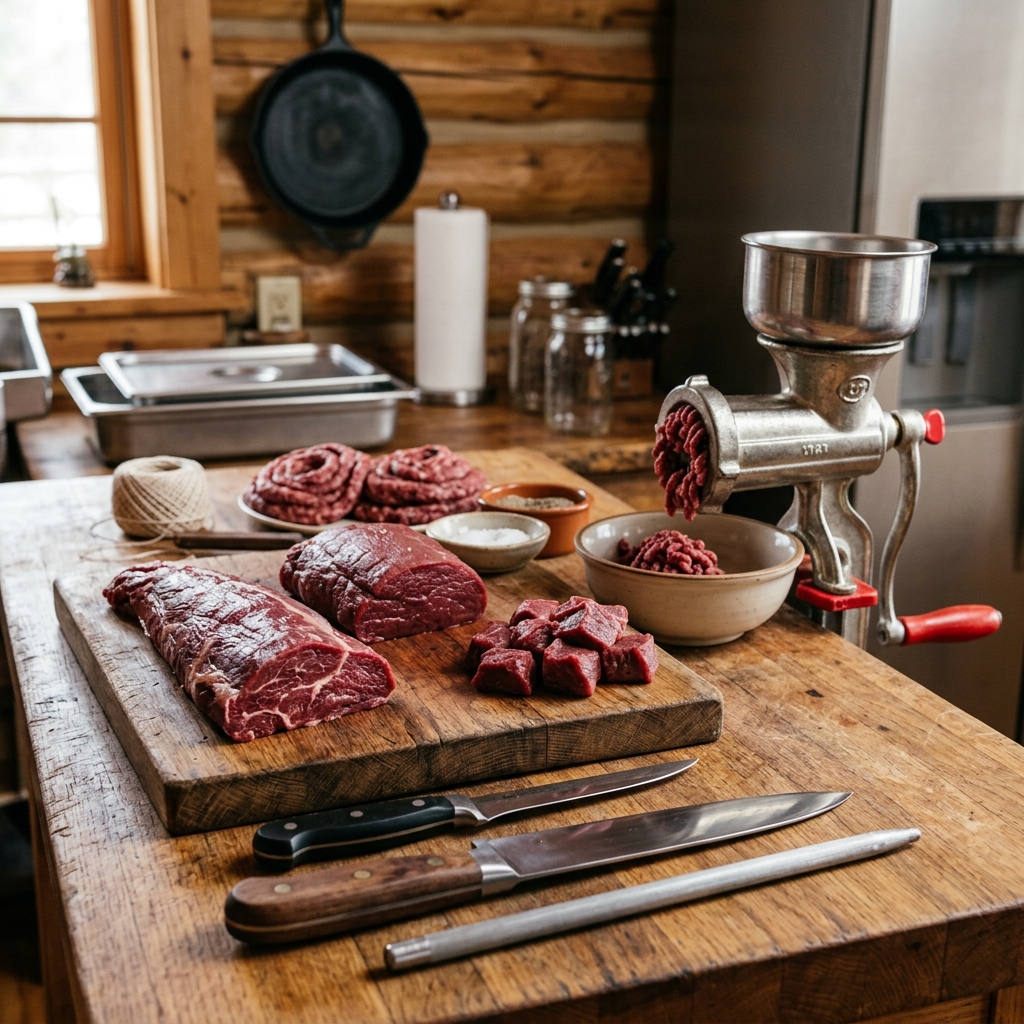
DIY Venison Processing: The Ultimate Guide to Butchering at Home
Take absolute control of your harvest from field to fork. Learn the essential tools, safety protocols, and seam-butchery techniques required to process prime venison at home.
There is a profound, primal sense of closing the cycle when you process your own harvest. At Wildsnap, we believe that field-dressing is only the beginning; the meticulous butchery of the animal is the final, respectful act of the hunt.
Taking complete control of breaking down the “Primal Cuts” ensures the absolute highest quality meat for your family. It guarantees that your steaks are free from the bitter bone-dust of commercial band-saws, and eliminates the risk of your organic, hard-earned venison being cross-contaminated in a giant communal grinder at a high-volume commercial processor.
Processing your own deer is intimidating the first time, but with the right tools and a basic understanding of mammalian anatomy, it quickly becomes a highly rewarding yearly tradition.
1. The Art of Seam Butchery
The biggest mistake beginners make is treating a deer leg like a block of wood, arbitrarily “sawing” through the center of the meat with a large hunting knife to create random chunks. Professional-grade venison is processed strictly by following the Natural Muscle Seams.
The Hindquarter Breakdown
A deer’s ham (the massive hind leg) is not one solid piece of meat. It is composed of four distinct, major muscle groups (the Top Round, the Bottom Round, the Eye of Round, and the Sirloin Tip) wrapped together in a thin layer of connective tissue called “silver-skin.”
- The Technique: By using your fingers or the dull back of a boning knife to find the white silver-skin “seams” between these muscles, you can pull and separate the entire leg into individual, perfect roasts without ever actually cutting into the muscle fibers themselves.
- The Result: Cutting along the seams preserves the moisture in the meat, prevents tough, jagged edges, and leaves you with beautiful, uniform cuts that cook evenly.
The Dry-Aging Process
If you have access to a spare refrigerator or if the outdoor temperatures consistently hold between 34°F and 38°F, we highly recommend hanging and aging the skinned carcass (or the quartered pieces in an open cooler) for 7 to 10 days before cutting. During this period, natural enzymes slowly break down the tough, fibrous connective tissue within the muscle. The result is a significantly more tender, flavorful steak with a much more complex, beef-like profile.
2. Essential Technical Tooling
You cannot butcher an entire whitetail with the same 4-inch drop-point hunting knife you used to field dress it. You need a sanitation-focused, culinary setup.
- The Boning Knife: This is your primary tool. You need a dedicated meat-processing knife with a semi-flexible 6-inch blade (like a Victorinox Fibrox). The flexibility allows the blade to contour perfectly against the pelvis, femur, and “H-bone,” cleanly removing maximum meat without gouging the bone.
- Vacuum Sealing System: Oxygen is the absolute enemy of wild game flavor. Wrapping steaks in traditional white butcher paper works for a few months, but air will eventually penetrate, causing severe freezer burn. Investing in a high-quality commercial-grade vacuum sealer will easily preserve your venison steaks and roasts in perfect condition for up to 2 years in a deep freeze.
- The Grinder: Do not buy a cheap plastic kitchen grinder. Invest in a heavy-duty, stainless steel electric meat grinder (at least 0.5 Horsepower). It will churn through the tough neck meat, shanks, and trimmings in minutes rather than hours.
PROCESSING SAFETY & SANITATION
1. Grinder Discipline: When feeding chunks of meat into the hopper of an electric grinder, never, under any circumstances, use your fingers to push the meat down the throat. Always use the heavy plastic stomper provided with the machine. A high-torque electric grinder auger is relentlessly powerful and can easily pull a digit into the blades in a fraction of a second, resulting in catastrophic nerve, tendon, and bone damage.
2. Temperature Danger Zones: Butchering an entire deer can take several hours. You must keep your ambient work area and the meat itself at a constant 40°F or lower. Allowing raw venison to sit on a cutting board in a 70°F heated garage for six hours creates the perfect breeding ground for dangerous food-borne pathogens and bacteria. Work in very small batches, keeping the bulk of the quarters in the refrigerator until you are actively cutting them.
Frequently Asked Questions (FAQ)
Should I cut through the bones to make Bone-In steaks? No. Commercial processors use high-speed oscillating saws to cut “bone-in” chops. This smears marrow, bone dust, and potentially spinal fluid across the surface of the meat. Whitetail bone marrow and fat are notoriously waxy and can taste intensely “gamey.” Always totally debone the meat for the best, cleanest flavor profile.
Do I need to add fat to venison burger? Venison is exceptionally, incredibly lean (often 98% fat-free). While this makes it incredibly healthy, a pure venison burger will crumble into dry, chalky pieces on the grill. When grinding burger meat, it is highly recommended to blend in 10% to 20% high-quality beef suet (fat) or pork shoulder to bind the meat together and add moisture for cooking.
What is “Silver-Skin” and why must it be removed? Silver-skin is the extremely tough, white, shiny layer of fascial connective tissue that encases the muscle groups. Unlike beef fat, which melts beautifully into the meat when cooked, silver-skin will never break down with heat. If left on a steak, it will severely curl the meat during cooking and remains rubbery and completely unchewable. You must meticulously trim it all off before freezing.
Honor the life of the animal by mastering the blade. From the highly prized backstraps to the humble shoulder grind, processing your own deer allows you to treat every single ounce of venison as the premium, organic, hard-earned protein it truly is.