
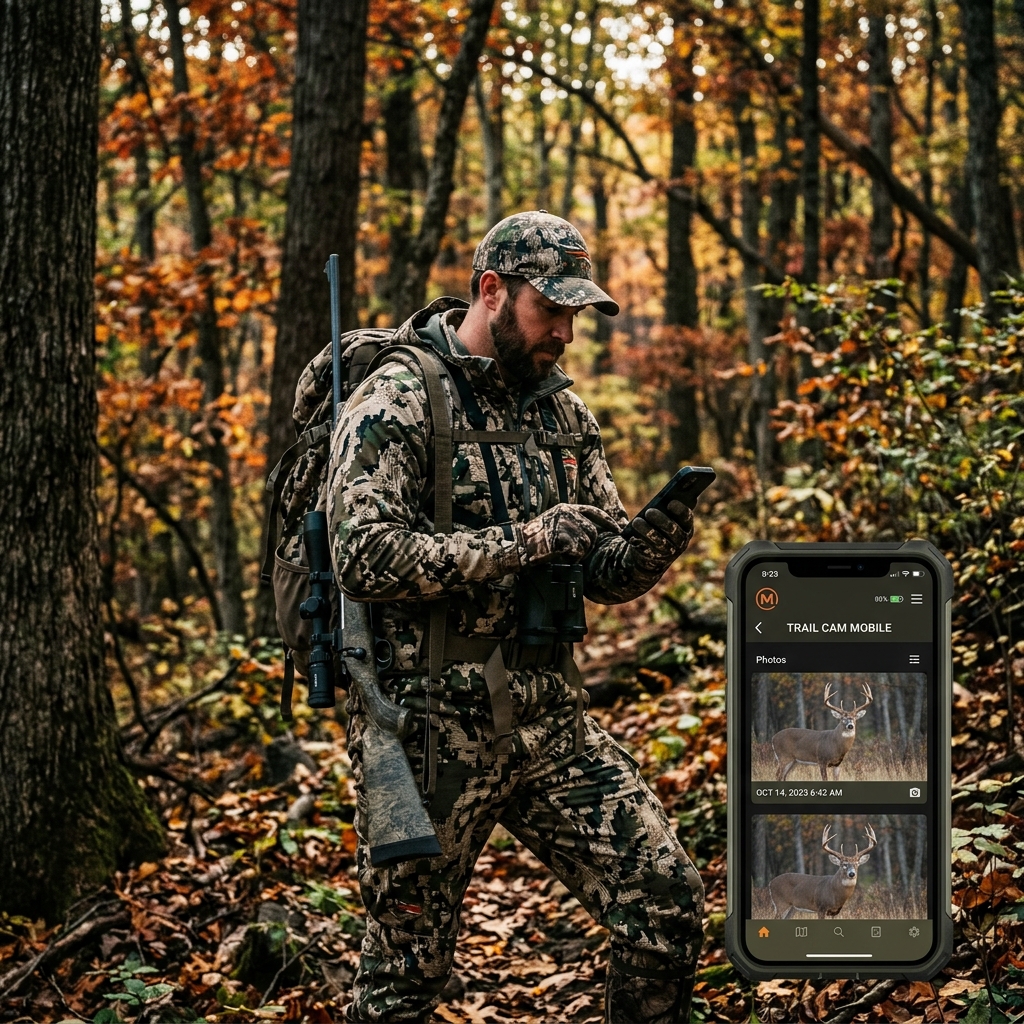
The Ethics of Smart Hunting: Navigating AI, Cellular Apps, and Fair Chase
As Artificial Intelligence and cellular drone cameras rapidly change the deer woods, how do modern hunters balance cutting-edge technology with the primal spirit and strict ethics of Fair Chase?
Hunting, at its absolute core, is a deeply physical, sacred contract with the natural world. It is the pursuit of returning to our oldest, most primal instincts.
Yet, we are currently living through the greatest technological explosion in the history of the sport. At Wildsnap, we are a technology company; we actively build complex digital tools to bridge the vast gap between human observation and biological reality. But simultaneously, we consider ourselves fierce, unyielding protectors of the Fair-Chase Threshold.
As Artificial Intelligence, cellular mapping algorithms, and real-time drones aggressively enter the deer woods, a massive philosophical question arises: isn’t whether technology itself is inherently “good” or “bad”—it is entirely a question of whether you are using the tools to become a fundamentally better, more connected woodsman, or if you are simply trying to become a lazy assassin driven by algorithms.
1. The Algorithm vs. The Woodsman
There is a rapidly growing, highly vocal divide in the hunting community: the “rely entirely on the data” crowd versus the “rely entirely on intuition and woodsmanship” crowd. We firmly believe the most ethical, consistently lethal hunter is the one who masterfully blends both.
The “Cheat-Code” Trap
If you blindly look at a smartphone app on Friday night, let the algorithm tell you exactly which specific tree stand to sit in on Saturday morning based on weather data, and shoot a deer without ever actually “Reading the Dirt”—without ever understanding the subtle acorns dropping or why that buck chose that specific topographical transition zone—you have entirely surrendered your woodsmanship. You aren’t hunting the deer; the computer is hunting the deer, and you are just pulling the trigger. This deeply hollows out the emotional reward of the harvest, turning a sacred pursuit into a sterile video game.
The Ethical Application of Tech: Zero-Intrusion
Conversely, technology can be the ultimate ethical tool when applied correctly.
- Scent Mitigation: Before cellular cameras, hunters were forced to aggressively stomp through the timber every single weekend, leaving a massive, terrifying trail of human scent just to pull an SD card from a camera.
- The Sanctuary Guarantee: By utilizing cellular cameras, we can monitor a property remotely from the cloud. This entirely eliminates our physical intrusion into the woods, allowing the deer herd to remain completely wild, undisturbed, and behaving naturally. This deep respect for the animal’s sanctuary is the truest, highest definition of modern Fair Chase.
2. Artificial Intelligence as a Conservation Tool
When we deploy AI to aggressively structure and analyze tens of thousands of trail camera photos, our goal is not to “hack” the deer or build a magic bullet. Our goal is massive, landscape-level population monitoring.
- Accurately identifying highly specific age classes and tracking individual bucks year-over-year ensures that hunters have the correct biological data to only target fully mature, post-prime animals.
- By passing on the 3.5-year-old bucks and surgically removing the 6.5-year-old bullies, hunters maintain a wildly healthy, balanced buck-to-doe ratio, directly ensuring the robust, long-term genetic viability of the entire local herd. The data isn’t a weapon; it is a vital conservation management tool.
DIGITAL ETHICS & SURVIVAL: The Dependency Warning
Relying heavily on smartphone mapping applications (like onX or HuntStand) for deep-woods navigation brings a massive, entirely new layer of risk: Lethal Digital Dependency.
- The Battery Failure Reality: We have seen dozens of modern hunters become severely disoriented and lost overnight in the sprawling “Big Timber” of the Northeast or the massive western mountains simply because they relied 100% on a GPS app, and their smartphone battery instantly died in sub-zero temperatures.
- The Redundancy Mandate: You MUST maintain analog, Paper-Map Redundancy and habitually carry a physical, magnetic baseplate compass in your pack. Technology will inevitably fail when you need it most.
- Cyber-Location Security: Furthermore, be hyper-aware of your digital footprint. If your cellular trail camera locations or app waypoints are hacked or leaked onto public forums, you risk attracting aggressive poachers directly to your meticulously scouted sanctuaries. Always utilize heavily encrypted, highly secure platform architectures (like Wildsnap) to protect your tactical data from bad actors.
Advanced digital technology should act as a clear window to help you better understand the mysteries of the forest, never as a crutch to replace your physical effort. Use the data to deeply understand the animal, minimize your invasive footprint, and fiercely honor the primal spirit of the chase.