
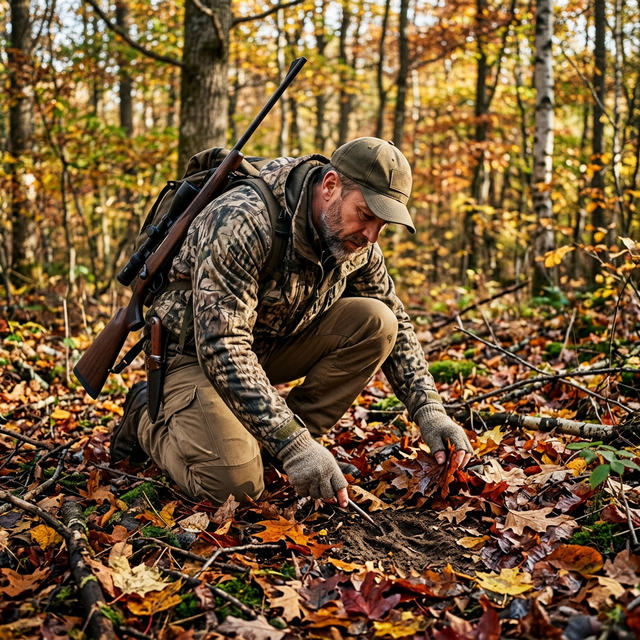
Expert Blood Trailing: Technical Forensic Tips for Recovering Wounded Deer
An incredibly authoritative, science-based guide on reading complex post-shot reactions, completely analyzing the exact color chemistry of blood, and knowing exactly when to strategically back out versus when to aggressively push forward.
The exact, explosive moment a dedicated hunter cleanly releases a carbon arrow or slowly squeezes a heavy rifle trigger, an overwhelming, violently deafening wave of chemical adrenaline violently hits the human bloodstream. It is undeniably the absolute pinnacle of the entire hunt.
But that massive, addictive burst of excitement is immediately, abruptly followed exactly by the absolute most critical, highly difficult—and undeniably the most intensely stressful—phase of the entire hunting process: The Physical Recovery.
At Wildsnap, our tracking teams firmly believe that effectively tracking wounded deer is absolutely not luck; it is a highly technical, biological forensic science that violently requires immense emotional patience, surgical clinical observation, and a deeply profound anatomical understanding of the whitetail’s complex cardiovascular system. Arrogantly misreading a single, tiny blood droplet or carelessly rushing the psychological process out of pure excitement will directly, tragically result in a permanently lost, completely wasted animal.
Here is our elite, expert-level guide on perfectly interpreting the biological scene of the impact.
1. The Psychology of the Wait: Exactly How Long?
The single most devastating, tragic mistake 95% of amateur hunters aggressively make is violently climbing out of their tree stand exactly five minutes after the shot to arrogantly “go look for the arrow.”
You absolutely, fundamentally must physically give the massive animal the biological time to quietly expire in its first bed. If you climb down early, make human noise, and immediately biologically push a mortally wounded, heavily bedded deer, its survival adrenaline will violently spike again. An animal that would have peacefully died in 100 yards will now easily, rapidly run for three agonizing miles, physically pushing every drop of its remaining blood right out of its body and leaving a totally untrackable, agonizingly sparse trail.
Your forced, agonizing waiting time depends entirely and exclusively on the visible forensic clues of the exact shot placement.
- The Double Lung / Heart Shot: Even if you are 100% absolutely certain you perfectly passed right through both lungs (clearly indicated by a massive, loud, hollow “thwack” sound and the deer violently “mule-kicking” both its back legs high into the air), you must still force yourself to sit motionless in the tree for a strict, absolute minimum of 45 minutes. Let the woods go completely, terrifyingly silent.
- The Liver Hit: A liver hit typically immediately produces incredibly dark, thick red blood. The massive deer is mortally wounded and will absolutely mathematically expire, but the internal biological bleeding process is much, much slower. You absolutely must back out quietly and wait a strict minimum of 4 to 6 hours before ever beginning tracking.
- The Gut Shot Trap: A devastating gut-shot deer (clearly indicated by foul greenish-brown stomach fluid or corn explicitly on the arrow, a violently foul, acidic smell at the impact site, and a deer that violently hunches its back up like a Halloween cat and slowly, painfully walks away) requires agonizing, superhuman patience. You must back out completely, quietly, and wait an absolute minimum of 12 to 24 full hours. If you ever aggressively bump a gut-shot deer from its initial survival bed, your mathematical odds of successful recovery instantly plummet to exactly zero.
2. Chemical Forensics: What Does the Blood Actually Mean?
The actual physical color, the specific oxygenation consistency, and the exact geometric spray pattern of the blood found directly at the initial site of the impact are your absolute best, undeniable scientific indicators of internal organ damage.
- Bright Pink, Heavily Bubbly Blood: This is the absolute tracking holy grail. It definitively, scientifically indicates a massive, high-percentage double-lung shot. The highly visible pink bubbles are literally trapped oxygen gas from the violently severed respiratory system. Start your strict timer for 45 minutes; the massive deer is almost certainly already dead within 150 yards.
- Rich, Crimson Red Spray: Massive, violent amounts of bright crimson red blood heavily sprayed three feet across thigh-high vegetation usually definitively indicates a devastating heart shot or the absolute severing of a major, massive artery (like the femoral artery or jugular). The blood trail will often be incredibly heavy, highly steady, and ridiculously easy to walk at a fast pace.
- Dark, Purplish-Red Blood: Very dark, almost black-red blood that violently pools heavily on the ground strongly points to a fatal liver shot. The blood will absolutely not contain any oxygen bubbles and physically appears incredibly thick, heavy, and viscous like cold syrup.
- Watery, Light Red Blood (The Danger Zone): Extremely watery, highly diluted light red blood physically mixed with tiny, white chunks of slick fat or white muscle tissue usually definitively points to a highly non-lethal, high-shoulder “meat hit” or a superficial low-brisket graze. The initial trail may start incredibly, deceptively heavy for 50 yards, falsely encouraging you, but it will almost always violently dry up to a single, impossible pin-drop within 300 yards as the massive shoulder muscle effectively clots the superficial exterior wound.
3. The “Lost Trail” Emergency Protocol
Losing a heavy blood trail happens to the absolute best, most seasoned trackers on earth. When the massive red drops suddenly violently vanish into thin air, massive panic and deep despair instantly set in. Stop, deliberately breathe, and clinically execute a professional protocol:
- Stop and Mark Immediately: The absolute exact second you visibly realize you haven’t physically seen a single drop of blood in three steps, STOP WALKING. Do absolutely not aggressively trample and physically destroy the forensic crime scene with your muddy boots. Violently pull out bright orange flagging tape or physically drop a strict digital GPS pin on your mapping app to mark the absolute last confirmed microscopic drop of blood.
- Analyze the Escape Geometry: Intensely look at the exact direction the deer’s front toes were physically pointing in the mud. Terminally wounded, heavily bleeding deer rapidly lose massive blood pressure; they will strongly, almost universally favor the exact path of least physical resistance (walking downhill rather than fighting gravity uphill) and will almost always magnetically gravitate directly toward a known water source (creeks) or the absolute thickest, nastiest briar cover available.
- The Tactical Grid Search: If tracing the logical escape route totally fails, begin a severe, highly systematic visual grid search. Start exactly at the orange flag and walk in slowly widening, tight concentric circles. Do absolutely not just look down at the dirt; aggressively look for scuffed leaves, overturned wet rocks exposing dark soil, or single, tiny drops of blood wiped cleanly exactly on the sides of tall grass stems at your knee height.
- Call the K9 Pro: If you have aggressively, physically exhausted absolutely all visual tracking options for four solid hours, and the mandatory legal waiting period heavily confirms the massive deer should definitely be expired, it is absolutely time to violently swallow your human pride and legally call a licensed, highly professional Blood Tracking Dog. A heavily trained tracking hound possesses a genetic, biological nose that we simply cannot fathom or replicate, and they successfully recover thousands of totally “lost” deer every single season.
BIO-SAFETY: Bloodborne Pathogens and The Dressing Scene
Physically tracking and ultimately recovering a massive, bloody animal carries heavily ignored biological health consequences.
- The Open Wound Threat: If you have any microscopic open cuts or fresh scratches on your own bare hands, violently digging around blindly inside the chest cavity of a dead animal directly exposes your own bloodstream to massive, severe animal bacteria.
- The Glove Mandate: We explicitly mandate always wearing heavy-duty, elbow-length rubber field-dressing gloves exactly during the gutting and recovery process. Do absolutely not blindly risk a massive, hospital-grade staph infection simply because you wanted to look tough in the woods.
Intense forensic tracking inherently requires immense emotional discipline, extreme patience, and clinical observation. When completely in doubt, back out, give the massive animal the ultimate respect of time, and return exactly when the biological conditions dictate it is legally and ethically safe to proceed.