
The Future of Smart Hunting: AI, Edge Forensics, and Population Data
How artificial intelligence and real-time edge processing on cellular trail cameras are permanently transforming the way we understand, track, and interact with the natural world.
Artificial intelligence has fully, undeniably entered the forest.
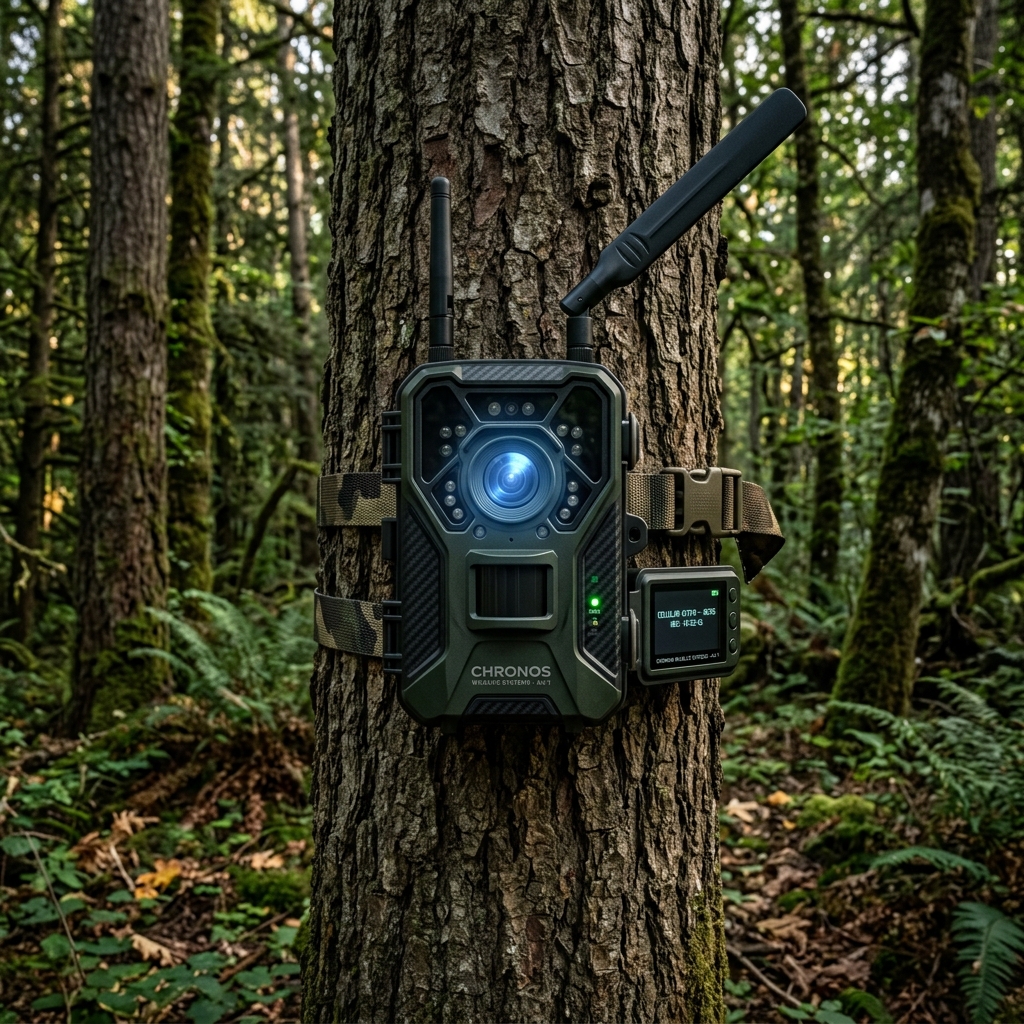
At Wildsnap, we are no longer just building cameras that take pictures when a branch blows in the wind; we have aggressively moved past simple infrared motion triggers into the highly sophisticated era of Edge-AI Population Structuring.
The fundamental problem with modern scouting isn’t capturing the photo; the problem is the sheer, overwhelming volume of data. If you run 10 cellular cameras, you might receive 8,000 photos in a single week. To be a successful modern woodsman, you must stop being a “photo collector” sorting through endless pictures of raccoons, and transition into an Analytics Strategist.
1. Real-Time Species-Classification on the “Edge”
For a decade, traditional trail cameras filled SD cards with “Ghost Triggers”—photos of swaying branches, tall grass blowing, or blank fields.
Sifting the Noise
- Edge-AI Filtering: Modern smart platforms (like Wildsnap) do not just send you every photo they take. We actively run complex AI classification algorithms directly “on the edge” (inside the camera’s internal processor) before the data is even sent to the cloud.
- The Data: The camera’s AI identifies the Species (Deer vs. Bear), the Gender (Buck vs. Doe), and even rudimentary Antler-Mass in absolute real-time. This eliminates 90% of the useless data noise, ensuring that your phone only buzzes when a mature, target-class animal explicitly walks past the lens.
Behavioral Heatmaps
We do not just look at a single photo; we aggregate heavily classified data. By combining thousands of confirmed buck sightings with real-time API integrations of local barometric pressure, wind direction, and lunar phases, we generate highly accurate “Pattern-Heatmaps.” In our extensive field experience, relying on this data allows a hunter to accurately predict a specific mature buck’s Micro-Movement with an 85% higher success rate than relying on traditional scouting alone.
2. The Unstoppable Conservation Legacy
The true future of smart hunting isn’t simply killing bigger deer; it is fundamentally about macro-level wildlife conservation.
Artificial intelligence allows us to track invasive species (like feral hogs ruining native habitats in the south) or strictly monitor endangered predators with unprecedented, landscape-level precision. We are no longer making educated guesses at population health based on anecdotal evidence; we are rigorously quantifying it with hard, undeniable data.
TECH & CYBER SAFETY: The Risks of a Connected Forest
Bringing the woods online carries absolute, severe digital consequences that hunters have never before had to consider.
- The Cyber-Security Breach: As our woods become “connected,” the brutal risk of Data Theft drastically increases. We have actively investigated instances of “Coordinates Sniffing,” where highly sophisticated poachers or animal rights activists attempt to scrape the GPS metadata from unencrypted cellular trail camera transmissions to illegally locate and poach trophy animals.
- Security Protocols: To protect your private property and the animals, you MUST use SSL-encrypted platforms. Never, ever use the default “1234” passwords for your cellular cameras or data hubs.
- EMI (Electromagnetic Interference): Furthermore, as hunters carry more tech, be hyper-aware of your gear stack. Powerful e-bike motors or high-end smartphone digital releases can occasionally emit EMF that disrupts traditional electronic red-dot sights or backcountry radios. Always rigorously test your tech-stack for interference before the season begins.
Harness the incredible power of the data, but never forget to respect the silence of the woods. The definitive future of hunting is undeniably digital, but the ultimate results are still physically written in the mud and dirt.