
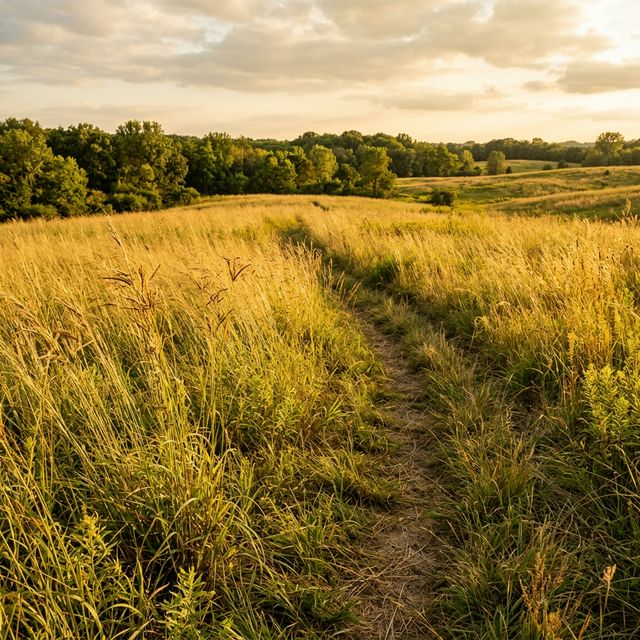
Planting Native Warm Season Grasses (NWSG) for Elite Whitetail Fawning Cover
Basic food plots are only half the battle. Learn exactly why Native Warm Season Grasses like towering switchgrass are the ultimate bedding and protective fawning cover for whitetail deer.
The vast majority of casual land managers explicitly spend 90% of their annual budget and physical time planting traditional green food plots. While providing high-quality, high-protein food is undeniably essential, it mathematically means absolutely nothing if the local deer do not feel physically safe resting on your property in the daylight.
To scientifically hold more mature deer securely on your specific parcel, you must aggressively provide impenetrable security cover, and mathematically nothing beats towering Native Warm Season Grasses (NWSG). Thick grass blends like Switchgrass, Big Bluestem, and Indiangrass provide the immense, rigid vertical structure that paranoid whitetails desperately need for secure bedding and crucial spring fawning.
1. What is the Absolute Best Grass to Plant for Deer Bedding?
In the highly technical world of advanced deer habitat management, Cave-In-Rock Switchgrass is universally considered the absolute gold standard for thermal bedding.
- The Vertical Structure: Switchgrass is specifically a tall “bunch grass” that vigorously grows exactly 5 to 7 feet vertically tall. Unlike weak, shallow cool-season pasture grasses (like basic fescue or orchard grass) that instantly mat completely flat under the first heavy winter snow, Switchgrass features an incredibly stiff, rigid stalk that proudly stands entirely upright to the brutal winter elements, providing massive, impenetrable year-round thermal wind cover.
- Critical Fawning Protection: The incredibly dense, towering, maze-like structure of mature NWSG perfectly protects defenseless, newly dropped spotted fawns directly from the sharp eyes of lethal aerial predators like hawks, and completely blocks the ground scent trail from hunting coyotes during their most highly vulnerable first three weeks of life in the early summer.
2. The Timeline: How Long Does It Take for Switchgrass to Grow?
Absolute patience is strictly required when aggressively planting specialized NWSG. This is a multi-year biological investment, not an instant overnight fix.
- Year 1: “It Sleeps.” During the first critical summer, almost 80% of the entire plant’s solar energy goes entirely straight down deep into the soil, establishing a massive, drought-resistant root system. The surface field will likely look like a terrible, messy failure of short green weeds. Do not panic; this is biologically correct.
- Year 2: “It Creeps.” You will finally start to clearly see the distinct, thick vertical bunch grasses physically forming on the surface, and the entire green stand will typically reach an encouraging 2 to 3 feet in total height by late August.
- Year 3: “It Leaps.” The massive root system is fully established. The towering grass will abruptly hit its absolute maximum full height and extreme density, instantly becoming a totally functional, highly secure, impenetrable bedding area holding mature bucks.
HABITAT MANAGEMENT: Glyphosate Prep and Prescribed Fire
Successfully planting specialized NWSG is mathematically not as simple as blindly throwing expensive seed onto raw ground. It requires aggressive chemical preparation.
- Ruthless Site Prep: You absolutely must entirely eliminate all competition directly from established, invasive cool-season grasses and broadleaf weeds using heavy, targeted applications of glyphosate perfectly in the late fall and early spring totally prior to summer planting. If you do not kill the fescue, the switchgrass will fail.
- No-Till Planting: Always use a specialized agricultural “no-till” drill specifically designed with fluffy-seed boxes to perfectly slice the tiny seed exactly 1/4 inch deep into the firm soil.
- The Burn Cycle: established NWSG is fundamentally a fire-dependent ecosystem. Safely conducting a massive prescribed burn aggressively every 3 to 4 years completely removes the heavy, suffocating dead “thatch” on the ground level and aggressively stimulates explosive, vibrant new green growth, keeping the towering stand incredibly healthy and flawlessly attractive to holding deer.
If you desperately want to mathematically see incredibly large, mature deer securely on your expensive property strictly during active daylight hunting hours, you absolutely must give them a dark, impenetrable place to securely hide from the sun. Aggressively plant the tall grass correctly, intensely respect the sanctuary, and the massive deer will absolutely stay.