
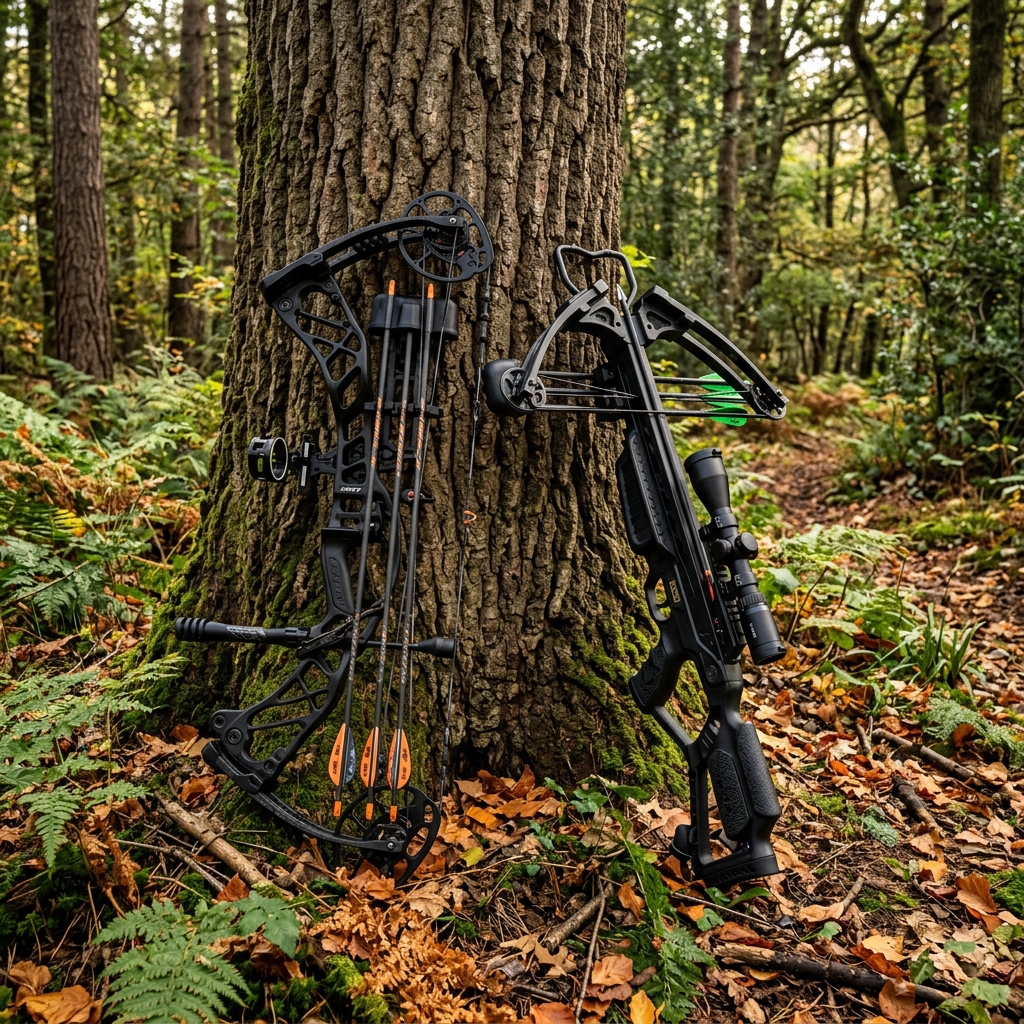
Crossbow vs. Compound Bow: Choosing the Right Archery Tool
Compare crossbow vs compound for whitetails: maneuverability, learning curve, range, jump-the-string, and safety so you pick the bow that fits your hunts.
Modern archery hunting often splits into two tools: the vertical compound bow and the horizontal crossbow. Traditionalists argue morality; field hunters should argue terrain, body, practice time, and shot windows. Both harvest deer cleanly when the shooter knows limits.
Pick the platform you will practice enough to trust at your real maximum yardage—not the one that wins internet debates.
Compound Bow: Maneuverability King
Compounds reward form, conditioning, and tuning. In tight stands and brush, the vertical profile shines.
Advantages:
- Pivot around a trunk to cover off-side shots without slamming limbs into bark
- High let-off (often 85–90%) lets you hold 60–90 seconds for a clear lane
- Lighter carry for long hikes once you are fit for it
Costs:
- Steep practice curve and year-round muscle memory
- Tuning, peep alignment, and release execution demand reps
- Holding fatigue still exists at low let-off or poor fit
If you live in lock-on stands among oaks, compounds remain hard to beat.
Crossbow: Efficiency and Accessibility
A crossbow is a short-range, string-driven rifle analog: cocked, scoped, trigger-fired. Speeds of 400–500 FPS are common on modern models; bolts are short and heavy relative to many arrows.
Advantages:
- Beginners can reach lethal pie-plate accuracy to ~40 yards quickly
- Rest the fore-end on a rail for stable shots
- Excellent for youth, older hunters, or shoulder limitations where legal
Costs:
- Wide horizontal limbs fight tight trees
- Weight and cocking effort (even with ropes/cranks)
- Louder shot signature; more “jump the string” awareness needed
Know your state’s seasons—some separate crossbow timing from vertical bow.
Jumping the String: Speed Does Not Cancel Sound
Sound travels about 1,125 FPS. A 450 FPS bolt is still beaten by the crack of the shot to a deer at 40 yards. Tense whitetails drop to load muscles—“jumping the string”—and high hits follow.
Mitigations:
- Aim lower third of the vitals past ~30 yards
- Wait for calm body language; pass on wired deer
- Practice with the same rest and grip you use hunting
Compounds are quieter on average but not immune. Shot selection beats FPS stickers.
Effective Range Is Personal
Catalog range is marketing. Your range is the distance where you put 8/10 bolts or arrows in a softball under hunt-like conditions (cold hands, seat harness, odd angle).
Typical ethical starting points:
- Many compound hunters: 30–40 yards if practiced
- Many crossbow hunters: 40–50 yards with a solid rest—only if groups prove it
- Timber reality: 15–25 yards still kills most deer
Ranging skills matter—judging distance in the field.
Setup, Broadheads, and Penetration
Both platforms need sharp heads matched to bolt/arrow mass. Crossbows launching light bolts at huge speed can open big mechanicals then stall—match heads thoughtfully via fixed vs mechanical broadheads and mass/FOC ideas in heavy vs light arrows FOC.
Also:
- Verify scope zeros after travel
- Replace strings/cables on schedule
- Use manufacturer-recommended bolt weight minimums
Tree Stand and Blind Realities
Compounds: best for swivel shots and tight lock-ons. Practice drawing seated and kneeling.
Crossbows: excel in blinds with window rests and open ladder stands. Measure limb clearance before season; trim lanes that catch cams/limbs.
Blind tactics: ground blind strategies. Stand safety and angles: tree stand placement and concealment.
Critical Crossbow Safety
Rail strikes cause gruesome hand injuries. A cocked string stores hundreds of pounds of force.
Rules:
- Keep thumb and fingers below the finger guard—never on the rail
- Uncock per manual if you must climb down still loaded (or use a discharge target)
- Treat every cocked crossbow like a loaded gun on the hang and hoist
Compound shooters still need dry-fire discipline—never release without an arrow.
Season Structure and Practice Calendars
Match practice to your calendar. Compound shooters benefit from year-round shooting—even 20 arrows twice a week maintains form. Crossbow shooters should still practice weekly in season because trigger control and scope levels rust too. Include awkward positions: seated, kneeling, and angled downhill.
If your state offers early crossbow or extended opportunity, plan meat care for warm weather. A 90°F September crossbow harvest needs faster recovery discipline than a December compound sit. Platform choice does not erase biology after the shot.
Cost of Ownership Over Five Years
Sticker price lies. Compounds need strings, peeps, rests, and occasional press work. Crossbows need strings/cables, scopes, cocking devices, and bolts that are not cheap. Budget for replacement strings before they fail on a buck. Dry-firing either platform is how expensive lessons happen—use discharge targets and follow manuals.
Also budget time for local regulations research each year—crossbow legality windows change, and “my buddy said it’s open” is not a defense.
Hunting Style Fit: Stalk, Stand, or Blind
Still-hunters and spot-and-stalk hunters often prefer compounds for one-hand maneuvering and faster second-shot readiness after a miss-hold. Dedicated blind hunters who shoot from rests may prefer crossbows for stability. Ladder-stand hunters should measure limb clearance before buying a wide crossbow.
Be honest about practice time. A compound you shoot 40 arrows a week will outperform a crossbow you fired once in August. Conversely, a crossbow practiced weekly will outperform a dusty compound that hurts your shoulder.
If you mentor a new hunter, match the tool to their body and attention span, then insist on the same ethics: yardage limits, sharp heads, and recovery plans. The best “beginner” platform is the one that produces clean, short blood trails.
Finally, check HOA/lease rules and state definitions—some properties restrict crossbows even when the state allows them. Paperwork is part of gear choice.
Second Shot and Follow-Up Reality
Compounds generally allow faster follow-up shots after a miss or a poor hit if another arrow is nocked and the deer hesitates. Crossbows require recocking—slow in a stand with a heavy cranequin. That difference argues for extra shot discipline with crossbows: make the first bolt count, and do not take low-odds send-its.
Practice your cocking routine seated in a harness until it is smooth and quiet. Fumbling a rope cocker after a hit wastes critical minutes you could spend marking blood. Keep a discharge plan if you must climb down still cocked, per the manufacturer’s safe method.
Either platform demands the same recovery ethics—mark, wait, trail carefully, and know when to back out overnight.
Decision Matrix: Pick Your Platform
Choose a compound if you hike long distances, hunt tight timber, want faster follow-ups, and will practice year-round.
Choose a crossbow if you need a shorter learning curve, hunt mostly from rests/blinds, have shoulder limitations, and will still practice weekly for trigger control and yardage discipline.
Choose based on the animal’s welfare: the best tool is the one that produces the highest percentage of pass-through vital hits for you. Ego about which limb orientation is “real archery” does not help a wounded deer. Set a hard maximum yardage, write it on your sight or scope rail, and obey it when adrenaline argues.
Whatever you choose, schedule broadhead practice the week before season and again after any gear change. Confidence is built on recent groups, not on catalog speed ratings or campfire arguments about which bow is more virtuous.
Shoot both platforms if you can borrow one before buying. The right answer is usually obvious after one evening of realistic practice from a stand or blind seat. Then commit, practice, and hold yourself to a written maximum yardage all season.
These details sound small, but stacked together they separate hunters who adapt weekly from hunters who repeat empty sits. Build the habit of updating pins, winds, and food ranks every time you leave the truck.
Frequently Asked Questions
Is a crossbow “cheating”?
It is a different tool. Ethics are shot quality, legal use, and respect for recovery—not limb orientation. Some states manage seasons differently for a reason; follow local regs.
Which is better for public land hikers?
Often a compound for weight and maneuverability—if you will practice. If shoulder injury or time limits practice, a crossbow that you shoot well is better than a compound you do not.
Can deer jump a 500 FPS crossbow?
Yes. Sound still arrives first. Aim low and pick calm animals.
How much should I practice?
Minimum weekly sessions in season, with monthly broadhead confirmation. More if you are new or switched platforms.
Do I need binoculars and a rangefinder for both?
Yes. Platform does not replace glassing and yardage confirmation—especially past 30 yards.
Confidence kills cleanly. Choose the bow that fits your body and hunting style, prove your range on targets, and wait for the high-percentage shot the animal deserves.