
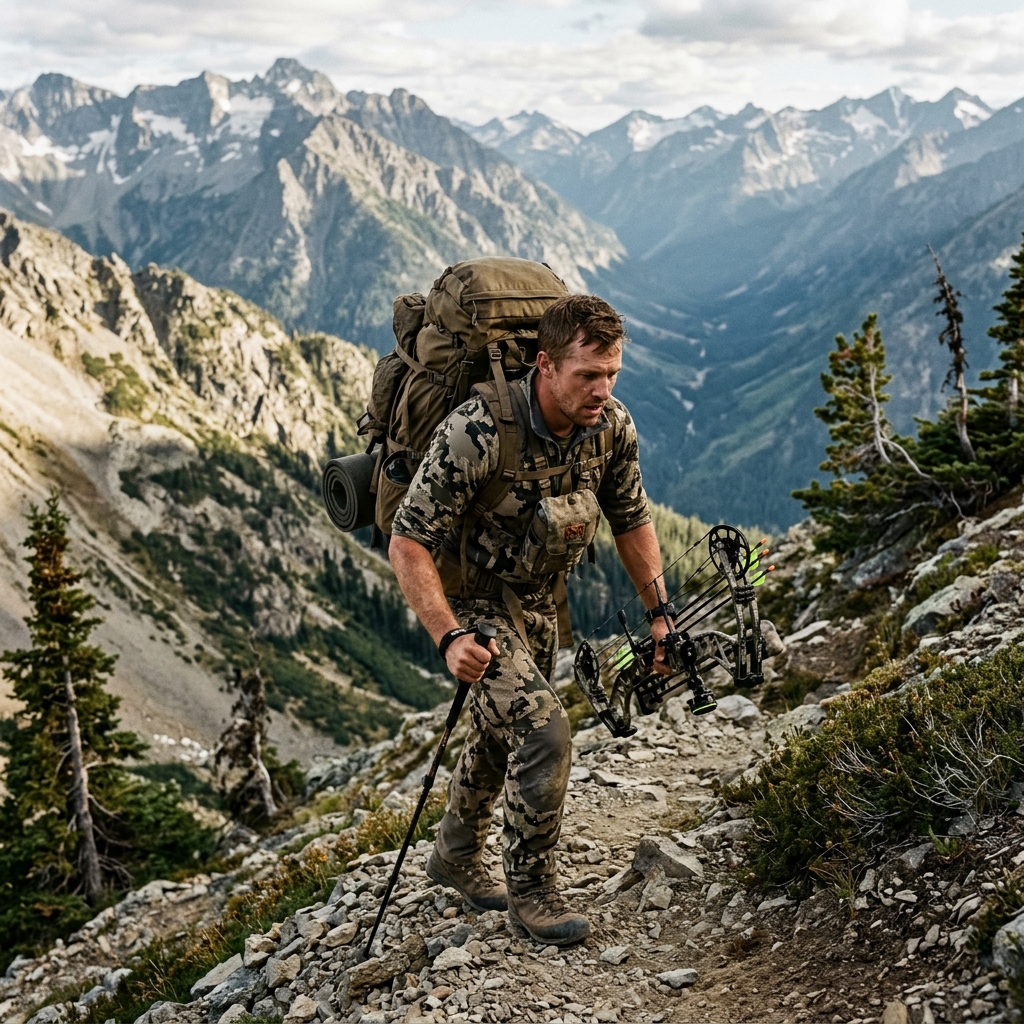
Fitness for the Backcountry Whitetail Hunter: The Ultimate Training Guide
Train for backcountry whitetails with rucking, draw strength, pack-out power, and heart-safe recovery habits that keep you hunting deep timber.
The industry sells lighter bows and louder camo. The harder truth: you are the most important piece of gear. Fitness decides whether you reach unpressured sanctuaries, stay sharp through a 10-hour sit, and get a 200-pound deer out of a ravine without a hospital visit.
Backcountry and big public parcels reward hunters who can hike under load, draw cold bows smoothly, and recover safely. Here is a practical training plan aimed at woods work—not beach muscles.
Cardio That Transfers: Rucking
Marathon mileage is optional. Loaded hiking is not.
- Pack 40 to 60 pounds in your actual hunting frame (sandbags, plates, or water).
- Hike uneven ground 2 to 3 times per week, 3 to 5 miles, including hills.
- Keep conversational pace; stop if sharp joint pain appears.
- Progress load before distance when new to rucking.
Rucking builds the ankles, knees, hips, and low back that fail on deadfalls and slick logs. It also mirrors the pack-out reality you face after a successful hunt.
Archery Strength: Draw and Hold
A 65- to 70-pound bow after six motionless hours demands specific muscle—not random curls.
- Draw muscles: Rows, face-pulls, and band pull-aparts train rhomboids, traps, and rear delts. Draw with the back, not a sky-heave that flashes movement to deer.
- Hold endurance: Planks, side planks, and farmer carries stabilize the core at full draw when a buck stalls behind a tree for 90 seconds.
- Practice under fatigue: Once a week, shoot 20 to 30 arrows after a ruck or hard walk. Cold, tired form is hunt form.
If early-season hunts mean long walks to remote pins, combine this work with mobility so you can still saddle hunt comfortably after the hike in.
Pack-Out Power: Legs and Posterior Chain
The hardest part of many hunts starts after the shot.
- Weighted step-ups: 16- to 20-inch box, ruck on, 3 to 4 sets of 12 to 20 steps per leg.
- Hip hinge work: Romanian deadlifts or kettlebell swings teach safe lifting mechanics for quartered loads.
- Grip: Dead hangs and suitcase carries help when dragging or handling bone-in quarters.
- Mobility: 10 to 15 minutes daily on hips, calves, and thoracic spine reduces season-ending tweaks.
Train like the extract might be 1 to 2 miles with 60 to 80 pounds—because sometimes it is.
A Simple 8-Week Preseason Template
| Day | Focus |
|---|---|
| Mon | Strength (rows, hinges, cores) + 20 arrows |
| Tue | Ruck 3–4 miles |
| Wed | Mobility + light draw band work |
| Thu | Strength (legs/step-ups) + hold drills |
| Fri | Rest or easy walk |
| Sat | Long ruck 4–6 miles with elevation |
| Sun | Shoot 40–60 arrows, walk recovery |
Four to eight weeks of consistency beats one heroic week in September. Hunters planning DIY out-of-state trips should start earlier—12 weeks if coming off a desk season.
Heart Health and Drag Safety
Dragging a deer in insulated clothes is a major cardiac stressor. Every year hunters suffer heart attacks during pack-outs.
Mitigate risk:
- Get clearance if you are over 40, overweight, or have family heart history.
- Shed layers before the drag; overheating spikes heart rate.
- Use a sled, cart, or quarter-and-pack method instead of ego drags.
- Rest 60 to 90 seconds whenever speech gets difficult.
- Never hide chest pain, nausea, or left-arm symptoms as “just being out of shape.”
Fitness is an ethics issue: a safer hunter recovers animals cleanly and comes home.
Gear That Supports Training and Hunts
- Broken-in boots identical to hunt boots
- Pack with a real hip belt for ruck sessions
- Trekking poles for steep descents under load
- Blister kit and nail clippers (ignore foot care and training dies)
- Simple kitchen scale to track ruck weight honestly
Cold sits also punish undertrained hunters. Pair conditioning with a smart layering system so you generate less panic-shivering movement in the stand.
Mistakes That Waste Training Time
- Only treadmill jogging in shorts, never hiking under load
- Maxing draw weight two weeks before opener
- Skipping posterior-chain work, then blowing a back disc on the drag
- Training through sharp knee or Achilles pain
- Ignoring sleep and hydration—recovery is part of the program
- Showing up to swamp hunts unfit; swamp tactics demand legs and lungs
In-Season Maintenance
Once hunting starts, shift to maintenance:
- One short ruck per week
- Two brief strength sessions (20 to 30 minutes)
- Daily mobility
- Shoot enough to keep form without frying shoulders
Peak fitness in August means little if you are broken by November.
Foot Care, Boots, and Injury Prevention
More hunts end from blisters and rolled ankles than from “not enough bench press.”
- Train in the same boots you will hunt in for at least 40 to 60 break-in miles.
- Trim nails before long rucks; carry tape, lubricant, and blister pads every session.
- Strengthen ankles with single-leg balances and slow downhill rucks—descents under load cause many injuries.
- If knees ache, reduce load 20%, add trekking poles, and check step-up height before pushing miles.
- Schedule a deload week every 4 to 5 weeks: cut volume in half so tissues adapt.
Nutrition and Recovery for Hunt Prep
- Aim for protein across the day (roughly 0.7 to 1.0 g per pound of body weight if training hard).
- Hydrate on rucks; practice drinking on the move so hunt day is not your first trial.
- Sleep 7 to 8 hours—adaptation happens off the trail.
- Limit “hero weekends” that leave you too sore to shoot accurately on Monday.
- Two weeks out, shift toward maintenance and mobility; do not PR deadlifts days before a DIY flight.
Hunters over 50 should consider a stress test discussion with a physician before max-effort pack-out simulations. Pride is a poor substitute for a clear cardiac plan.
Field Notes and Practical Numbers Use these benchmarks to keep decisions concrete rather than vague:
- Log every sit with date, wind direction, temperature, and deer observations—patterns appear after 8 to 12 recorded hunts on the same property.
- Limit first-time pressure on a hot pin to one quality sit, then rest at least 24 to 48 hours unless the rut calendar demands otherwise.
- Carry a short checklist in your phone notes so gear and safety steps do not depend on memory at 4:30 a.m.
- Revisit your plan weekly during the season; crops, pressure, and breeding phases change the right answer.
- When in doubt, choose the option that leaves mature deer less educated for the next sit—longevity beats one burned encounter.
These habits compound across a season and across years on the same ground.
Successful hunters treat preparation as part of the hunt itself. Write down what worked, what failed, and what you will change next time. Small improvements in access, timing, and patience usually matter more than buying another gadget. Stay flexible after weather swings, keep safety non-negotiable, and measure success by clean opportunities and ethical recoveries—not only by antlers on the wall. Over a full season, disciplined routines outperform random hard hunting.
Frequently Asked Questions
How heavy should my ruck be?
Start at 20 to 30% of body weight if new. Work toward hunt-realistic loads (often 40 to 60 pounds) over several weeks.
Do I need a gym membership?
No. A pack, a hill, a step, and resistance bands cover most needs. Gym access just adds convenient rows and hinges.
Will running ruin my knees for hunting?
Easy running can help capacity, but it does not replace loaded hiking. If knees complain, prioritize rucks and bikes over pavement miles.
How fit do I need to be for saddle hunting?
Core and hip endurance matter. Practice hanging near the ground, then at height, after light conditioning days so hunt day is not your first long hang.
Can WildSnap help with training goals?
Indirectly—better camera intel means fewer wasted miles to dead stands. Saving steps for the right pins is part of smart “fitness economy” on big public tracts.
You do not need to look like a magazine athlete. You need to be woods-fit: capable of hiking in, hunting hard, and packing out without gambling your heart or your harvest. Train for that job, and deep country stays open to you for decades.
Wildsnap • Open beta
Join Wildsnap and try the beta
In the open beta, you turn trail-cam data into actionable insights—free, fast, and simple.
No credit card