
Mastering Saddle Hunting: The Ultimate Mobile Hunter's Apex Advantage
Learn saddle hunting for mobile whitetails: light kits, any-tree setups, 360° shots, silent climbs, practice progressions, and fall safety basics.
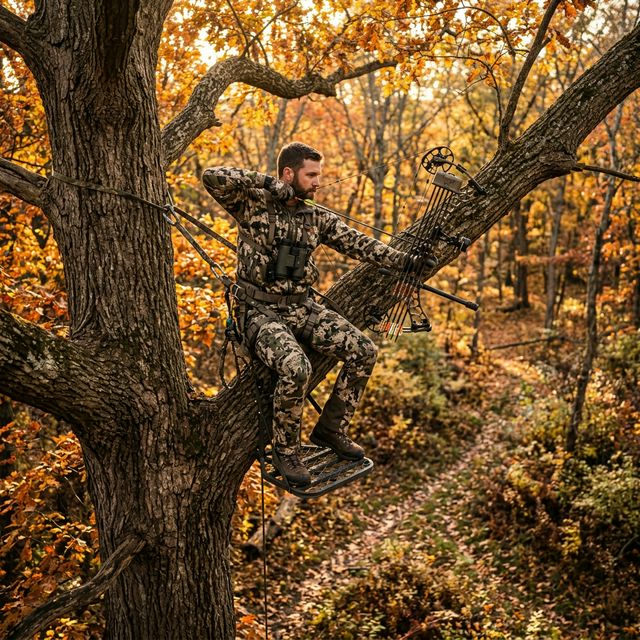
Dragging a 30-pound steel stand through public timber and ratcheting it onto the same straight oak educates mature bucks. Saddle hunting flips that script: a compact fabric seat, tether, lineman’s belt, and small platform that pack small, climb quiet, and work in crooked trees other hunters skip.
It is not a gimmick. It is a mobility system—if you practice on the ground before you trust it at 20 feet.
Why Saddles Win on Pressured Land
- Weight: Complete systems often land under 8 to 12 pounds, football-sized when packed.
- Any-tree access: Leaning, branched, multi-trunk, and ugly cedar trees become huntables—exactly where bucks feel safe.
- Speed: From pack to hunting height in roughly 5 to 10 minutes once skilled.
- Fresh sign response: Find a smoking scrape at noon; hunt it at 12:20.
Pair mobility with e-scouting so you are not wandering—you are hopping ranked pins.
360-Degree Cover and Silence
On a hang-on, you often silhouette on the front of the tree. In a saddle, you keep the trunk between you and the deer longer, then rotate as needed.
- Pivot around the trunk for full 360° shot opportunities.
- Ropes and fabric replace chains and clanging steel—critical on frozen mornings.
- Learn to shoot weak-side and strong-side angles before season; geometry differs from a standup platform.
Silence also means pack discipline: cinch buckles, silence hooks, and use a haul line for the bow.
Core Gear Without the Circus
Minimum effective kit:
- Saddle with comfortable lumbar support
- Climbing sticks or single-stick method you have rehearsed
- Platform sized for your stance
- Lineman’s belt + main tether rated for life support
- Ropeman/ascender or Prusil setup per manufacturer guidance
- Full bridge/tether familiarity—no mystery knots on opener
Buy climbing-rated components. Frayed garage rope is not a savings plan. Cross-train safety mindset with harness and lifeline habits.
Practice Progression (Do Not Skip)
- Ground: Sit in the saddle, practice draw angles, weak-side shots, and quiet shifts.
- Low tree (4–6 feet): Climb, transition from lineman to tether, hang, and descend 10+ reps.
- Hunt height at home or lease: Full dress rehearsal with pack and stick count.
- Live hunt: Start on easy trees; save gnarly leans for after reps feel boring.
Two evenings of practice prevent opening-week panic. Fitness helps—core and hips from the hunting fitness guide make long hangs tolerable.
Tactical Uses Through the Season
| Scenario | Saddle advantage |
|---|---|
| Public land circuits | Move daily without leaving steel |
| Rut seeking | Jump to fresh scrapes and pinch points |
| Lockdown | Hang on odd cover trees near thickets |
| Water / swamps | Use imperfect trees uphill of scent pools |
| DIY travel trips | Fly/drive light; see out-of-state DIY |
You can still keep a couple of preset hang-ons on private land. Saddles shine when flexibility beats permanence.
Safety: Zero Slack and Redundant Attachment
Saddle systems follow arborist logic.
- Stay attached at all times—lineman during climb, tether at height, controlled transition.
- Maintain tension; slack equals fall distance.
- Inspect stitches, ropes, and carabiners before every trip; retire UV-beaten gear.
- Never free-climb sticks “just this once.”
- Know how to rescue or self-lower per your system’s manual.
A four-foot fall onto a hard tether still hurts; prevention beats toughness.
Comfort Tips for Long Sits
- Dial bridge length so hip pressure is even.
- Use a quiet foam or ring for longer sits if your model allows.
- Layer for stillness; fidgeting ropes telegraph motion.
- Practice peeing protocols (bottles) so you do not descend at 11 a.m. of an all-day rut sit.
- Stretch hips on the ground between moves.
If a saddle will never be comfortable for your body, hybrid strategies (saddle for moves, hang-on for all-day oaks) are valid.
Common Beginner Mistakes
- First hunt at 22 feet with zero low-tree reps
- Oversized platforms that defeat the “small tree” advantage
- Too many sticks (exhaustion) or too few (unsafe reach)
- Shooting only strong-side in practice
- Ignoring wind because the tree “looked perfect”
- Comparing yourself to social-media minimalists on day three
Packing Systems and Stick Strategy
How you carry the kit decides whether you actually stay mobile:
- Keep the saddle on a dedicated waist belt or at the top of the pack for fast on/off.
- Stack sticks in a consistent order every time—muscle memory prevents noisy fumbling.
- Use a quiet haul line for bow and pack; never climb with the bow on your person if your system advises against it.
- Carry a small repair kit: extra strap, carabiner, cordage, and a compact saw for a single interfering branch.
- Weigh the full hunt pack at home; if it exceeds what you ruck in training, cut ounces or train heavier.
Shot Sequences Unique to Saddles
Practice these until boring:
- Deer left, strong-side draw with partial pivot
- Deer right, weak-side or full around-trunk rotation
- Straight underneath (ethical pass or careful lean—know your limits)
- Sitting versus standing platform shots if your style varies
Film a practice session on a phone to spot excessive motion. Deer at 18 yards catch rope swings and elbow flares you never notice until you watch playback.
Field Notes and Practical Numbers Use these benchmarks to keep decisions concrete rather than vague:
- Log every sit with date, wind direction, temperature, and deer observations—patterns appear after 8 to 12 recorded hunts on the same property.
- Limit first-time pressure on a hot pin to one quality sit, then rest at least 24 to 48 hours unless the rut calendar demands otherwise.
- Carry a short checklist in your phone notes so gear and safety steps do not depend on memory at 4:30 a.m.
- Revisit your plan weekly during the season; crops, pressure, and breeding phases change the right answer.
- When in doubt, choose the option that leaves mature deer less educated for the next sit—longevity beats one burned encounter.
These habits compound across a season and across years on the same ground.
Successful hunters treat preparation as part of the hunt itself. Write down what worked, what failed, and what you will change next time. Small improvements in access, timing, and patience usually matter more than buying another gadget. Stay flexible after weather swings, keep safety non-negotiable, and measure success by clean opportunities and ethical recoveries—not only by antlers on the wall. Over a full season, disciplined routines outperform random hard hunting.
Transitioning From Hang-Ons Without Chaos If you already own hang-ons, phase in saddles:
- Use the saddle for midday moves and public circuits.
- Keep one or two quiet hang-ons on private A-trees for all-day rut sits.
- Do not sell every stand the week you buy a saddle—overlap one season.
- Take a friend when you first hunt height in the saddle.
- After five successful hunts, evaluate comfort honestly and adjust bridge/platform gear.
Hybrid programs are smart, not impure. Mobility where it matters, comfort where it pays.
Keep refining your approach with honest notes after every outing. Track winds that worked, access mistakes, and timing windows that produced daylight movement. Share lessons with your hunting partners so the whole group improves pressure management. Small, consistent upgrades in planning usually add more encounters than a single new piece of equipment. Stay patient through slow sits, stay aggressive when sign and weather align, and protect the long-term health of the places you hunt.
Frequently Asked Questions
Is saddle hunting safe compared to hang-ons?
Equally safe when used with proper tether discipline—and safer than unconnected climbing. Most accidents come from detachment or poor climbs, not the fabric seat itself.
Can I bowhunt effectively from a saddle?
Yes. Thousands do. The learning curve is shot geometry and comfort. Crossbows and firearms also work with practice and legal rest rules.
How many sticks do I need?
Enough for solid, repeatable steps to your height—often 4 to 7 depending on stick length and method. Consistency beats ego minimalism.
Will a saddle replace my climbing stand?
For many mobile hunters, yes. Climbers still win on perfect straight trees if you prefer that workflow. Own the method that gets you in range quietly.
Does WildSnap relate to saddle hunting?
When cameras show a new daylight pattern, mobility lets you respond tomorrow. Saddles turn intel into same-week sits instead of next-month stand moves.
Master the saddle on purpose: light kit, endless tree options, and silent moves. Put in the low-tree reps, stay tied in, and public-land odds tilt back toward the hunter willing to hunt where the steel crowd will not.
Wildsnap • Open beta
Join Wildsnap and try the beta
In the open beta, you turn trail-cam data into actionable insights—free, fast, and simple.
No credit card