
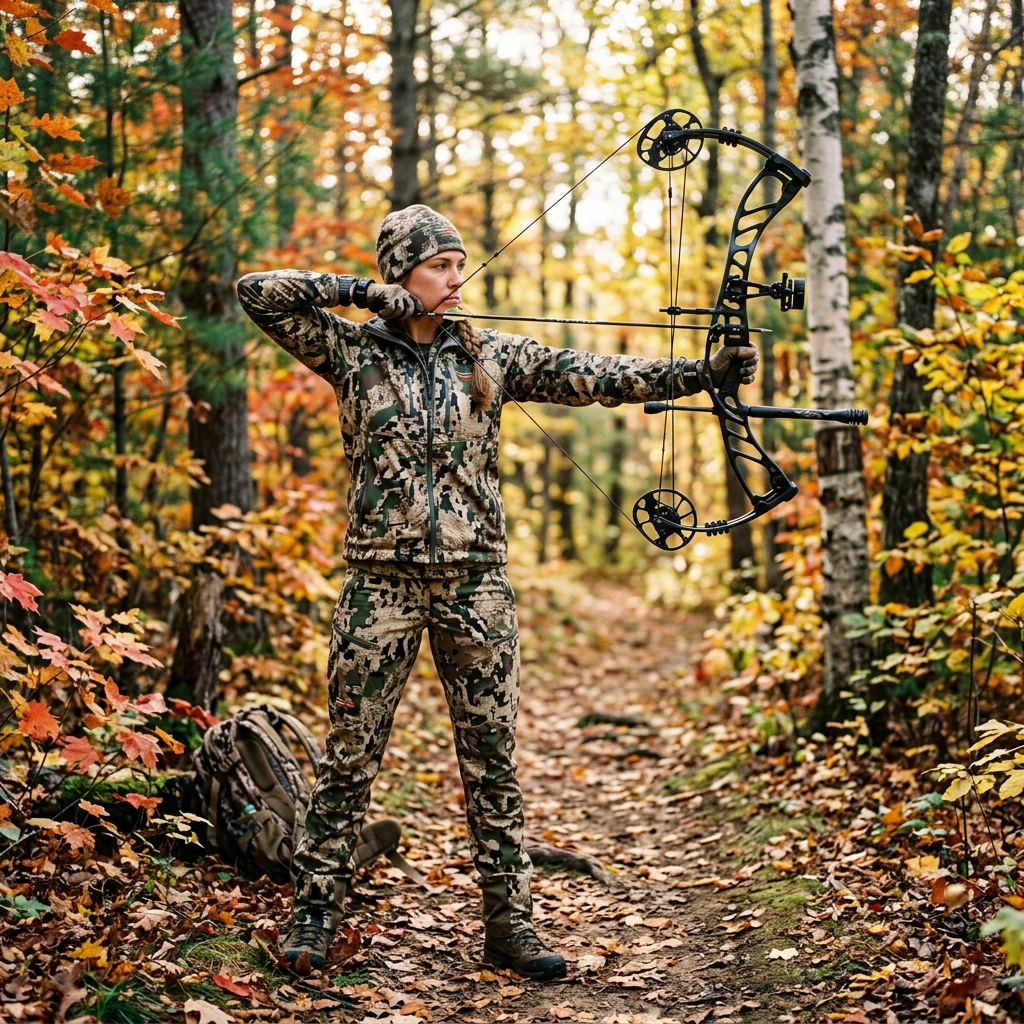
Women in Whitetail Hunting: Mastering Advanced Gear Geometry and Fit
Women are hunting's fastest-growing demographic. Focus on fit, draw length, kinetic energy, harness safety, recoil management, and solo-hunt protocols.
The woods do not grade hunters by gender. Cold, wind, and mature deer respond to skill, patience, and gear that actually fits. Women are among the fastest-growing groups in hunting—and the old “shrink it and pink it” approach still fails too many newcomers who deserve better than borrowed jackets and mis-sized harnesses.
This guide focuses on geometry and fit: jackets that draw a bow without binding, pants that layer without scent gaps, bows set to real draw length, rifles with correct length of pull, and harnesses that work on your frame instead of hanging like a parachute. None of this is vanity. Poor fit costs shots, creates safety hazards, and sends talented hunters home early.
Why Fit Beats Fashion Camo
Ill-fitting gear creates cold leaks, string slap, and noisy fabric stretch at full draw. Colorways are secondary to how a garment moves when you climb, sit, and draw.
Demand these features when shopping:
- Articulated elbows and gusseted underarms that allow a full draw without shoulder pinch
- Torso length that covers the lumbar bend when you sit in a stand for three hours
- Sleeve length that stays put at full draw without riding up past the wrist
- Hip and seat cuts that do not gap when you lean forward in a stand or saddle
- Quiet fabrics that do not rustle when you shift weight on a cold morning
A men’s small is not a women’s hunting system. It often leaves a cold, scent-leaking gap at the lower back and binds across the shoulders where you need the most mobility. Purpose-built women’s lines from serious technical brands exist for a reason—try before you buy when possible, and do not accept “close enough” on outer layers you will wear every sit.
Layering fundamentals matter as much as the shell. A jacket that fits standing but gaps when seated is a scent and heat leak waiting to happen. Build from the skin out: merino or synthetic base, insulating mid, quiet waterproof shell. Full system guidance: cold weather layering system.
Fit also affects scent control. Gaps at the waist and wrists let body heat and odor escape in plumes deer detect downwind. Tight cuffs, adjustable hems, and integrated gaiters on pants close those leaks without adding bulk.
Archery: Draw Weight, Draw Length, and KE
Clean ethics beat ego poundage every time.
A sharp fixed-blade broadhead from a tuned bow at 40–45+ pounds (with adequate arrow weight and solid form) can humanely take whitetails with good shot placement. Many hunters shoot higher; few need 70–80 pounds if form suffers and holding weight causes collapse at full draw.
Draw length is the make-or-break variable. Correct length lets bone structure hold the bow, settling the pin without muscular strain. Too long and you collapse forward at anchor; too short and you float, fighting the wall every shot. Get measured by a competent shop with a draw board—do not guess from a height chart alone. A half-inch error changes anchor point, peep alignment, and spine selection.
Kinetic energy (KE) depends on arrow weight and speed together. A 400-grain arrow at 260 fps delivers roughly 60 ft-lbs of KE—adequate for whitetails with sharp broadheads and quartering-away shots. Heavier arrows at moderate speed often penetrate better than light arrows at max speed. Match spine to draw weight and length; a shop tune with paper and bare-shaft testing saves months of frustration.
Checklist before season:
- Professional draw-length fit and cam module selection
- Comfortable holding weight at full draw for 20–30 seconds without shaking
- Paper and bare-shaft tune with hunting arrows, not range arrows
- Broadhead practice at realistic yardages from elevated positions
- Confirm peep, D-loop, and release alignment with your actual hunting clothes on
Beginners can start with the beginner’s guide to whitetail hunting. Bowhunters comparing platforms should read crossbow vs compound bow for honest tradeoffs on draw weight, practice time, and season access.
Rifle Fit and Recoil Management
Stock length of pull (LOP), comb height, and recoil pad quality matter more than caliber bragging rights.
Length of pull is measured from the trigger to the butt pad center. Too-long LOP causes shoulder reach and missed follow-throughs when you wear cold-weather layers. Too-short LOP pushes the scope into your brow and invites scope bite. Most adult women fit comfortably in the 13–13.75 inch LOP range, but measure with your hunting coat on—not in a T-shirt at the gun counter.
Comb height determines whether your eye aligns naturally with the scope without craning your neck. A raised comb or adjustable cheek piece helps smaller-framed shooters see a full field of view without lifting the head off the stock. This matters most at dawn when you are tired and tempted to rush the shot.
Recoil management tips:
- Start with moderate calibers you can shoot 20 rounds without flinching (.243, 6.5 Creedmoor, 7mm-08, .308)
- Use quality recoil pads and consider a muzzle brake where legal and tolerable
- Practice from sitting and kneeling—the positions you actually use in timber
- Dry-fire with snap caps to build a smooth press without anticipating kick
A well-fitted lighter rifle you shoot confidently outperforms a heavier magnum you flinch. Pair caliber choice with optics in the best rifle calibers for whitetail guide.
Tree Stand Harnesses Sized Correctly
Suspension trauma risk rises when leg straps and bridges do not fit. Do not borrow an oversized men’s harness “because it was free.”
Requirements for every hunt:
- Full-body harness designed for your size range—not a one-size-fits-all bargain unit
- Test hang a foot or two off the ground at home before season opens
- Lifeline use on every climb, every time
- Practice recovery and self-rescue steps with a spotter present
- Replace harnesses after a fall or per manufacturer expiration dates
Leg straps should sit high on the thigh without cutting circulation. Chest strap should sit across the sternum, not under the chin or over the stomach. Bridge length should allow comfortable lean-forward shooting without the tether fighting you. If a strap rides wrong on hips or thighs in a controlled hang, replace the harness—do not hope it “breaks in” at 20 feet.
Details on lifelines, lineman belts, and recovery: tree stand safety, harnesses, and lifelines. Stand placement and concealment pair with harness fit: tree stand placement and concealment.
Weight matters on climb. A 15-pound pack on a 130-pound frame feels different than on a 200-pound frame. Distribute load between hip belt and shoulders; never climb with everything dangling from one shoulder strap.
Boots, Packs, and Cold Extremities
Fit issues show up first in feet and hands—and they end hunts faster than empty scrapes.
Boots with real women’s lasts when available; enough room for medium-weight wool socks without heel slip on steep climbs. Try boots in the afternoon when feet are slightly swollen, the way they will be after a mile walk in. Break them in on stairs and uneven ground, not just pavement.
Pack selection:
- Torso-length adjustment between 14–18 inches depending on your back measurement
- Hip belts that sit on the iliac crest—not the soft waist where the belt slides under load
- Load lifters that angle correctly when the pack is 20–30% of body weight
- External pockets for release, calls, and snacks without digging into the main compartment
Mitt systems work better than single-layer gloves for late-season sits: windproof shell plus dexterous liner for release or safety on the bowstring. Hand warmers in pockets beat numb fingers fumbling a trigger or release.
Blisters form at hot spots—heel, ball of foot, pinky toe. Pre-treat with moleskin on known problem areas before opening day. Numb fingers and cold toes destroy shooting form long before you see a deer.
Community, Mentorship, and Confidence
Skill compounds faster with good mentors—formal programs, trusted friends, or structured clinics. You do not need permission from anyone to hunt; you do need reps, honest feedback, and safe habits modeled by people who have been where you are.
Practical confidence builders:
- Small public-land sits with simple goals: correct wind, clean entry, full sit duration
- Documented shot routines written down and rehearsed at home
- One new skill per month: blood trailing, e-scouting, packing, calling
- Range sessions that mimic hunting positions, not just benchrest groups
Mentorship culture tips apply across ages: mentoring youth hunters (many principles transfer directly to adult learners). Ignore gatekeeping noise in forums and parking lots. Competence is earned in reps, not in arguments about who belongs in the woods.
Find local archery shops that offer women’s clinics, NWTF or QDMA chapter events, and online communities focused on skill—not gear flexing. A mentor who critiques your form without condescension is worth more than any camo pattern.
Solo Hunt Communication Protocol
Solo hunting is common and legitimate. Reduce risk with protocols your emergency contact understands before you leave cell service.
Before every solo trip:
- Share live location with a trusted contact (phone share or satellite messenger in remote country)
- Agree on check-in times and a missed-check-in plan with specific actions
- Carry navigation backup: map, compass, and downloaded offline maps
- Pack a headlamp you have tested in rain, not still in the box
- Know your physical limits for drag and pack-out—gutless multi-trips are smart, not weak
Tell your contact where you will park, which stand you plan to hunt, and when you expect to be back in service. If you change stands mid-hunt, text when possible. Satellite messengers with preset check-in buttons remove the excuse of “no signal” for loved ones waiting at home.
Carry a basic first-aid kit, whistle, and extra calories. Solo hunters who push through hypothermia or dehydration because “help is embarrassing” create real emergencies. Pride kills; protocols save.
Frequently Asked Questions
Do I need women’s-specific camo? You need correct fit and quiet fabrics. If a unisex piece fits your shoulders and torso without gaps, use it. If it binds, gaps, or restricts draw, switch to purpose-built gear regardless of label.
What draw weight should I start with? Start where you can shoot perfect form repeatedly. Many adult beginners land in the 30–40 lb training range, then work toward ethical hunting poundage with their arrow setup over several weeks of practice.
Are women’s tree stands a thing? Platforms are platforms; harnesses, pack weights, and climb methods matter more. Choose stands you can hang and hunt safely at your strength level—climbing sticks vs ladder stands vs saddles are personal decisions based on fitness and terrain.
How do I deal with being underestimated in the field? Let results and preparation speak. Keep interactions brief, wear required safety colors, and leave unsafe people or situations. You owe strangers no biography; you owe yourself safe, legal hunting.
What is the best first weapon system? The one you will practice weekly. Crossbow, compound, or firearm can all work within local seasons—fit and reps win over trendy gear every time.
Any clothing fabrics to avoid? Cotton next to skin in cold or wet weather. Prioritize merino or synthetics for base layers and a quiet rain shell for outer protection. Cotton holds moisture and accelerates hypothermia on long sits.
Claim your place in the deer woods with gear that fits, a bow or rifle you can shoot, and safety habits that match solo reality. Skill is the only credential that matters once the stand goes quiet.
Wildsnap • Open beta
Join Wildsnap and try the beta
In the open beta, you turn trail-cam data into actionable insights—free, fast, and simple.
No credit card