
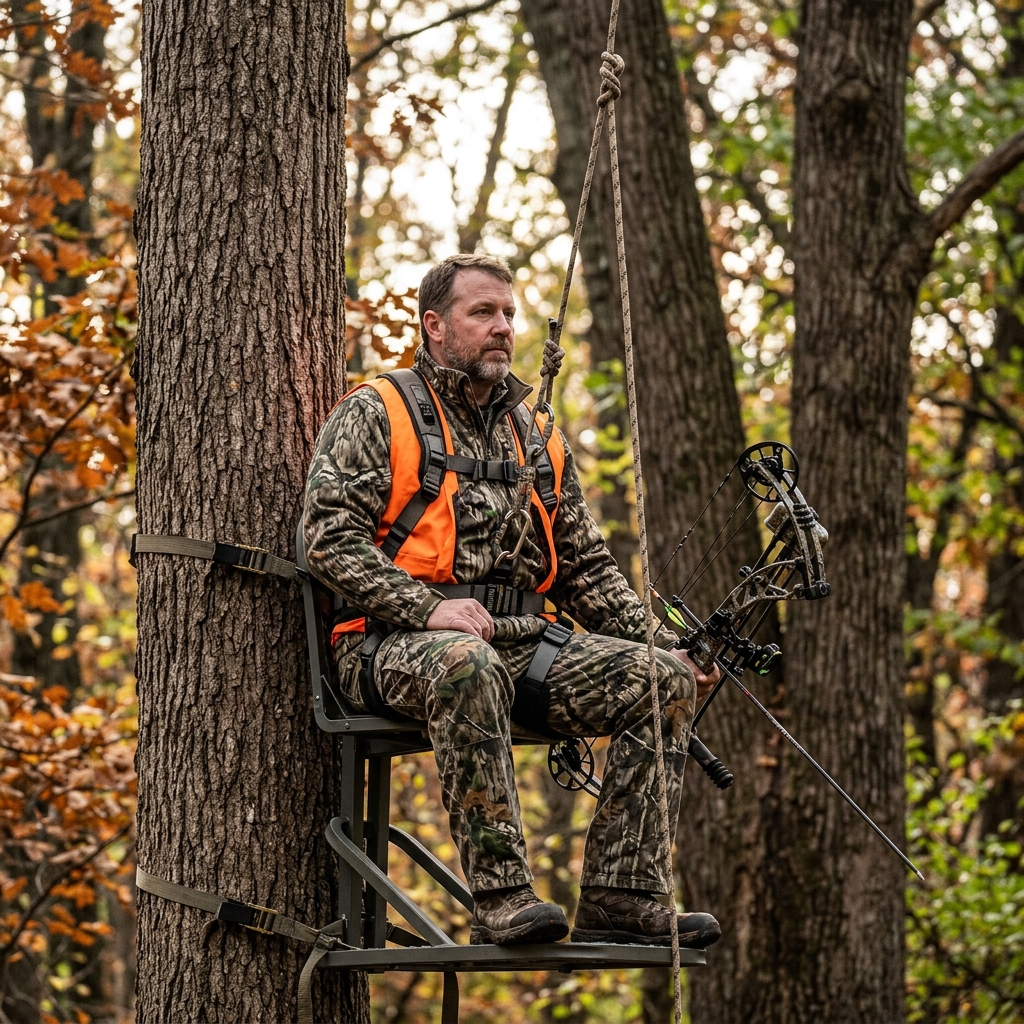
Tree Stand Safety: Harnesses, Lifelines, and Suspension Trauma
Falls are the top serious injury risk in deer hunting. Learn lifelines, full-body harnesses, suspension relief, and gear replacement rules that keep you alive.
Ask hunters who have survived a tree stand fall and the story is almost always the same: a wet ladder rung, a strap that let go, a moment of weightlessness, then impact or a hard stop in a harness. Falling from an elevated stand is the leading cause of serious injury in the deer woods—and it is almost entirely preventable when safety is treated as part of the hunt, not an afterthought clipped on at daylight.
Your family is waiting at home. Hunt like that matters.
Why Most Falls Happen During the Climb
The sit is not the danger zone. Getting in and out is.
Common failure points:
- Climbing with a bow or rifle in hand
- Skipping a tether “just for a second” to adjust a stick
- Using worn ratchet straps left in the weather for years
- Standing on a single step while reaching for the platform
- Descending in the dark with cold hands and stiff boots
Industry data and hunter-education programs consistently show that a large share of incidents occur while ascending or descending. Treat the climb as the hunt’s highest-risk minutes.
The Lifeline: Connected From the Ground Up
A lifeline is a static rope left on the tree for the season, paired with a sliding knot or mechanical rope-grab that travels with you.
- How it works: You clip your harness tether to the sliding connection at ground level. As you climb, the connection slides. If you fall, it locks and stops the drop.
- Prusik-style systems: Traditional setups use a Prusik hitch that runs free under light tension and bites under sudden load. Follow the manufacturer’s dress and inspection instructions every sit.
- 100% connection rule: Never leave the ground untethered. Stay clipped until both feet are on dirt again—including when you step onto the platform and when you leave.
If you hunt multiple trees, each hang-on needs its own inspected lifeline. A rope in the truck does not help when you are halfway up.
Full-Body Harness Fit and Use
A waist belt alone is not enough. Use a full-body fall-arrest harness designed for hunting.
Checklist before every climb:
- Leg straps snug in the groin area—not loose, not cutting circulation while standing.
- Chest/shoulder straps adjusted so the tether attachment sits high on the back per the manual.
- Tether short enough that a fall leaves you close to the trunk, not swinging into space.
- Suspension relief strap accessible with either hand.
- No cuts, UV fade, frayed stitching, or cracked hardware.
Practice buckling in the garage with gloves on. The first time you fight a harness should not be 18 feet up in the rain.
Suspension Trauma: The Danger After You Are “Saved”
A harness that stops your fall can still kill you if you hang too long. Suspension trauma (also called harness hang syndrome) happens when straps compress the legs and restrict blood return. Pooling blood and reduced circulation can lead to unconsciousness in as little as 10 to 15 minutes for some people—sometimes sooner.
Immediate actions if you are hanging:
- Stay calm and call for help if you have signal—or yell if partners are nearby.
- Deploy the suspension relief strap, put your feet in the loop, and “stand” to relieve pressure on the femoral arteries.
- Keep moving your legs if you cannot get relief webbing deployed—push against the tree, try to regain the platform or ladder.
- Have a plan before the season: phone, whistle, and a hunting partner who knows your spot and return time.
Rescue capability matters. A device that stops a fall without a relief plan only delays the emergency.
Gear Retirement: The One-Fall and UV Rules
Safety gear is not forever.
- One-fall rule: If a harness, tether, or lineman’s rope arrests a fall, retire and destroy it. Energy-absorbing webbing is designed for a single serious loading event.
- UV and weather: Nylon left in sunlight weakens. Replace harnesses on the manufacturer’s schedule—often every 3 to 5 years with regular use, sooner if stored in a hot truck or left outdoors.
- Stand straps: Replace ratchet and cam straps every 2 to 3 years if they stay in the tree year-round. Inspect before every season for cracks, rust, and stretch.
- Expiration labels: Many products print manufacture dates. If you cannot find a date or history, replace the gear.
Cheap replacement straps cost less than a hospital bill. Budget them like ammo.
Safe Climbing Habits That Prevent Falls
Build these habits until they are automatic:
- Three points of contact on ladder sticks or climbing sticks at all times (two hands/one foot or two feet/one hand).
- Haul line for weapons—never climb with a bow, crossbow, or loaded firearm in your hands.
- Unload firearms before climbing; treat muzzle direction as seriously on the tree as on the ground.
- Clear ice and wet leaves from steps; use boot cleats when frost is present.
- Maintain the tree: remove dead bark and stubs that snag straps; avoid trees with widow-makers overhead.
- Weight ratings: Your body weight plus pack and clothing must stay under stand and stick ratings—often 300 lb class for many hang-ons; verify your model.
Stand placement choices also affect safety. Unstable dead trees, extreme leans, and slick bark species raise risk even with perfect harness use. Choose living, solid trunks as described in our tree stand placement article.
Public Land and Saddle Hunting Notes
Mobile hunters using saddles and platforms still need fall protection. A lineman’s belt for the climb plus a tether at height is non-negotiable. Practice transitions at low height before you commit to a 20-foot oak on public land.
On public ground, inspect any stand you did not hang yourself—or do not use it. Old straps and unknown hardware are not worth the gamble. If you e-scout new trees often, bake safety kit weight into your pack list alongside kill-kit essentials.
Pre-Season and Pre-Hunt Safety Checklist
Print this and keep it in your stand tote:
- Inspect harness stitching, buckles, and tether for fray, UV chalking, and cracked plastic
- Confirm lifeline rope is free of cuts, glaze, and rodent chew; replace annually if left outdoors in harsh sun
- Check every stick section, strap, and platform bolt for rust and movement
- Confirm tree diameter still matches stand specs after years of growth or bark loss
- Pack suspension relief strap access, charged phone, whistle, and a small knife
- Tell a partner your spot and expected return time
- Practice the full connect-climb-haul-sit-descend sequence once in daylight before opening morning
Weather multiplies risk. Ice on ladder rungs, wet walnut bark, and numb fingers in December cause falls that never happen on a dry October afternoon. Cleats, gloves you can buckle in, and patience on the descent matter as much as the brand name on the harness tag.
Stand placement choices also interact with safety. Dead snags, widow-makers, and trees with hidden rot can fail under load even when your tether works. Choose living, solid trunks as covered in tree stand placement. After a successful hunt, resist the urge to rush down in the dark with a loaded firearm—unload, haul the weapon down safely, then descend while still clipped in. Adrenaline is when shortcuts sneak in.
If you mentor new hunters, make harness use non-negotiable from day one. A first deer is not worth a lifelong injury. Pair safety habits with basic skills from the beginner’s whitetail guide so new hunters build the right sequence early.
Frequently Asked Questions
Do I need a lifeline if I am careful?
Yes. Most falls are slips and equipment failures, not recklessness. A lifeline covers the climb—the phase when careful people still get hurt.
How long can I hang in a harness before suspension trauma?
It varies by fitness, strap position, and whether you can relieve leg pressure. Serious symptoms can begin within about 10 to 15 minutes. Deploy relief webbing immediately and get rescued fast.
Can I reuse a harness after a short fall?
No. If the system arrested a fall, retire it. Micro-damage and stretched webbing are not always visible.
How often should I replace tree stand straps?
Every 2 to 3 years for straps left outdoors is a solid rule of thumb, and sooner if you see UV fade, stiffness, rust, or fraying. Inspect before every season and every hunt.
Are climbing sticks safer than ladder stands?
Both can be safe when installed correctly with a harness and lifeline. Ladder stands fail when pins and straps are neglected; sticks fail when hunters free-climb or skip tethers. The system matters more than the brand.
Should youth hunters use the same gear?
Youth need properly sized full-body harnesses and adult supervision. Never put a child in an adult harness that cannot be adjusted correctly. Practice at ground level until the sequence is automatic.