
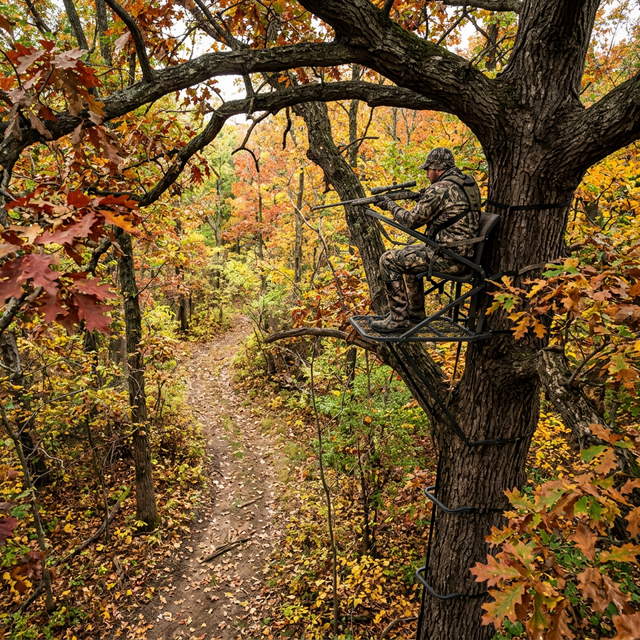
Tree Stand Placement: Optimizing Concealment and Tactical Approach
Hang smarter, not higher. Master leeward ridges, back cover, scent cones, and silent entry routes so your tree stand stays invisible to mature whitetails.
A successful whitetail hunt is often decided weeks before you climb. Stand placement is not about hanging metal where a deer walked once—it is about existing in a deer’s sensory world without being sorted as a threat. Wind, thermals, silhouette, access noise, and shooting angle all matter more than how many scrapes you can count from the platform.
Get placement right and average spots kill. Get it wrong and even hot sign becomes a education factory.
Hunt the Leeward Ridge Bench
In hill country, one of the most productive stand locations is the leeward side of a primary ridge.
- Wind physics: Prevailing wind over a ridge top creates a slight vacuum on the downwind face. That draw pulls valley air upward along the slope.
- Buck travel: Mature bucks often cruise benches 15 to 20 yards below the crest. From there they scent-check the valley while staying off the skyline.
- Stand height relative to deer: Hang so you are slightly above eye level of a walking deer on that bench—often 12 to 18 feet of tree height depending on slope—not automatically 25 feet because “higher is safer.”
On flat ground, translate the same idea: hang just off the main trail, downwind of expected travel, with cover behind you and an exit that never cuts the bedding.
Manage Your Scent Cone Before You Hang
Height changes how your scent hits the ground, but it does not erase odor.
- Plunging scent: From 15 to 20 feet, scent often travels farther horizontally before settling. From 25 to 30 feet, archery angles get steep and the vital target shrinks.
- Practical sweet spot: Most bowhunters kill cleanly from 14 to 20 feet when back cover is solid and wind is honest.
- Thermals beat height: Morning thermals rise; evening thermals fall. A “perfect” wind direction on the forecast can reverse in a creek bottom at first light.
Before you drill a single bolt, stand on the ground at dawn and dusk and watch smoke or milkweed. If your scent washes into bedding or the trail, move the tree—do not hope height will save you. For more on how weather drives movement around these setups, see white-tailed deer activity and weather.
Back Cover Beats Sheer Height
Deer look for silhouettes and motion. A hunter at 12 feet with a thick cedar or pine wall behind him disappears. A hunter at 28 feet on a bare oak lights up against open sky the moment he draws.
Prioritize:
- Vertical backdrop — branches, trunk forks, or a second tree behind your torso and head.
- Side cover — enough to break the outline without blocking the shot.
- Lane work — cut only what you need; a shaved “shooting highway” screams human activity.
- Shade — morning sun on your face is a flare for every doe that walks past.
If you must choose between five more feet of height and real back cover, take the cover.
Design Entry and Exit Like the Hunt Itself
Most stands fail on the walk in, not the sit.
- Park out of sight and downwind of the food source and bedding when possible.
- Use ditches, creek beds, and field edges so you are not sky-lined on ridges.
- Time access to thermals. Enter evening stands early enough that falling thermals do not carry you into bedding—but late enough that you are not sitting through midday heat with no purpose.
- Exit the dark side. Leaving across a food plot at dark after shooting a doe can blow the best buck off the farm for a week.
- One trail in, one trail out. Boot-legging a new path every sit creates a scent grid deer learn to flank.
Map access during summer when leaves hide your movement and deer pressure is lower. Confirm paths again after leaf drop when visibility changes. E-scouting helps you pick routes that stay in ditches and off bedding before you ever hang steel.
Choose Trees for Stability, Angle, and Safety
A perfect wind tree that sways in a 20 mph breeze is a poor hunting tree.
Look for:
- Healthy live wood with diameter that matches your stand’s rating (often 8 to 20 inches depending on model).
- Straight enough trunk for a level platform; a severe lean fights your harness and your shot.
- Natural steps or stick placement that keep you from hugging dead bark.
- Shot angle under ~30 degrees for bowhunting when possible; steeper shots demand precise aiming at the lower third of the vitals—review whitetail anatomy and shot placement before opening day.
Never hang a stand you cannot safely climb with three points of contact. Use a haul line for weapons. Full details on harnesses, lifelines, and suspension trauma belong in every hang plan—read our tree stand safety guide before the season.
Stand Height, Shooting Lanes, and Weapon Choice
Match height and lanes to how you hunt:
| Setup | Typical height | Lane priority |
|---|---|---|
| Bow, timber | 14–18 ft | Quiet 20–30 yd windows |
| Bow, field edge | 12–16 ft | Staging trails, not open field only |
| Crossbow | 15–20 ft | Clear horizontal lanes |
| Rifle/slug | 12–20 ft | Longer alleys; mind backstops |
Cut lanes in the off-season when possible. Fresh white wood and piled brush educate deer. Leave a few “soft” windows rather than one sterile shooting gallery.
Common Placement Mistakes
- Hanging on the scrapes instead of downwind of the travel that creates them.
- Choosing the biggest tree instead of the best cover tree.
- Ignoring weekend pressure routes—see weekdays vs weekends when hunting public ground.
- Overhanging: five stands in one 40-acre block turns the whole parcel into a scent zone.
- Skipping a dry run: climb once in daylight with your pack to find squeaks, shine, and blocked draws.
Trail cameras can validate a hang without weekly visits. Pattern the trail for 10 to 14 days, then hunt only on matching winds. WildSnap can help flag species and timing so you are not hanging over raccoon highways.
Seasonal Stand Moves That Keep You Invisible
The same tree is rarely perfect from September through January. Early-season bucks often use staging cover 60 to 100 yards off food; rut bucks cruise benches and doe bedding fringes; late-season deer lock onto remaining calories. Move stands with the calendar instead of forcing one hang to do everything.
Practical cadence many private-land hunters use:
- August–September: Hang on summer entry trails confirmed by glassing and cameras—see summer velvet scouting. Keep disturbance low; hunt only ideal winds.
- October seeking: Shift slightly toward scrapes and community hubs, still favoring downwind ambush over sitting on the dirt.
- Peak rut: Favor funnels between doe groups—ditches, fence gaps, saddle crossings—where a buck’s nose works overtime.
- Late season: Relocate to the warmest thermal cover adjacent to the best remaining food, with access that never cuts the feeding field after dark.
Each move should include a fresh lifeline check, strap inspection, and a quiet daylight dry-fit with your pack. A stand that squeaks in September will educate every doe on an October scrape line.
Public-land hunters should think in temporary sets: climbing sticks, a platform, and a rope that come out when you leave. Permanent rusty ladder stands near parking lots train deer to flank 80 yards wide. Mobile placement plus midweek timing beats a famous oak everyone photographs from the truck.
Frequently Asked Questions
How high should a deer stand be?
For most bowhunters, 14 to 20 feet with solid back cover is more effective than 25-plus feet. Rifle hunters can sit lower if concealment and wind are correct. Height never replaces wind discipline.
Should I hang on a scrape line?
Hang downwind of the travel corridor that feeds the scrapes, not necessarily over the freshest dirt. Bucks often scent-check scrapes from 20 to 40 yards away.
How far should my stand be from bedding?
Often 75 to 150 yards from known bedding on an evening trail is a workable compromise. Closer increases encounter odds and bump risk. Adjust for cover density and access quality.
Is a climbing stand better than a lock-on?
Climbers shine when you need mobility and clean trunks. Lock-ons and hang-ons win for permanent or semi-permanent sets with sticks and lifelines. Choose based on trees and how often you relocate.
When should I hang stands for early season?
Hang summer-pattern stands weeks before opening day so scent and disturbance fade. Recheck straps and lifelines before you hunt. Confirm with cameras that the pattern still exists after crops change.
Wildsnap • Open beta
Join Wildsnap and try the beta
In the open beta, you turn trail-cam data into actionable insights—free, fast, and simple.
No credit card