
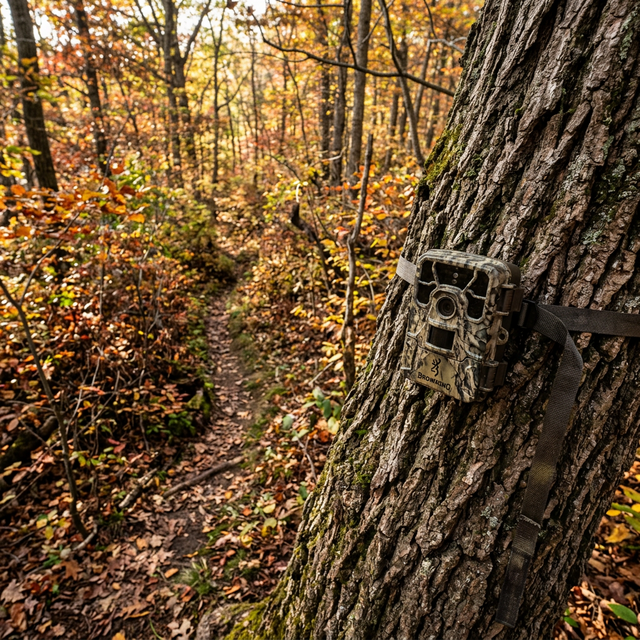
Trail Camera Placement: Advanced Tactical Strategies for the Rut
Rut cameras belong on scrapes, downwind doe bedding checks, and micro-funnels—not dead food plots. Placement tactics, cellular use, and scent-safe checks.
During the rut, September food patterns shatter. Mature bucks expand ranges to find receptive does, abandon predictable feeding schedules, and cruise through timber you never monitored in October. A camera glued to a tired clover plot will stack fawns and yearlings while cruising giants slip through funnels you never watched.
Rut camera work means relocating into communication hubs and micro-funnels—then staying out of them. The goal is not maximum deer photos. The goal is daylight intel on mature bucks without contaminating the stands you plan to hunt.
Why Field-Edge Cams Go Quiet for Target Bucks
Early-season beans and oaks still feed does. Bucks briefly visit those edges, then spend daylight hours scent-checking bedding, scrapes, and travel bottlenecks between doe groups. A buck photographed at a food plot at 2:00 a.m. tells you almost nothing about where to sit at legal light.
Leave one or two food cams for doe group intel if you want baseline herd data. Move your best units—especially cellular models—to:
- Community scrapes in cover, not roadside frustration scrapes
- Downwind edges of known doe bedding thickets
- Creek crossings and fence gaps on rut travel routes
- Saddles between doe pockets where terrain compresses movement
Phase context matters. Read hunting the pre-rut seeking phase for when bucks start expanding, and scrape hunting strategies for how mature bucks use scrape lines as communication networks. Camera placement should mirror where you would hunt—not where deer ate in September.
Pressure accelerates the shift. On heavily hunted properties, mature bucks may abandon field edges entirely by mid-November. Your rut cameras need to be in cover where those bucks feel safe enough to daylight, even briefly.
Community Scrapes as Camera Anchors
Look for large, maintained scrapes under active licking branches—often several feet of worked dirt, fresh pawing, and overhead branches chewed to stubs. These are community hubs, not tiny roadside frustration scrapes a young buck made once and abandoned.
Camera tips for scrape sets:
- Aim along the primary approach trail, not only straight at the licking branch
- Height roughly 3–4 feet, angled slightly downward to reduce blank-sky false triggers
- Clear a tiny lens window with minimal vegetation disturbance; do not prune a landing zone
- Prefer cellular upload so you are not walking the scrape every week
- Set 15–30 second delay on hot scrapes to avoid 400-photo raccoon nights
Bucks may hit scrapes primarily at night—and still reveal which wind direction and which corridor they favor when they do show daylight. Track wind direction on every timestamped photo. After two weeks, you should see a pattern: northwest wind mornings, southwest wind never, and so on.
Mock scrapes can anchor cameras along corridors you choose if legal in your state. Maintenance details: mock scrapes and communication hubs. Real scrapes outperform mocks on mature ground, but a maintained mock along a pinch point beats a random food-plot cam every time.
Downwind Doe Bedding Checks
Cruising bucks often swing 60–80 yards downwind of doe bedding rather than busting through the center of a thicket. That parallel scent-check trail is prime camera real estate because it catches bucks moving at a walk, nose into the wind, scanning for estrous does without committing to the bed itself.
How to set it:
- Map doe bedding thickets from summer and early fall sign—trails, beds, droppings clusters
- Mark prevailing November winds on your property map (not August breezes)
- Place cams on downwind fringe trails parallel to the bedding edge
- Hunt only when daylight photos and wind direction align on the same day
Overhanging a bed with weekly SD card checks is how you empty the thicket for the season. Does pattern intrusion faster than bucks in some cases, and spooked does take the buck intel with them. Use cellular trail cameras when budget allows on these sensitive sets.
Distance matters. Too close and your scent cone overlaps the bed on approach. Too far and you miss the parallel check trail entirely. Start at 75 yards downwind of the thicket center and adjust after the first week’s photos show travel angles.
Micro-Funnels and Barrier Crossings
Rut bucks maximize ground covered per calorie. Terrain does the funneling for you if you place cameras at the throat of each pinch instead of spread randomly across acres.
High-odds features:
- Single shallow creek ford on a steep-banked stream with no alternate crossing nearby
- Break in a high fence, cliff line, or property boundary deer cannot jump easily
- Wetland choke between two timber blocks forcing a single trail
- Powerline or logging-road low spot where deer dip under cover to cross open ground
- Bench transitions where ridge runners drop into creek bottoms
Hang cams covering the throat of the pinch—where two trails merge into one—not 200 yards up either branch where you only catch partial traffic. Terrain primer: whitetail pinch points and funnels.
On public land, prioritize funnels away from obvious parking access. The best pinch on the map is worthless if every hunter walks through it at dawn. E-scouting helps identify overlooked crossings: e-scouting whitetails.
Camera Settings for Rut Chaos
Rut traffic can burn batteries and fill SD cards in a week if settings are wrong. Dial in before you hang.
| Setting | Suggestion | Why |
|---|---|---|
| Capture mode | Photo or short photo+video | Balances detail with battery and cell data limits |
| Delay | 15–30 seconds on hot scrapes | Reduces duplicate piles of the same buck |
| Flash | Low-glow or no-glow preferred | Less spook on pressured mature bucks |
| Time stamp | On always | Critical for wind and time-of-day correlation |
| Multi-shot | 2–3 bursts | Catches trailing bucks in a string |
| Sensitivity | Medium-high on funnel trails | Low sensitivity misses fast-walking cruisers |
Name cams by feature (“North saddle scrape”, “East bedding fringe”) not cute nicknames. You will thank yourself when comparing wind days across three properties in one app.
Data habits determine whether photos become hunts or clutter: managing trail camera data. Log wind direction, buck ID, and time clusters in a spreadsheet or notebook—not just in your head.
Scent Control When You Must Touch a Cam
Walking a pristine funnel on November 5 to “just check the card” can ruin the stand you planned for November 6. Mature bucks pattern human intrusion on travel routes within days on pressured ground.
Rules for any camera service visit:
- Prefer cellular upload and never touch the set during prime rut weeks if avoidable
- If SD only: rubber gloves, scent control on housing exterior, enter via water or non-deer edges when possible
- Service cams midday with crosswinds, not dawn or dusk prime movement windows
- Bunch maintenance on non-prime days after fronts—not daily tinkering because you are bored
- Never spray scent eliminator directly on the camera lens or sensor window
Treat the card, camera housing, and your boots like contamination sources for your best rut trap. One sloppy check can shift a buck’s travel 100 yards into cover you cannot see from any stand.
If you must swap batteries, do it fast: approach from the downwind side, swap, leave. No standing at the scrape adjusting angle for ten minutes while your scent pools.
From Photo to Sit: Discipline
A noon photo of a giant is not an automatic evening sit if wind is wrong. Reactive hunting burns stands; pattern-based hunting builds seasons.
Build these patterns from your rut cam data:
- Daylight frequency by wind direction (not just “he showed up”)
- Time clusters (e.g., 9–11 a.m. seeking windows vs pure night feeders)
- Direction of travel past the cam (inbound to bedding vs outbound to scrape line)
- Days between appearances (some bucks cruise on 48–72 hour loops)
Hunt the third or fourth confirming daylight event with perfect wind—not the first adrenaline ping—unless season timing forces a now-or-never move. One daylight photo on the wrong wind is intel; three daylight photos on the same wind over two weeks is a plan.
When a target buck goes nocturnal, resist the urge to hunt the scrape at night adjacent stands. Shift cameras closer to bedding-to-funnel daylight routes and wait for cold fronts that trigger seeking movement. Night-only data does not justify bad-wind daylight sits.
Frequently Asked Questions
Should I pull all food-plot cameras in November? Not necessarily. Keep one or two minimal doe intel cams for herd context; move most units to scrapes and funnels where rut traffic concentrates.
How high should rut cameras hang? Often 3–4 feet for body shots on scrape approaches; higher (6–8+ feet) aimed down can reduce theft and some spooking on public land—test your model’s detection zone at each height.
Are mock scrapes good camera sites? Yes if legal and maintained through the rut. They concentrate checks along a corridor you choose rather than waiting for random natural sign.
How many cams do I need? Three well-placed cellular cams beat ten random SD cams you never service cleanly. Quality of placement and analysis beats camera count.
What if I only get night pictures of my target buck? Shift cams closer to bedding-to-funnel daylight routes, or wait for cold fronts and seeking peak—do not invent bad-wind daylight sits from night data alone.
Can I face cams north to avoid sun glare? Northish aiming helps with sun flare, but trail angle matters more. Prioritize covering the actual deer path even if you need a hood or slight downward tilt to manage glare.
Rut cameras succeed when they watch how bucks search for does—not where does ate in September. Move to scrapes and pinches, stay out of the scent cone, and let patterns—not single pings—pick your sit.
Turn your trail camera data into scouting intelligence
Wildsnap AI filters noise, recognizes species, and surfaces activity patterns from your own photos.
No credit card
Wildsnap • Open beta
Turn your trail camera data into scouting intelligence
Wildsnap AI filters noise, recognizes species, and surfaces activity patterns from your own photos.
No credit card