
Trail Camera Tech: Maximizing Battery Life and Solar Setups
Maximize trail camera battery life with lithium AAs, solar panels, and batched uploads so you check cameras less and spook fewer mature bucks.
The biggest downside of modern cellular trail cameras is power. They’re searching for signal, compressing images, and pushing files to your phone. A set of cheap alkalines can be dead in 2–4 weeks on a busy cell cam. Every battery walk dumps scent and educates deer.
The fix is a power system: better batteries, solar where it makes sense, and settings that stop wasting watts.
Why Do Cellular Cameras Kill Batteries So Fast?
Power draw comes from three places:
- Network radio — connecting and uploading
- Night illumination — IR or no-glow LEDs
- CPU work — writing video, high-res bursts, AI onboard features
A cam that uploads instantly on every trigger can burn more power overnight than an SD-only cam uses in a month. Cold multiplies the problem: below 20°F, alkalines lose capacity fast.
If you’re comparing cell vs. traditional workflows, see Cellular Trail Cameras for Deer Hunting.
Are Lithium Batteries Worth It for Trail Cameras?
Yes—for most cellular and cold-weather setups.
Lithiums cost roughly 2× alkalines, but they typically win on total cost per season:
| Factor | Alkaline | Lithium |
|---|---|---|
| Cold performance | Poor below freezing | Strong |
| Voltage curve | Gradual fade | Holds high until near end |
| Leak risk | Higher | Lower |
| Weight | Heavier | Lighter |
| Best use | Low-traffic SD cams in mild weather | Cell cams, winter, remote sets |
Practical rule:
- Cellular + winter: lithium only
- Busy scrape cams: lithium
- Quiet inventory SD cam in September heat: alkalines can be fine
Buy name-brand lithium AAs sized for your tray (usually 8–12 cells). Mixing old/new or alkaline/lithium in one tray is asking for early failure.
How Do You Set Up a Solar Panel Without False Triggers?
Solar is the closest thing to “set and forget,” but placement matters.
Core setup:
- Mount the camera in shade when possible—direct sun on the PIR sensor causes heat false triggers.
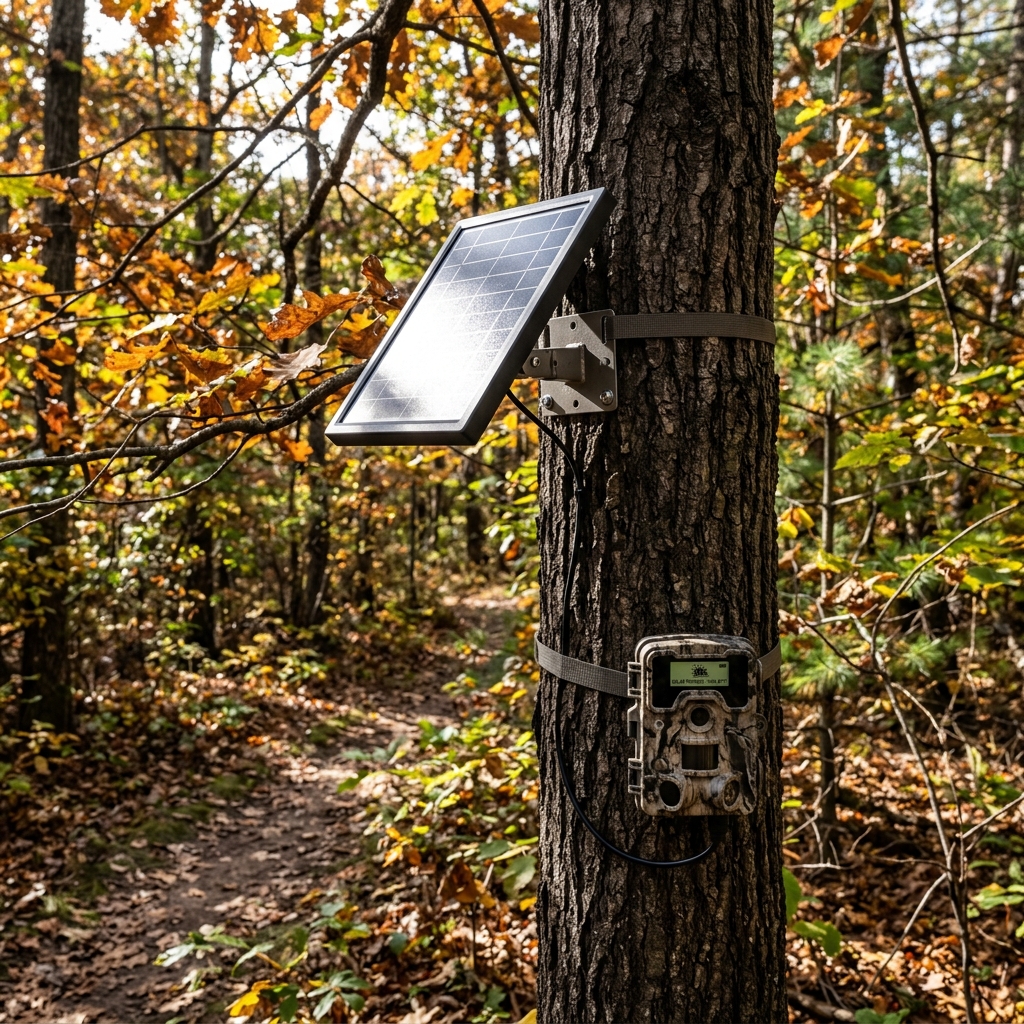
- Place the panel in a sun window that gets 4–6 hours of direct light (south-facing in most of the U.S.).
- Use the extension cable to separate cam and panel by 6–15 feet if needed.
- Aim the panel steep enough to shed leaves and snow (often 30–45°).
- Secure cable with staples or conduit so squirrels and weed whackers don’t cut it.
Battery pairing: Many solar kits work best with NiMH rechargeables or the manufacturer’s pack. Confirm compatibility—some solar controllers dislike primary lithium chemistry.
Check connections when you pull cards. Corroded barrel plugs kill more “dead cams” than empty cells.
Which Camera Settings Save the Most Power?
Hardware helps; settings decide.
Highest-impact changes:
- Upload schedule: Switch from instant transfer to 2–4 batch uploads per day (e.g., 10 a.m. and 7 p.m.).
- Photo over video: 1080p/4K video is a battery hog. Use stills for long soaks; video only on short-term hunt cams.
- Burst length: 1–2 photos per trigger beats 5–8.
- Quiet period / delay: 15–60 seconds on mineral sites cuts raccoon spam.
- Hybrid IR mode: If available, balance glow vs. range; max IR power drains packs.
- Signal check frequency: Longer intervals between network wake-ups save life in weak coverage.
Weak cell signal is a silent killer—cams retry uploads. If bars are marginal, move 20–40 yards to better coverage or raise the antenna. Battery life often doubles with one bar of improvement.
How Long Should Batteries Last in Real Conditions?
Ballpark expectations for a typical cellular cam (8–12 AA):
- Alkaline, instant upload, busy trail: 2–4 weeks
- Lithium, batched upload, moderate traffic: 2–4 months
- Lithium + solar, batched upload: season-long is realistic if sun is consistent
- SD-only cam, lithium, photo mode: 4–8+ months
Night-heavy sites with constant raccoons will always underperform. Fix the site (height, angle, delay) before blaming batteries. For reducing intrusion overall, combine power upgrades with smarter review habits in Managing Trail Camera Data.
What’s the Best Maintenance Schedule for Power Gear?
Even “maintenance-free” setups need light checks:
- Late summer: Fresh lithiums or topped solar packs before velvet peel
- Pre-rut: Confirm upload settings and solar cable integrity
- After first hard freeze: Check panel angle for leaf shade and ice
- Post-season: Remove batteries from cams in storage to prevent corrosion
Carry a spare loaded battery tray in a sealed bag. A 90-second tray swap beats fumbling 12 loose cells in the dark.
How Does Power Management Help You Kill More Deer?
Every unnecessary visit is a scent event. Extending battery life from 3 weeks to 3 months can cut intrusion by 70%+ on a remote cam line.
That matters most:
- Near bedding cover
- On public land pinch points
- During daylight patterning windows in October–November
Pair long soaks with disciplined placement from Trail Camera Placement During the Rut and keep cards/security in mind via Securing Trail Cameras on Public Land.
Wildsnap users often lean on longer soaks because AI sorting makes big dumps usable—species recognition beats scrolling 4,000 raccoons—but the biology still rewards fewer walks into the setup.
How Do You Troubleshoot a Camera That “Dies” Early?
Work the checklist before you blame the brand:
- Open the tray: Look for one corroded or reverse-oriented cell. A single bad AA can drag the whole pack down.
- Meter the pack: If you have a battery tester, cull anything under spec instead of mixing weak cells with fresh lithiums.
- Check the solar barrel plug: Green corrosion or a loose fit equals phantom drain or zero charge.
- Review settings history: Did a firmware update reset you to instant upload + video?
- Walk for signal: Compare upload success 30 yards left/right or 6 feet higher on the trunk.
- Inspect the PIR window: Dirt and webs cause repeated triggers that burn IR and radio time.
Keep a field log in your phone: date, % battery (if reported), settings profile, and site name. Patterns like “Creek cam dies every full moon week” usually mean raccoon storms or weak signal retries—not defective lithiums.
Should You Standardize One Power Setup Across All Cams?
Yes, as much as possible. Mixing alkaline trays, NiMH solar packs, and lithium primaries across a dozen cameras creates maintenance chaos in the dark.
A clean standard for most hunters:
- Cellular hunt cams: lithium AA + optional solar
- Remote SD inventory cams: lithium AA, photo mode, long delay
- One spare pre-loaded tray per camera model in the truck tote
- Label trays with install date in paint pen
Standardization also helps when a buddy helps pull cards—they aren’t guessing which cam takes which chemistry.
How Do Weather and Trigger Volume Affect Power Math?
Battery life estimates assume average traffic. Reality is site-specific.
A mineral lick in July with nightly raccoon parties can triple night IR use versus a quiet saddle scrape in early September. Likewise, a north-facing timber cam in December may never see solar gain, while a field-edge cam on the same property charges daily.
Build power plans per site class:
- Chaos sites (minerals, waterholes): lithium + aggressive delay (30–60 sec) + photos only
- Hunt sites (scrapes, funnels): lithium + solar if sun exists + batched uploads
- Sanctuary inventory: SD card, lithium, long soak, minimal visits
After windstorms, check that panels still face south and cables were not yanked. A panel face-down in leaves is a dead cam wearing a costume. Five minutes of post-storm maintenance saves a two-week blackout during the seeking phase.
Frequently Asked Questions
Do solar panels work under tree canopy?
Poorly. Dappled light rarely charges enough for cellular uploads. Put the panel in a sun pocket and the camera in shade when you can separate them.
Can I use rechargeable NiMH without solar?
Yes for SD cams and some cell cams, but capacity and cold performance vary. Keep a charger schedule; don’t expect lithium-like winter stamina.
Why is my camera dying in a week even on lithium?
Usually weak signal retries, instant uploads, video mode, or a bad cell in the tray. Test signal strength and switch to batched photos first.
Should I remove solar panels in winter?
Not if they’re producing. Steepen the angle for low sun and wipe snow. If the panel is buried for weeks, run lithium primary packs instead.
Are external battery banks worth it?
For multi-cam hubs or extreme cold, yes. For a single remote cam, lithium AAs plus solar is usually simpler and quieter to service.
Lithiums, sun where it shines, and fewer uploads—that’s the whole game. Stretch power, cut scent, and let the camera work while you stay out of the timber.
Turn your trail camera data into scouting intelligence
Wildsnap AI filters noise, recognizes species, and surfaces activity patterns from your own photos.
No credit card
Wildsnap • Open beta
Turn your trail camera data into scouting intelligence
Wildsnap AI filters noise, recognizes species, and surfaces activity patterns from your own photos.
No credit card