
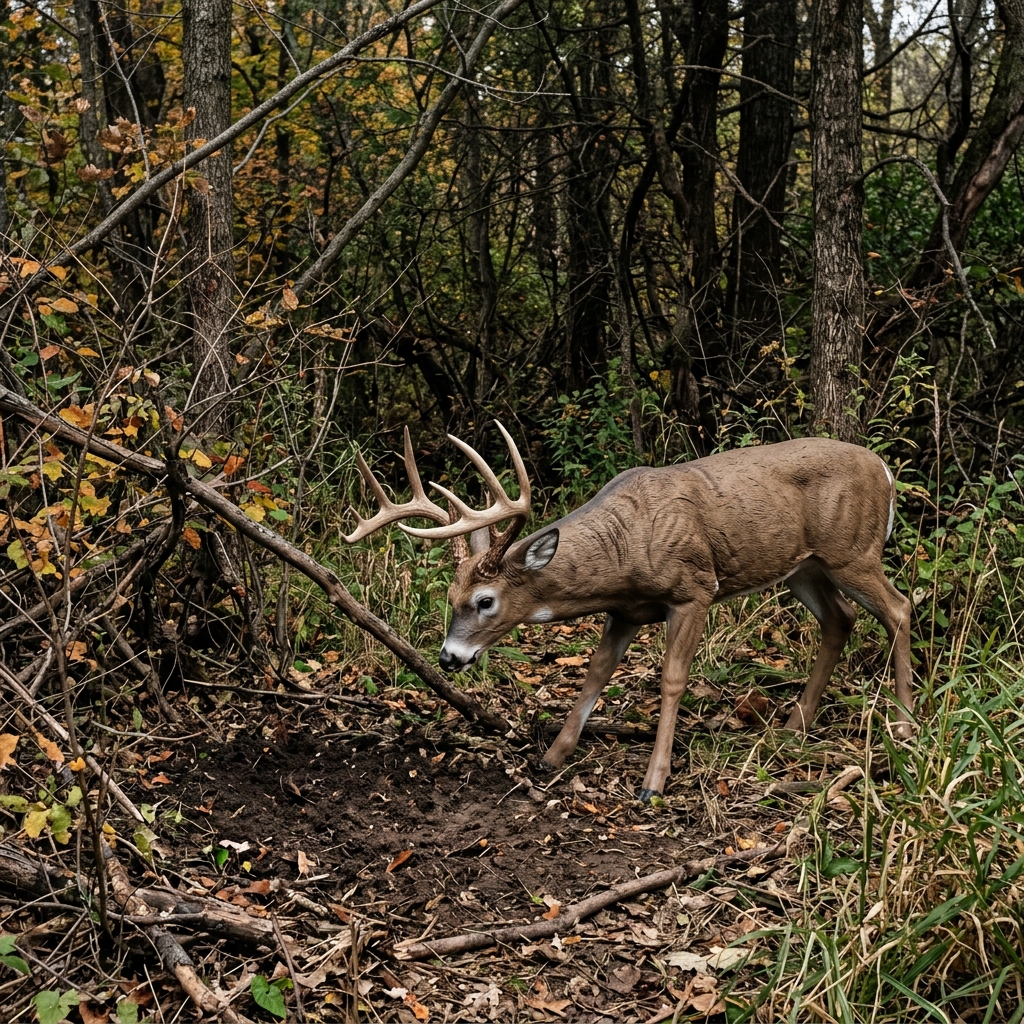
Using Decoys During the Pre-Rut: Aggressive Posturing
Use buck decoys in the pre-rut to trigger fights. Learn aggressive posture, the 20-yard rule, calling combos, and safety tips that pull mature bucks.
The pre-rut is the boiling point of whitetail season. Dominant bucks aren’t only feeding—they’re patrolling for rivals and checking doe groups with a chip on their shoulder. That ego window is peak time for aggressive posturing with a 3D buck decoy: a visual challenge that short-circuits caution and pulls a mature deer into bow range.
Used wrong, a decoy educates every buck on the farm. Used right, it’s the difference between watching a cruiser at 80 yards and hearing hoofbeats at 20.
Why Does the Pre-Rut Favor Aggressive Decoys?
Timing beats talent.
Prime decoy window (generalized Midwest timing—shift by region):
- Late October into early November seeking phase
- Cool mornings, rising scrape use, rub lines fresh
- Bucks still on relatively predictable circuits before full lockdown
Weaker windows:
- Early season—bucks avoid fights
- Peak lockdown—target bucks may be buried with does
- Post-rut—ego drops; food rules again
Anchor your calendar with Hunting the Pre-Rut Seeking Phase and broader tactics in Decoying Whitetails.
What Decoy Posture Triggers a Fight Response?
Mature bucks aren’t looking for a friend. They’re looking for a winnable fight.
Aggressive visual cues:
- Ears pinned or laid back
- Head low to mid, angled forward
- Tail set that reads tension (many decoys use a slight lift)
Size matters—smaller often wins: Field experience shows a 2.5-year-old body / modest rack decoy draws more charges than a heavyweight “monster” decoy. A monarch will punish an interloper he thinks he can thrash; he may ghost a decoy that looks like a fair fight with a legend.
Finish the story with scent: light buck urine or tarsal near the decoy. Details in Demystifying Deer Lures.
What Is the 20-Yard Rule for Decoy Placement?
Never plant a decoy in the middle of a 10-acre field and hope. Control the approach.
Setup geometry:
- Place the decoy 15–25 yards from your tree or blind.
- Face the decoy toward your position (or slightly quartering toward you).
- Expect the real buck to approach face-to-face.
- When he squares up to the decoy, his focus locks on plastic—and his vitals often open for a quartering-away or broadside shot.
Add a realistic touch: set the decoy on a slight rise or path intersection where a buck expects to see rivals. Pair with a mock scrape 5–10 yards away if the site supports it (How to Create a Mock Rub Line).
How Should You Combine Calling With a Decoy?
Visual first, audio second.
Effective sequence:
- Spot a cruising buck at 100–200 yards.
- Soft contact grunts to get his eyes up.
- If he looks but doesn’t commit, add a short sparring sequence—20–45 seconds, not a three-minute concert.
- Stop calling when he commits; let the decoy finish the sale.
Over-calling with a visible decoy can look like a trap. Silence after commitment is a weapon.
Where Should You Hunt a Decy—Stand Height and Cover?
Safety and realism:
- Prefer elevated stands 15+ feet when using aggressive buck decoys
- Quality ground blinds work if you’re fully concealed and the decoy is not between you and an escape route that dumps a charging buck into your lap
- Brush the decoy lightly so it isn’t a shiny plastic beacon—mud on legs, vegetation at the base
Wind: Keep your scent out of the approach lane the buck will use. A decoy can’t fix a bad wind.
For stand access without blowing the setup, review What to Do If You Spook a Deer and scent basics in Whitetail Scent Control.
What Are the Real Risks of Aggressive Decoying?
Testosterone is not a joke.
- Bucks can shatter decoys with antlers and hooves
- Confused, fired-up bucks may investigate anything nearby—including you on the ground
- Other hunters may shoot at decoys on public land—use blaze markers where legal/ethical and know your backdrop
Rules:
- Never doze behind an aggressive decoy on open ground without a hard barrier.
- Unload/secure weapons when placing or retrieving the decoy.
- Wear gloves; control your scent on the plastic.
- On public land, consider the risk of another hunter mistaking motion near your decoy.
How Do You Transport and Store Decoys Without Spooking Deer?
- Haul in a bag or decoy sled; don’t bounce plastic off every tree at dawn
- Set up in dark or well before legal light when possible
- Spray or wipe foreign odors; store away from gasoline cans
- After the hunt, pull the decoy if leaving it overnight invites theft or educates night movers on a static fake
If cameras show your decoy being night-checked then avoided by day, rest the tactic for a week.
How Do You Brush and Stake a Decoy So It Looks Alive?
Plastic shines. Motion sells.
Realism upgrades:
- Stake firmly—wobble looks wrong unless wind is natural and subtle.
- Add a motion stake or feather/tail strip that twitches in light breeze.
- Mud the legs and lower chest; knock off warehouse gloss.
- Place near a real scrape, shadow line, or terrain crease—not in barren center stage.
- Keep tall grass from swallowing the decoy’s brisket; bucks need to silhouette it at distance.
If a buck approaches then hooks downwind, your scent—not the decoy’s pose—failed. Reassess wind before blaming the product.
Doe Decoys, Breeding Pairs, and When to Switch Tactics
As true breeding pressure rises, some hunters flip to a doe decoy or doe-plus-small-buck pair to suggest a tending opportunity. That can pull cruisers looking for an unguarded doe more than a fight.
Guidelines:
- Pre-rut seeking: aggressive buck decoy first
- Peak rut: doe or breeding-pair setups near doe bedding edges
- Pressured land: less decoying overall; shorter exposures
Never leave a decoy out for days on public land where other hunters may shoot it—or you while tending it. Set, hunt, pull.
What Camera Intel Makes a Decoy Sit Worth the Hassle?
Decoys are heavy and awkward. Earn the carry.
Good green lights:
- Daylight cruising bucks on a field edge within 7 days
- Multiple bucks sharing a scrape line (competition exists)
- Cold front during seeking phase
- Wind that lets you sit with the decoy’s approach lane clean
Red lights:
- Heat wave with night-only photos
- Single random midnight buck
- Public-land Saturday circus within sight of the setup
- No ability to get elevated or fully concealed
If Wildsnap or your manual logs show three daylight cruisers using the same 80-yard corridor, that corridor is decoy water. If the data is weak, leave the plastic home and hunt the trail with quieter gear.
How Do You Avoid Educating the Whole Property?
Limit decoy frequency. Two to four carefully chosen sits in the prime seeking window beat daily plastic in the same field. Rotate fields or edges, pull the decoy when the sit ends, and give a busted buck a long rest.
If a mature buck circles downwind, blows, and leaves, that decoy site may be burned for him personally even if younger bucks still charge it. Hunt him elsewhere for a week. Keep a compact repair kit—cable ties, spare stake, and duct tape—because a charged buck can leave your decoy in pieces before the shot opportunity settles. Practice the entire decoy set at home once so stake order, scent wipe, and bagging routine take under five quiet minutes in the dark.
Frequently Asked Questions
Should I use a doe decoy instead during pre-rut?
Doe decoys can work, especially later as breeding nears, but aggressive buck decoys shine in the ego-driven seeking phase. Match decoy sex to the response you want: fight vs. breed.
How far away will a buck respond to a decoy?
Eyesight and terrain rule. Open CRP edges may draw bucks from 150–300+ yards. Thick timber responses are often inside 80 yards.
Can I decoy in the morning and evening?
Both. Mornings near staging-to-bed routes and evenings on scrapes/doe travel can produce. Avoid decoying inside bedding sanctuaries—you’ll bump more than you’ll kill.
What if a buck hangs up at 60 yards?
Add a single grunt or soft snort-wheeze only if legal and you’re confident. Otherwise, wait. Some bucks need five minutes to commit.
Is decoying worth it on heavily pressured public land?
Sometimes—especially midweek and in low-visibility setups. High-pressure tracts educate fast; use sparingly and move sites.
Face the decoy toward you, keep it 20 yards out, call sparingly, and stay elevated. Pre-rut ego is real—give it a rival worth charging.
Confirm seasonal patterns from your cameras
Find patterns and time your hunts right when your camera history tells you what happened — and when.
No credit card
Wildsnap • Open beta
Confirm seasonal patterns from your cameras
Find patterns and time your hunts right when your camera history tells you what happened — and when.
No credit card