
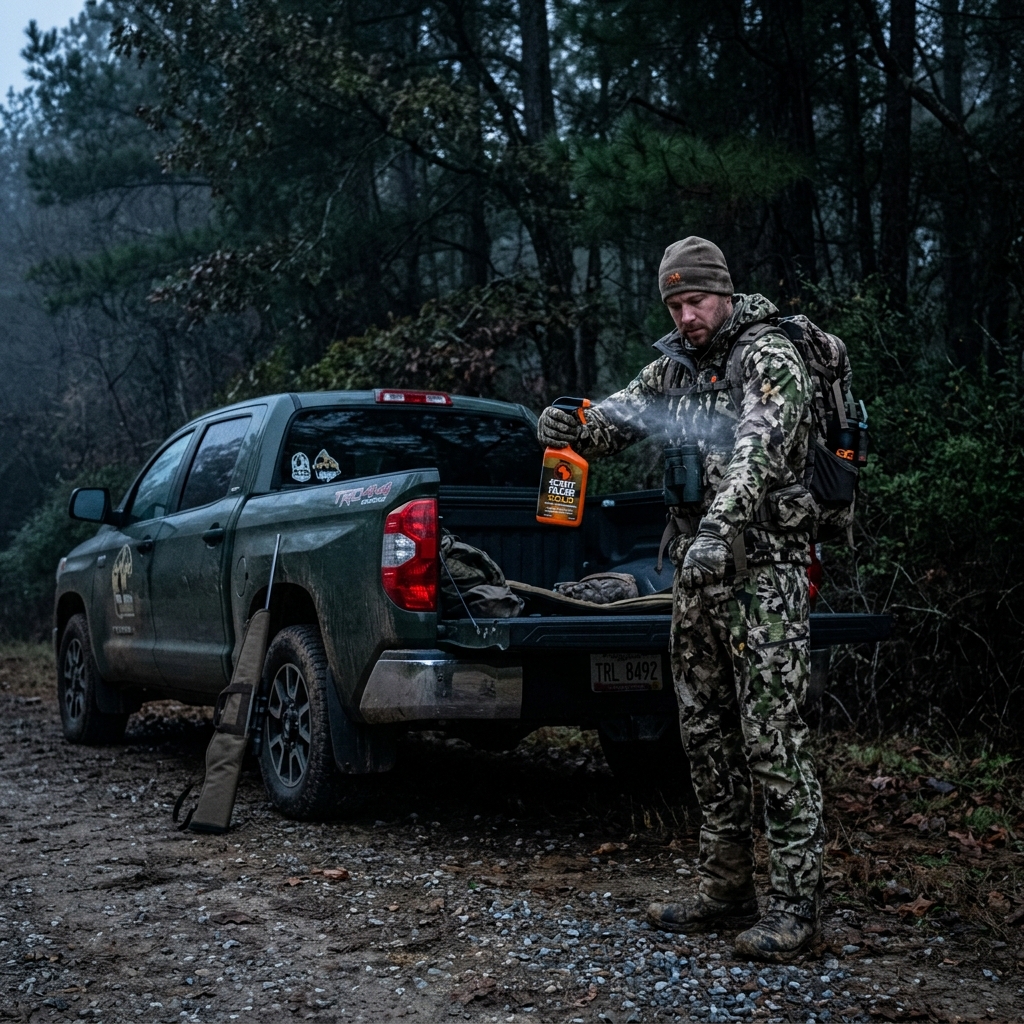
The Ultimate Guide to Whitetail Scent Control: Defeating the Ultimate Defense
Practical whitetail scent control: deer nose biology, wind and thermals, clothing systems, ozone limits, and entry plans that actually work.
A mature buck trusts his nose first. Movement and sound matter, but scent is the defense that ends hunts you never knew you had. Scent control is not one spray bottle—it is a system: hygiene, clothing storage, entry routes, and wind selection.
This guide covers how far deer can smell you, what products realistically do, why wind still rules, and a field checklist you can run every sit.
How Strong Is a Deer’s Nose?
Whitetails have on the order of hundreds of millions of olfactory receptors—far beyond human capability. In practical hunting terms, under the right humidity, wind, and terrain, detection at hundreds of yards downwind is normal. Your truck exhaust, breakfast grease, and laundry fragrance travel with you.
You will not become scentless. You are trying to shrink and aim your scent cone so deer do not intersect it before the shot.
For related sensory context, see understanding whitetail deer vision and whitetail hearing distance.
The Hierarchy That Actually Matters
- Wind and thermal direction relative to expected deer
- Where you walk (ground scent on trails deer use)
- How often you intrude (camera checks, scouting)
- Clothing cleanliness and storage
- Optional layers (ozone chambers, sprays, cover scents)
Flip that list and you will buy gear while still hunting downwind of the bed.
Playing Wind and Thermals
Never set up so the forecast wind blows your scent into the cover you expect deer to use. Prefer “off-wind” angles where your cone dumps into a barrier: open field deer will not enter, a river, a cliff, or a noisy road buffer.
Morning thermals often rise as slopes warm—scent can pull uphill.
Evening thermals fall—scent pools into bottoms and creek channels.
River bottoms are notorious swirl zones; read hunting river bottoms and creek crossings and understanding thermals before you blame “bad luck.”
Carry wind-checker powder and use it every 15–20 minutes. Forecasts miss micro-eddies.
Clothing System Without the Mythology
Wash. Use scent-free detergent; skip fabric softener. Hot rinse if your machine allows. Some hunters do a final wipe-down with scent-free soap on high-touch areas.
Dry carefully. Avoid dryer sheets. Outdoor drying in clean air helps if pollen/dust is not extreme.
Store sealed. Plastic totes or scent-control bags beat hanging camo in a garage full of oil and gas. Change into hunting layers at the truck when practical.
Boots. Rubber or easily cleaned boots help reduce farmyard and truck-cab odors on your walk-in. Brush mud off before you hit bedding-adjacent trails.
Layer in the field. Sweat is scent. Dress light for the hike, add insulation when settled.
Ozone, Sprays, and Cover Scents: Honest Limits
Ozone in a sealed chamber or tote can reduce residual odor on fabrics. That is the strongest use case.
Ozone in an open stand may shrink a scent cone slightly but will not defeat a deer that walks through your downwind stream in a swirl. Treat it as a layer, not a force field.
Sprays. Useful on boots, stands, and blinds before sits. They do not erase a bad wind.
Cover scents. Earth or gland scents can help mask at the margins; they will not fool a buck that hits pure human plume. Application that reeks of human hands on a decoy is worse than nothing—see decoying whitetails.
Independent habitat and deer biology reading from groups like the National Deer Association is worth your time; marketing brochures are not peer review.
Ground Scent and Intrusion Control
Every walk lays a timeline of human presence. During season:
- Use the same disciplined entry each sit when it is the cleanest option
- Avoid crossing primary trails upwind of beds
- Reduce daylight camera checks—remote cams help
- Drag a deer out on routes that do not educate the best corner of the farm every time
Managing cameras thoughtfully pairs with managing trail camera data.
Stand-Site Scent Engineering
When hanging stands, think where scent goes for the winds you will actually hunt—not the wind you wish for. Multiple stands for opposite winds beat one “favorite tree” hunted on marginal days.
On small properties, protect sanctuaries so deer do not smell you weekly in their bedroom—whitetail sanctuaries on small parcels.
Pre-Hunt Scent Checklist
- Check wind + thermal forecast vs stand purpose
- Confirm entry will not paint the downwind approach
- Dress in clean layers; soft-case dirty drive clothes
- Spray boots and stand metal if part of your system
- Pack wind checker
- Abort and switch stands if powder shows a swirl into the bedding
Common Scent-Control Mistakes
- Hunting a sacred spot on a wrong wind because “it’s due”
- Gas-station coffee run in hunting clothes
- Storing camo with the outboard motor
- Checking cameras through the bedding thicket
- Trusting ozone while sitting directly upwind of a trail
- Ignoring evening thermal dump into a creek crossing
Entry Timing and the “Scent Timeline”
Deer do not only smell you while you sit. They smell where you walked hours earlier. A 4:30 a.m. march across a frost-covered scrapeline leaves a timeline a buck can read on his evening loop. When possible, enter from the back side of the farm, stay off primary trails, and accept a longer hike for a cleaner cone.
Evening exits educate as much as entries. Climbing down into a bean field full of deer paints panic across the best food source. Wait for full dark, use a covered ditch exit, or have a partner pick you up on a downwind road edge when logistics allow. On public land, plan the “ugly” exit that other hunters skip.
Midday intrusion for camera cards is often the silent season-killer. If you must check a card, do it after a rain, on a wind that blows your walk into barren ground, and as rarely as possible. Cellular cameras exist for this reason.
Gear Odor Sources People Forget
Bow cases that live in truck beds collect fuel and rubber smells. Release aids pick up gun-case foam odor. Backpacks absorb campfire smoke. Seat cushions in ATVs are scent sponges. Air out and wipe high-contact gear, not only camo jackets. Keep a dedicated “hunt tote” that never rides under the chainsaw.
Food on stand matters. Greasy sausage biscuits perfume a tree. Choose low-odor snacks and seal wrappers. Avoid scented hand warmers against your nose all morning if you then adjust a peep with those gloves.
Boots deserve their own protocol: store them outside the living room, clean mud that came from the cattle lot, and do not walk through the gas-station bathroom in hunting socks you will wear into the stand.
Building a Two-Stand Wind System
Pick primary stands for your two most common seasonal winds. Hunt only the stand that matches today’s powder test—even if the “better” deer sign sits on the wrong wind. Burning a sanctuary fringe on a swirl day to force action is how scent-control shoppers still fail.
On hill country, keep a third option for thermal-driven mornings vs evenings. The tree that works at 7 a.m. may be poison at 6 p.m. when air falls. Write it on a notecard taped in the truck: Stand A north wind evening / Stand B south wind morning / Stand C east wind thermal rise.
Blind and Stand Materials
New carpet, fresh pressure-treated lumber, and plastic totes all outgas. Build and air out structures early. In existing stands, scrape away urine-soaked leaves at the base from prior seasons and keep a clean dry pad. Your scent cone starts at the ground you occupy, not only at your armpits.
Metal stands can hold odd industrial smells from shipping grease—wipe them down before the first hang. Small details compound. Hunters who obsess over detergent but sit in a gasoline-scented ATV seat are solving the wrong half of the equation.
Rainy-Day Myths
Rain does not make you scent-free. It can quiet leaves and wash some ground scent, but your body plume still rides the wind. Use rain as a noise advantage and a camera-check opportunity—not as permission to sit downwind of a bed. Wet clothing can even hold odor oddly as it warms in a blind. Keep playing directionality first.
Frequently Asked Questions
How far can a deer smell a hunter? Often hundreds of yards downwind in good conditions; sometimes less in swirling, broken wind—but assume far and plan accordingly.
Do scent-free soaps matter? They help reduce fragrance load. They do not replace wind.
Is it worth washing after every hunt? Wash when clothes are sweaty or contaminated. Rotating sealed sets through a week can work if storage is clean.
Should I smoke or use nicotine pouches on stand? If you can smell it, a deer can. Save it for the truck after the sit.
Do rain and humidity help or hurt? Humidity can keep scent molecules hanging and washable. Rain can quiet leaves but may improve odor transmission. Still play directionality.
Can I hunt swirling winds at all? Hunt terrain that dumps scent into barriers, shorten sits, or wait. Forcing swirl hunts near beds burns spots.
Shrink the cone, aim the cone, and walk like your boot prints are neon. That is scent control that kills deer—everything else is optional equipment around that core.
Wildsnap • Open beta
Join Wildsnap and try the beta
In the open beta, you turn trail-cam data into actionable insights—free, fast, and simple.
No credit card