
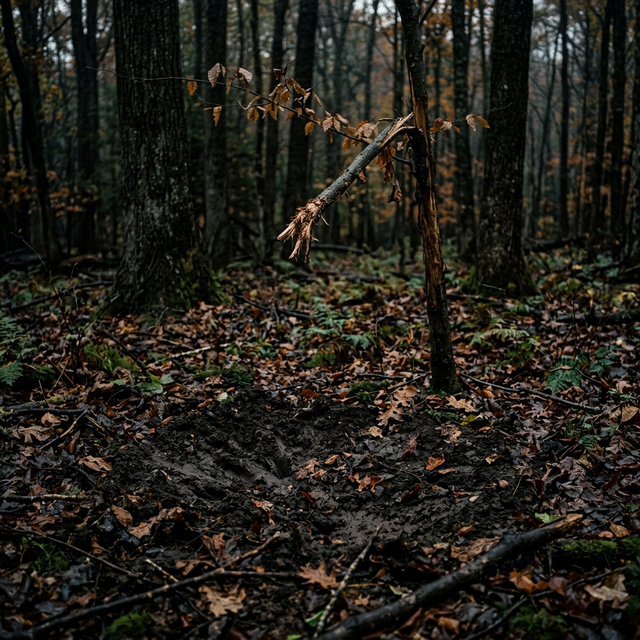
Scrape Hunting Strategies: When and Where to Hang Your Trail Cameras
Not all scrapes are equal. Learn community vs. boundary scrapes, licking-branch camera angles, scent hygiene, and when scrape stands beat food-edge sits.
Finding a scrape the size of a tractor tire is an adrenaline rush. Blindly hunting the dirt is a beginner trap. Treat the scrape as a woodland post office—a communication hub—not a final destination.
Lethal scrape hunting depends on identifying true primary community scrapes, focusing on the overhead licking branch, and monitoring the site without soaking it in human odor.
Boundary Scrapes vs. Community Scrapes
Not every pawed circle deserves a stand.
Boundary scrapes appear along field edges and travel lines during the October pre-rut. They are often random, revisited irregularly, and abandoned when food or wind shifts.
Community scrapes are established, year-round fixtures deeper in timber or along major interior trails. Multiple deer—does, fawns, and bucks of several age classes—use them to exchange scent. These hubs produce the best camera intel and the most repeatable daylight encounters.
Quick field test:
- Fresh licking branch wear at nose-to-chest height
- Multiple track sizes in the dirt
- Soft, damp soil kept open for weeks
- Location at a trail junction, saddle, or timber edge pinch
Hunt the hubs. Inventory the boundary scrapes and move on.
Anatomy of the Licking Branch
The overhead branch is the most important structural element of any scrape. Deer deposit pheromones from orbital and forehead glands onto a low horizontal limb—often oak, beech, or maple—directly above the pawed earth.
Typical specs:
- Branch height: 4–5 feet (nose-to-chest on a mature deer)
- Soil cleared in a circle roughly 2–4 feet across on active hubs
- Approach trails entering from cover, not always from open fields
If there is no licking branch, the scrape is incomplete. Bucks may still paw dirt, but communication value—and repeat visits—drop hard.
For creating and maintaining communication sites, pair this guide with mock scrapes as communication hubs.
When Scrapes Matter Most in the Season
Scrape activity is not equal across October–December.
| Period | What you see | Hunting implication |
|---|---|---|
| Early–mid October | New scrapes open, mostly nocturnal | Inventory with cameras; hunt food |
| Late October–early November | Community hubs heat up | Best scrape-stand window |
| Peak rut | Bucks may ignore scrapes while locked | Hunt doe bedding more than dirt |
| Post-rut / second rut | Secondary freshening possible | Recheck primary hubs |
Camera history beats calendar folklore. If your hub goes cold for 10 days in early November, shift to cruising corridors between doe bedding areas.
Camera Placement That Captures Antlers, Not Dirt
Do not aim the lens only at the pawed earth.
Elevation: mount the camera 6–7 feet high and angle down at the licking branch. You capture headgear and face while the buck works the branch—better age-class and ID photos.
Back-viewing: when possible, point the camera down the primary trail leading into the scrape. Many mature bucks scent-check from 15–25 yards downwind in cover and never step onto the open dirt.
Distance: set 10–15 yards from the hub to reduce blank frames and keep the full body in frame.
Cellular cameras excel here because you can soak a hub for weeks without weekly scent dumps. See trail camera placement during the rut and cellular trail cameras for deer hunting.
Hunting the Scrape Without Educating It
Daylight scrape hunting works when you treat the hub like a sanctuary edge, not a campsite.
Rules that keep hubs alive:
- Approach from downwind cover; never walk the scrape trail
- Hunt only matching winds that blow scent off the approach trails
- Limit sits to high-odds windows (cold front, major scrape freshening, pre-rut cruising)
- Leave if you bump a mature buck at the hub—rest it 5–7 days
Stand 20–40 yards off the scrape on the downwind side covering the scent-check trail. The buck you want often never reaches the dirt while you are there—and that is fine.
Mock Scrapes and Scent Application Hygiene
Mock scrapes can concentrate activity when placed on existing travel with a solid licking branch candidate. They fail when soaked in human odor.
Odor protocol:
- Never touch the licking branch or pawed earth with bare hands
- Use a clean “scrape stick” from local woods to clear leaves
- Wear clean rubber gloves when applying scent
- Skip heavy foreign odors if the natural hub is already hot
One sweat dump at a primary post office can push the site fully nocturnal for weeks. Keep setups sterile and short.
Reading Camera Data From Scrape Hubs
Sort scrape photos for decisions, not dopamine:
- Which bucks daylight vs. midnight only?
- Which wind directions produce daylight hits?
- Are doe groups using the hub before bucks cruise it?
- Did weekend pressure shut daylight down?
Build a simple tag system (target buck, daylight, wind) so you are not scrolling 2,000 raccoon frames. Managing trail camera data keeps scrape intel usable.
If a 4.5-year-old only daylights the hub on northwest winds between 7:00–9:00 AM, that is your only sit prescription—ignore every other forecast.
Stand Setups That Cover the Scent-Check Trail
The dirt is a decoy. Mature bucks often stop short, nose the wind, and leave. Build stands for that behavior.
Effective geometries:
- Downwind parallel: hang 20–30 yards off the hub, covering the brush line bucks use to scent-check
- Trail fork: sit where two entry trails meet before the scrape, not on top of the pawed earth
- Elevation assist: even a modest bank or terrace improves sight windows into thick approach cover
Cut only the lanes you need. A freshly opened shooting hole pointed at a famous scrape is a neon sign to other hunters and a visual red flag to deer. Prefer natural windows and slight hinge cuts done months early.
If you hunt with a bow, confirm a 20–30 yard shot to the scent-check zone—not a 45-yard hope at the dirt. Rifle hunters still benefit from the same geometry; it reduces hard quartering shots at deer that only partially commit.
Scrape Lines vs. Single Hubs
A single community hub is gold. A scrape line along a terrace or logging edge is a different puzzle. Lines often mean travel, not destination.
How to treat lines:
- Camera the freshest licking branch clusters, not every paw mark
- Hunt bends, saddles, and cover pinches along the line
- Ignore long straight edge scrapes that get hit only at night after field feeding
Buck rubs mixed into the scrape line raise odds that daylight cruising will occur nearby during pre-rut. Rubs alone without licking branches are weaker sit magnets than true hubs.
Weather Triggers That Freshen Scrapes
Scrapes “wake up” after certain conditions more than on random Tuesdays:
- First hard cold front of late October
- Barometric rise after a soaking rain (fresh earth, strong scent transfer)
- Calm mornings following all-night wind that kept deer bedded tight
- Light mist that keeps scent molecules hanging in cover
Do not confuse a weather-driven freshening with a permanent pattern change. Confirm with cameras for two or three matching events before you burn a vacation day on that hub.
Mock Scrape Maintenance Calendar
If you run mock scrapes as communication hubs, treat them like small food plots: scheduled, sterile, and infrequent.
Suggested cadence:
- Late August–September: create or refresh licking branch and clear leaves once
- October: refresh dirt only if cameras show declining use—and only with gloves and a scrape stick
- November: stop tinkering; hunt the data you already have
- Post-season: optional reset for next year when deer pressure is low
Over-maintaining mocks is a classic way to nocturnalize a good idea. Pair mock strategy with mock scrapes as communication hubs and keep human visits under a handful per season on private land—fewer on public.
Frequently Asked Questions
Should I hunt every fresh scrape I find? No. Inventory widely, hunt only primary community hubs with licking branches and multi-deer use.
How high should a trail camera be over a scrape? Six to seven feet, angled down at the licking branch, usually outperforms chest-high dirt shots.
Do scrapes go dead during peak rut? Often yes for locked bucks. Shift toward doe bedding and travel between groups, then recheck hubs afterward.
Are mock scrapes worth building? Yes when they reinforce a natural travel junction and you keep human scent near zero.
What time of day are scrapes best? Pre-rut mornings and last-light evenings are classic, but camera data on your hub beats any universal clock.
Master the licking branch, not just the dirt. Respect scrape social biology, monitor from a distance, and turn a random find into a repeatable ambush.
Turn your trail camera data into scouting intelligence
Wildsnap AI filters noise, recognizes species, and surfaces activity patterns from your own photos.
No credit card
Wildsnap • Open beta
Turn your trail camera data into scouting intelligence
Wildsnap AI filters noise, recognizes species, and surfaces activity patterns from your own photos.
No credit card