
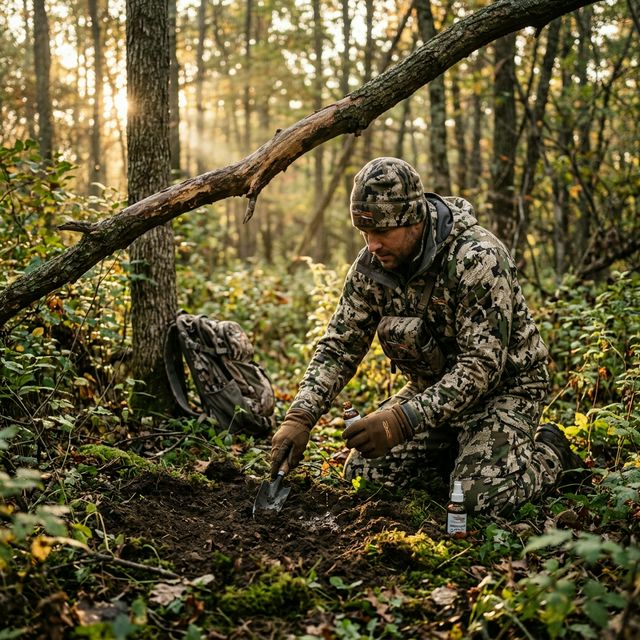
The Power of Mock Scrapes: Creating Artificial Communication Hubs
Build mock scrapes that mature bucks trust: licking branches, scent discipline, August timing, and staging setups for clean daylight bow shots.
A scrape is the whitetail bulletin board—hooves, forehead glands, and preorbital glands leave messages bucks and does check repeatedly. Nature makes thousands of random scrapes. A good mock scrape puts that conversation inside a 20-yard archery lane.
Done clean, mocks create daylight pause points. Done with human scent on the licking branch, they become places mature bucks ghost for weeks.
How to Build a Mock Scrape That Works
The dirt circle matters less than the licking branch.
- Branch height: Tip hangs about 5 feet off the ground (adjust for local deer size)—chest to chin height for a standing buck.
- Grapevine method: If no natural limb hangs in your lane, zip-tie a 3- to 4-foot porous grapevine or rough branch to a higher limb. Rough bark holds scent better than slick maple.
- Clear the pad: Use a stick—not boots—to expose a 2- to 3-foot circle of mineral soil under the tip. Kick leaves back.
- Scent discipline: Nitrile gloves only. Never touch branch or dirt with bare skin.
- Camera angle: Set a cam 8 to 12 feet high aimed at the branch tip to learn timing before you hunt it.
Natural scrape strategy still applies—read scrape hunting strategies alongside mocks.
Scent: Glands Beat Dumping Urine
Pouring a bottle of generic buck urine into dirt and leaving is amateur hour. Mimic how deer actually use scrapes:
- Preorbital (eye) scent: On the tip of the licking branch
- Forehead / preorbital challenge: Lightly on the upper bark where bucks rake
- Interdigital (hoof): A few drops in the soil pad
- Urine: Optional, light, freshened occasionally—never a mud puddle of lure every weekend
Less is more. Over-doctoring smells fake and can spook pressured deer. Always follow state lure and bait definitions—some zones restrict urine products.
Location: Put the Hub Where Daylight Happens
Location decides whether you get night photos or bow shots.
- Transition cover between bedding and evening food
- Trail merges where two paths become one
- Staging timber 20 to 40 yards inside the field edge, not in the open plot
- Downwind of your stand tree with a clean entry that never crosses the scrape
Tie mocks to terrain funnels when you can—pinch points already concentrate traffic. Confirm patterns with cameras and data habits.
Timing: Start in Summer, Hunt in Fall
Do not wait until November.
- Late July–August: Establish primary mocks so the herd adopts them socially.
- September–October: Maintain lightly; hunt cool fronts and seeking week.
- Pre-rut: Freshening intensifies—prime sit window with seeking-phase tactics.
- Lockdown: Open scrapes often go cold; shift to thick cover, then return as chasing resumes.
Early establishment beats frantically digging dirt the night before a sit.
Hunting the Mock Without Burning It
- Hang downwind 15 to 25 yards with a shooting lane to the branch tip—bucks pause to lick.
- Limit sits to good winds; one wrong swirl educates the best buck on camera.
- All-day sits pay during seeking; early season evenings may be enough.
- After a close call, rest the scrape several days.
- Do not walk up and “re-doctor” every morning you hunt.
Mobile setups help you adjust trees without building a permanent scent bomb—saddle hunting pairs well with mock-scrape circuits on public land.
Gear Checklist
- Nitrile gloves (box in the pack)
- Folding saw / zip ties for grapevine installs
- Stick or small rake dedicated to scrape dirt
- Quality camera + fresh batteries
- Minimal scent products you actually understand
- Wind checker
Mistakes That Kill Mock Scrapes
- Bare-hand licking branches
- Placing mocks in open fields mature bucks only visit at midnight
- Building ten mocks and hunting none well
- Flooding the pad with lure weekly
- Checking cameras by walking the scrape trail at midday every other day
- Ignoring legal restrictions on urine and natural scents
Mock Scrape Season Checklist
- 2–4 primary mocks on different winds
- Established before September when possible
- Cameras confirming daylight use
- Stand trees marked per wind
- Gloves and stick always used
- Rest rules after pressure
Reading Camera Data on Mock Scrapes
After two weeks of photos, sort reality from hope:
- Night-only mature bucks: Move deeper into cover or fix wind/entry; do not keep hunting the open edge.
- Daylight doe use + occasional buck: Sit cold fronts and seeking week all-day.
- Multiple bucks licking the same branch: Prime community hub—guard it from overhunting.
- No hits: Relocate the branch height or move to a real trail merge; dead mocks waste time.
Timestamp heat maps matter. A scrape hit at 10:40 a.m. three days in a row deserves a midday sit more than another evening field edge.
Mock Scrapes and the Rut Calendar
- August–September: Social acceptance phase; light or no hunting.
- October lull: Maintain; hunt selectively on cool evenings.
- Seeking: Peak hunting value—all-day sits justified.
- Lockdown: Expect a quiet spell; do not abandon forever.
- Secondary rut / late: Freshen lightly near doe groups and remaining food.
Keep notes on which mocks produced sightings versus harvests. Next summer, rebuild the winners first instead of inventing ten new sites from scratch.
Field Notes and Practical Numbers Use these benchmarks to keep decisions concrete rather than vague:
- Log every sit with date, wind direction, temperature, and deer observations—patterns appear after 8 to 12 recorded hunts on the same property.
- Limit first-time pressure on a hot pin to one quality sit, then rest at least 24 to 48 hours unless the rut calendar demands otherwise.
- Carry a short checklist in your phone notes so gear and safety steps do not depend on memory at 4:30 a.m.
- Revisit your plan weekly during the season; crops, pressure, and breeding phases change the right answer.
- When in doubt, choose the option that leaves mature deer less educated for the next sit—longevity beats one burned encounter.
These habits compound across a season and across years on the same ground.
Successful hunters treat preparation as part of the hunt itself. Write down what worked, what failed, and what you will change next time. Small improvements in access, timing, and patience usually matter more than buying another gadget. Stay flexible after weather swings, keep safety non-negotiable, and measure success by clean opportunities and ethical recoveries—not only by antlers on the wall. Over a full season, disciplined routines outperform random hard hunting.
Tools and Contaminants to Avoid Keep a dedicated scrape kit in a sealed bag:
- Gloves, zip ties, folding saw, and a “dirt stick” that never rides in muddy truck beds with gas cans.
- Avoid sunscreen, nicotine, and food grease on gloves.
- Do not urinate near the mock—human urine educates pressured bucks.
- Skip cigarette breaks on the walk in.
- If you must refresh lure, do it midday on an off-hunt day, then leave for 24 hours.
The hunters who swear mocks “never work” often have a scent problem, not a concept problem.
Keep refining your approach with honest notes after every outing. Track winds that worked, access mistakes, and timing windows that produced daylight movement. Share lessons with your hunting partners so the whole group improves pressure management. Small, consistent upgrades in planning usually add more encounters than a single new piece of equipment. Stay patient through slow sits, stay aggressive when sign and weather align, and protect the long-term health of the places you hunt.
Frequently Asked Questions
Do mock scrapes work on public land?
Yes, especially in transition cover away from parking lots. Expect competition and keep scent tighter. Focus on obscure merges, not roadside scrapes everyone doctors.
How often should I freshen scent?
If the scrape is active, deer maintain it. Light human maintenance every 1 to 3 weeks in early fall is plenty; more during peak seeking if legal and sparse.
Can I make a mock scrape without lure?
Absolutely. A proper licking branch and exposed earth alone often get adopted. Lure is optional seasoning, not the engine.
Why do bucks only hit my scrape at night?
Usually pressure, open location, or stand scent. Move the mock deeper into staging cover and fix wind/entry.
Should mocks replace hunting natural scrapes?
No—use both. Community natural scrapes on funnels are gold; mocks fill gaps where no branch hangs in your lane.
Mock scrapes are low effort and high discipline. Get the branch right, keep human odor off it, place it on a daylight line, and let bucks stop broadside where you already planned the shot.
Turn your trail camera data into scouting intelligence
Wildsnap AI filters noise, recognizes species, and surfaces activity patterns from your own photos.
No credit card
Wildsnap • Open beta
Turn your trail camera data into scouting intelligence
Wildsnap AI filters noise, recognizes species, and surfaces activity patterns from your own photos.
No credit card