
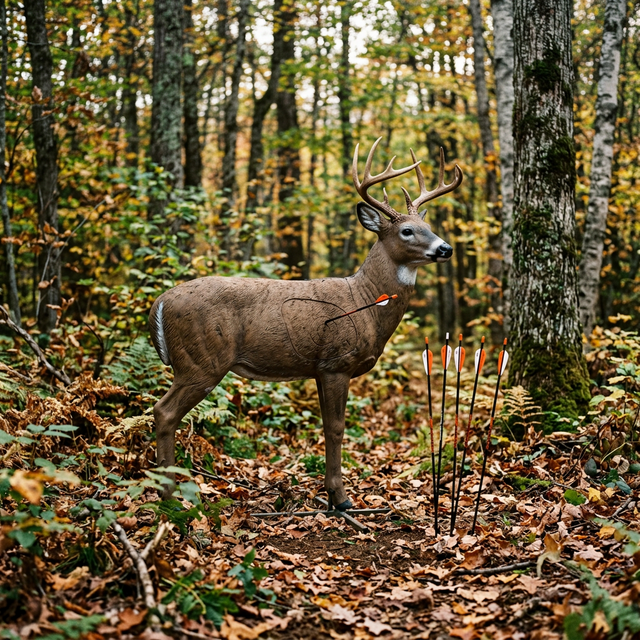
Whitetail Deer Anatomy: The Definitive Guide to Optimal Bow Shot Placement
Learn ethical bow shot placement on whitetails: broadside vitals, quartering angles, passes to make, blood clues, and anatomy myths to ignore.
Ethical bowhunting is anatomy under pressure. A rifle can deliver hydrostatic shock; a broadhead kills by hemorrhage. You must put a sharp cutting tip through the heart-lung complex—or pass the shot.
This guide maps the vitals, explains broadside and quartering geometry, lists shots to refuse, and connects impact clues to tracking decisions. Know this cold before you climb.
The Heart-Lung Target Zone
The lungs fill most of the forward chest behind the shoulder. A double-lung hit drops blood pressure fast and usually produces a short recovery. The heart sits low in the chest, protected by the brisket line and partially by the shoulder on some angles.
Primary goal: both lungs, preferably with an exit.
Secondary bonus: heart or major vessels low in the chest on a perfect low-third broadside.
Spine and high-shoulder “drop” shots are rifle talk. With a bow, they are low-percentage and often non-lethal or slow.
For recovery after the hit, study expert blood trailing tips.
Perfect Broadside Geometry
When the deer stands 90 degrees to you, find the crease where the rear of the front leg meets the ribcage. Aim on that vertical line about one-third of the way up from the belly to the back.
Why the lower third?
- String jump. Many deer drop at the sound of the shot. A low aim that meets a dropping deer still catches center lung; a center aim can sail high.
- Heart potential. Low lung shots can clip the top of the heart or major vessels.
Wait for the near leg forward enough to open the crease. A leg back can cover more of the vitals with bone and muscle.
Quartering-Away: High Percentage
Quartering-away is often the best bow angle. The near shoulder rotates forward out of the way, exposing a soft entry through the flank/rib area toward the opposite shoulder.
Aim idea: visualize an exit at the far-side shoulder. Enter behind the last ribs on the near side so the arrow drives forward through liver/diaphragm into both lungs.
Do not aim at the center of the visible body mass as if it were broadside—that sends the arrow out the paunch. Angle forward.
Quartering-Toward: Usually a Pass
When the deer faces you at an angle, the scapula and heavy shoulder muscle shield the vitals. Light carbon arrows that smack the knuckle or ridge of the shoulder often fail to penetrate.
Default rule for most bowhunters: do not take hard quartering-toward shots. Wait. A mature buck walking 10 more yards is better than a wounded animal.
If you somehow take a marginal angle anyway, you have already broken discipline—don’t compound it by hoping. Pass.
Frontal and Straight-Away Shots
Frontal: tiny target, heavy bone, poor blood trail geometry. Almost always a pass with a hunting bow.
Straight-away: you are looking at ham and spine angles that rarely offer a clean double-lung line without gut risk. Pass unless you have a true Texas heart shot scenario at contact range with a very heavy setup—and even then, many ethical hunters refuse it.
Traditional and heavy-arrow setups still do not make bad angles good. They only improve penetration on acceptable angles—see heavy vs light arrows and FOC and fixed vs mechanical broadheads.
The “Void” Myth
Campfire lore claims a magical empty pocket above the lungs where arrows pass harmlessly. Anatomically, that void does not exist as described.
What usually happened: the hunter shot high through backstrap muscle above the spine, or clipped non-vital dorsal tissue. The deer ran off, and the myth explained the miss. If you are under the spine and in the chest cavity properly, you are in lethal tissue.
Know the skeleton. When unsure, err low-center lung on broadside—not “just a little higher.”
Reading the Shot in Real Time
Train yourself to watch the arrow and the deer’s reaction:
- Mule kick / hard hump: often lung or liver; still wait before trailing
- Immediate crash: possible heart/spine; mark last sighting carefully
- Hunch and walk: classic gut; back out for a long wait
- No reaction / sprint with tucked: could be anything—find the arrow first
Mark the exact standing position, arrow direction, and last visual with landmarks or a GPS pin before you climb down. Memory lies under adrenaline.
Shot Discipline Checklist
Before you draw:
- Is the angle broadside or slight quartering-away?
- Is the near leg open?
- Is the vitals clear of brush?
- Is distance inside your honest maximum?
- Is the deer calm enough that you can settle?
If any answer is no, let down. Practice that let-down until it is pride, not shame. Distance skills help—judging distance in the field.
Practice That Transfers to Anatomy
- 3D targets with correct vitals, not just bullseyes
- Angle practice: elevated shots and quartering foam
- Broadheads on the same arrows you hunt
- Clothing and cold-weather simulation
Know where the pin sits on a real deer’s shoulder crease at 20 and 30 yards until it is automatic.
Elevated Angles From a Treestand
Height changes the line through the chest. From a tall stand, a “perfect” center-chest pin can exit low through the brisket or gut if you do not account for the downward angle. Visualize the exit on the far side of the ribcage, not only the entry hair you see. Many mentors teach aiming slightly higher on the body for steep shots while still staying in the lung pocket—practice on 3D targets from a deck or elevated platform until it is boring.
Steep quartering-away from height can drive an arrow through paunch if you aim as if you were on the ground. When in doubt on a steep angle, wait for the deer to step into a flatter broadside presentation. Pass rates should rise with stand height, not fall.
After the Hit: Connecting Anatomy to the Trail
Your anatomical call at the shot dictates wait time. A low third broadside with mule kick and pink frothy blood supports a shorter wait. A hit that looked “a little back” with hunched posture demands gut-shot patience. Do not let camp optimism override what you saw.
Find the arrow when safe. Bright lung blood on the shaft confirms what your eyes hoped. Green film or sour smell reverses your plan toward a long wait. Hair piles matter: white belly hair vs dark side hair vs coarse shoulder hair each hint at impact height and angle.
If you suspect a liver hit—dark blood, less froth—fight the urge to take up the trail at the 45-minute mark just because you are excited. Liver kills, but not on your schedule.
Building Shot Discipline in Practice
Put a life-size deer target at camp and practice only “green light” angles for a full week: broadside and slight quartering-away. Include “red light” reps where you draw, recognize quartering-toward, and let down. The let-down must feel like success.
Film yourself. Many hunters tip the bow or drop the bow arm on release, sending arrows high—exactly where void myths are born. Fix follow-through as seriously as aiming points.
Mechanical vs Fixed: Anatomy Does Not Change
Broadhead style does not invent new angles. Mechanicals need clearance and kinetic energy; fixed heads need sharpness and true flight. Both still require lungs. If your setup is marginal on penetration, your acceptable angles shrink further—another reason quartering-toward remains a pass for most bowhunters.
Rehearse pass decisions aloud in practice: “leg forward, crease open, green light” versus “shoulder covering, red light.” The words you train in calm hours are the words you need when adrenaline tries to negotiate. Anatomy knowledge without emotional discipline is trivia.
Ribs, Shoulder, and Arrow Weight
Heavy bone is why light, weakly spined arrows fail on imperfect hits. Even on green-light angles, adequate arrow momentum helps when a rib or near-side shoulder tip is grazed. That is not permission for bad angles—it is insurance for good ones. Tune for forgiveness inside ethical geometry, then refuse shots outside it.
Pass Rates Are a Skill Metric
Count the shots you refuse each season. A high pass rate with occasional perfect opportunities is the mark of an anatomical hunter. Tags filled on bad angles are not success stories—they are deferred tracking jobs.
Frequently Asked Questions
Where is the best place to shoot a deer with a bow? Double lungs on a calm broadside or slight quartering-away, lower third of the chest on the leg crease line.
Should I ever take a quartering-toward shot? Almost never with a bow. Wait for a better angle.
What about liver hits? Lethal but slower. Dark blood, longer wait. Do not push early.
Do mechanicals change aiming points? Aim points stay anatomy-based. Mechanicals need clearance and adequate speed; they do not create new ethical angles.
Why did I get a complete pass-through with little blood at first? Possible high lung with delayed bleeding, or plugged holes. Wait your protocol, then grid search from the hit site—don’t assume a miss.
Is a neck shot ethical with a bow? Rarely. Small margin, lots of non-lethal muscle. Aim for the boiler room.
Anatomy knowledge is respect. Draw only when the geometry says the animal will die quickly—and when you are ready to finish the job on the trail.