
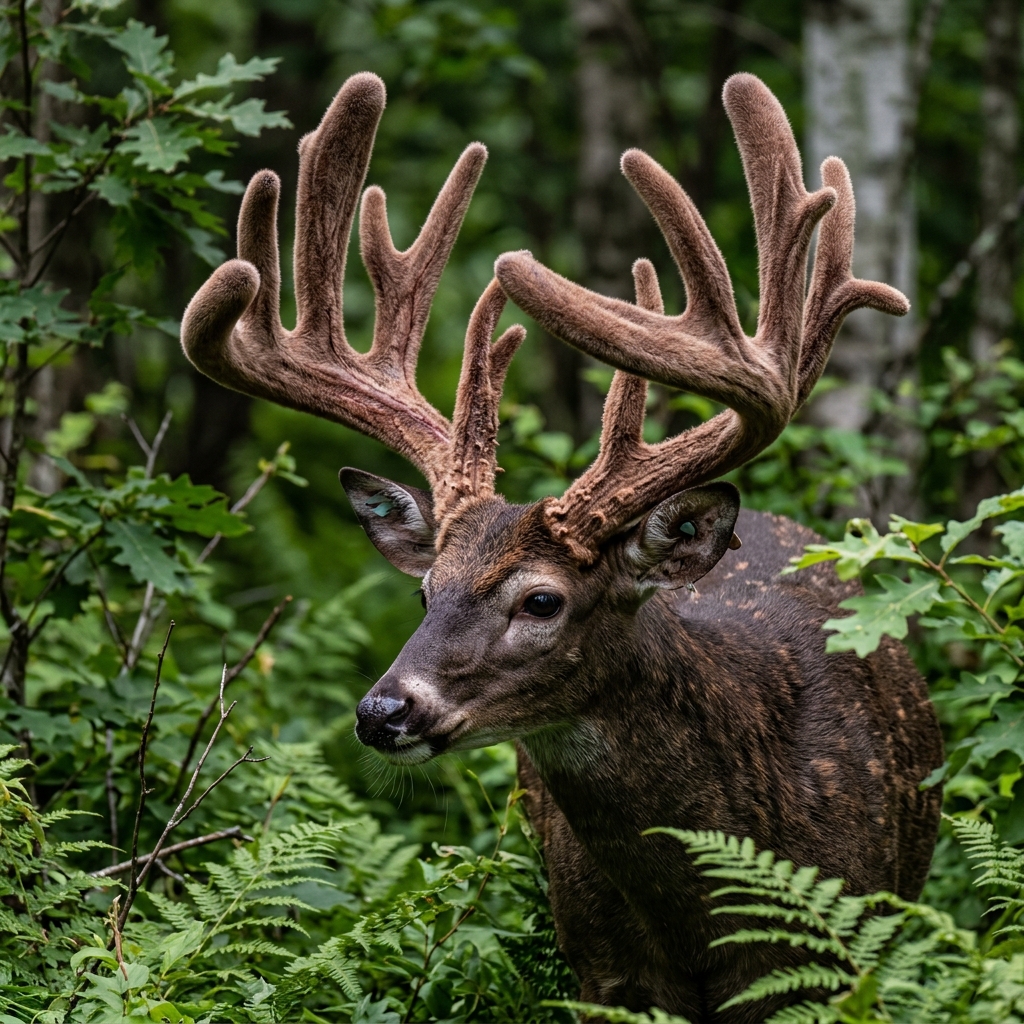
The Biology of Whitetail Antler Growth
How bucks grow racks in ~120 days: velvet science, testosterone timing, nutrition vs genetics vs age, and why mineral sites raise CWD concerns.
Antlers are among the fastest-growing tissues in the animal kingdom. A mature buck can produce well over 100 inches—and sometimes far more—of bone in roughly 100 to 120 days. That growth demands a huge metabolic redirect: minerals, protein, and energy that could otherwise support body condition. Understanding the cycle helps you judge summer deer, time scouting, and manage habitat without wishful thinking about “magic minerals.”
The Velvet Phase: Cartilage, Blood, and Nerves
In peak summer (June and July for much of the U.S.), growing antlers are not hard bone. They are a cartilage matrix wrapped in velvet—skin packed with blood vessels and nerves.
- Blood supply: Velvet feels warm because it delivers calcium, phosphorus, and nutrients under high demand.
- Mineral draw: If diet falls short, a buck can mobilize minerals from his own skeleton to keep antlers growing—body first still wins if starvation is severe, but subclinical stress shows up as weaker beams and shorter tines.
- Nerve risk: Velvet antlers are sensitive. Hard impacts can create non-typical kickers or damage a pedicle. That is one reason bachelor groups prefer open feeding areas and high-canopy timber with fewer face-level branches—see summer velvet scouting.
By late summer, mineralization advances. Velvet dries, shreds, and peels—often in early September—as testosterone rises.
Testosterone, Hard Antlers, and Shed Timing
Hormones run the calendar:
- Spring: Increasing day length and rising testosterone kick off growth from the pedicles after sheds.
- Summer: Growth rate peaks while social aggression stays relatively low.
- Early fall: Testosterone surge hardens antlers, triggers velvet shed, and breaks bachelor groups.
- Winter: After the rut, testosterone drops; antlers weaken at the pedicle and shed—often December through March depending on latitude, age, and condition.
Hard antlers are dead bone. They do not “feel” impacts the way velvet does, which is why sparring escalates in October.
The Three Pillars: Age, Nutrition, and Genetics
Antler potential is a three-legged stool. Kick out one leg and inches disappear.
Age: Body growth has priority through the first several years. Many bucks do not approach their antler potential until 4.5 to 5.5 years old, when skeletal growth is complete and surplus resources can hit the rack. A heavy 2.5-year-old frame with average antlers may still become a standout—if he survives.
Nutrition: Protein in spring and summer (often 16%+ dietary crude protein in quality forage systems), plus energy and minerals, drive growth. Drought years, over-browsed ranges, and late hard winters that leave bucks skinny into April all shrink racks.
Genetics: Ceiling height is inherited. You cannot feed a 120-inch genetic maximum into a 180-inch deer. You can keep bucks alive long enough to express what they have.
Midwest soils and ag landscapes often outproduce acidic, lower-fertility ranges in parts of the Northeast and Appalachians—not because of mystical “deer magic,” but because forage quantity and quality differ.
Minerals, Soil, and the CWD Problem
Calcium, phosphorus, zinc, manganese, and other micronutrients matter for bone. Healthy soils and diverse forage usually beat a bucket of loose mineral on a stump—especially when deer already have crop access.
Serious caution: mineral sites and dirt licks can concentrate deer and contaminate soil with prions in Chronic Wasting Disease areas. Prions persist in soil for years. In CWD-positive zones, follow state bans on baiting and mineral supplementation. The risk to herd health outweighs a few inches of antler. Read the full hunter protocol in our CWD guide.
Prefer habitat work—clover, diverse browse, oak management, hinge-cut cover—over bait piles. See late winter habitat management and hinge cutting for practical alternatives.
What Antler Growth Means for Hunters and Managers
Use biology in decisions:
- Summer glassing: Velvet bucks show relative frame early. Inventory now; do not wait for November.
- Pass decisions: A skinny 2.5-year-old with average antlers may be a future shooter if your management plan allows.
- Habitat timing: Protect spring and summer forage. Late-season food plots help survival; spring green-up fuels the rack.
- Camera judgment: Night photos of a wide velvet buck in July do not guarantee daylight October movement—but they prove he exists on your landscape.
Trail cameras through June–September document growth progress and bachelor groupings. WildSnap can help you separate bucks from does and cluster activity so you spend less time sorting empty cards and more time planning stands.
Non-Typicals, Breaks, and Asymmetry
Not every odd point is genetic destiny.
- Injuries to velvet, pedicles, or legs can produce asymmetric or non-typical growth
- Poor nutrition years may suppress tine length more than beam length
- Broken tines after velvet shed are combat or accident damage, not “growth failure”
Judge bucks across multiple years of photos when possible. One broken G2 in November says little about next year’s potential.
Month-by-Month Antler Calendar for Hunters
Use the growth cycle as a scouting and management calendar:
- March–April: Shed hunting confirms which bucks survived; note frame size from matched sheds. Habitat work and frost seeding set summer nutrition—see late winter management.
- May–June: Antlers sprout and accelerate. Minimize harassment of bachelor groups; keep cameras on field edges rather than in bedding.
- July–August: Peak velvet visibility. Glass fields, build hit lists, and avoid bumping soft antlers in timber.
- Early September: Velvet sheds, testosterone rises, groups break. Early-season patterns may still hold for a short window on food.
- October–November: Hard antlers, sparring, and breeding. Judging inches on the hoof gets harder; focus on age and behavior.
- December–February: Post-rut recovery and eventual shedding. Late-season food keeps bucks alive to grow next year’s rack.
Managers who want larger antlers on average rarely need exotic supplements. They need bucks to reach 4.5+ years, spring forage, and cover that reduces stress. That means sanctuaries, sensible harvest of young bucks, and doe harvest where populations exceed habitat. Antlers are a billboard for the whole system—not a product you purchase in a 50-pound mineral bag.
Photograph racks with consistent angles when possible. Side-by-side July velvet vs November hard-antler photos teach more about individual deer than any single trail-camera trophy shot. WildSnap helps keep those sequences organized by species and date so you compare the same bucks across months instead of guessing from a messy camera roll.
Nutrition on the Ground: What to Plant and Protect
If you control habitat, think protein and energy across the year—not only November brassicas. Spring and early summer legumes, diverse native forbs, and healthy browse fuel the velvet sprint. Oak management that improves acorn reliability helps body condition going into winter, which shows up as better antlers the following summer. Hinge cutting that floods light on the forest floor grows soft mast shrubs and woody browse bucks actually eat—see TSI hinge cutting.
Avoid the trap of measuring management only in Boone and Crockett inches. A property that grows healthy 2.5- and 3.5-year-olds into 4.5-year-olds will outproduce a mineral-site carnival that harvests every nice buck at 2.5. Antler biology rewards patience more than powder.
Drought years call for humility. Even great genetics throw short tines when forage burns up in July. Adjust expectations, protect does from unnecessary stress if you are under drought harvest plans, and double down on next winter’s habitat work rather than buying miracle supplements. A buck that looks “small” in a drought October may still be the right deer to pass if his age and frame say he has another year—biology is seasonal, not only genetic.
Trail-camera side-by-side shots from July and November remain the cheapest education on your farm’s antler ceiling. Label them, refuse to merge lookalike bucks, and let age structure—not internet score estimates—drive harvest choices.
Frequently Asked Questions
How fast do whitetail antlers grow?
During peak summer, antlers can grow measurable fractions of an inch per day—collectively producing a full rack in about 3.5 to 4 months depending on the buck and region.
When do bucks shed velvet?
Often late August through September in much of the U.S., timed with rising testosterone. Exact dates vary with latitude and individual hormones.
Do mineral licks grow bigger antlers?
They can help where soils and forage are deficient, but they are not a substitute for age structure and nutrition—and they raise disease concerns in CWD areas. Follow local law.
At what age do bucks grow their best antlers?
Many express near-peak antlers around 5.5 to 7.5 years, assuming quality nutrition and low stress. Few public-land bucks reach that age.
Why did a buck shrink from last year?
Common causes include poor winter condition, drought-limited forage, injury, age-related decline in very old bucks, or simply a late birth-year comparison error between similar deer.
Build a cleaner history of your herd
Spend less time sorting and more time seeing what matters—when detections are organized by time and class.
No credit card
Wildsnap • Open beta
Build a cleaner history of your herd
Spend less time sorting and more time seeing what matters—when detections are organized by time and class.
No credit card