
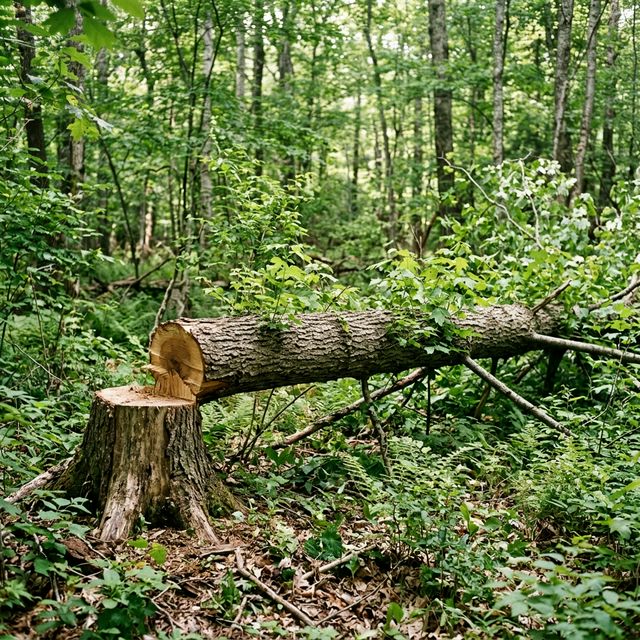
Timber Stand Improvement: The Science of Hinge Cutting
Hinge cutting releases canopy light, builds browse, and creates bedding thickets. Learn cut technique, tree selection, layout, and safety for whitetail TSI.
A mature hardwood stand with a cathedral canopy and open floor looks beautiful to hikers. To a whitetail, it can be a security desert: little browse at deer height, little bedding cover, and long sight lines for predators and people. Timber stand improvement (TSI) using hinge cutting deliberately breaks that canopy so sunlight hits the ground, brush explodes, and deer suddenly have a reason to daylight on your acreage.
Done right, hinge cuts mimic what windstorms and historic fire did for free—without waiting on disaster.
What Hinge Cutting Does Biologically
A tall maple or beech can monopolize light across a wide radius. Seedlings and shrubs starve in the shade. When you hinge low-value trees:
- Sunlight reaches the forest floor
- Soft mast shrubs, brambles, and seedlings respond
- The hinged stem stays partially alive through connected cambium and pushes sprouts at browse height
- The fallen crown creates lateral cover deer bed in and under
Unlike a clean stump cut that kills the stem immediately, a proper hinge keeps enough connecting wood and bark that the tree can persist for roughly three to five years, producing forage while it slowly fades.
How to Make a Proper Hinge Cut
Safety first: eye/ear protection, chaps, helmet around overhead hazards, and a clear escape path. If you are not comfortable with a saw, hire help or take a chainsaw safety course.
Technique overview:
- Select the fall direction toward the layout you want (along a trail edge, into a bedding pocket, away from mast trees you will keep).
- Cut from the back side of the intended lean, about waist to chest height depending on species and goal.
- Cut roughly half to two-thirds through—enough that you can push the tree over, not so much that it snaps free.
- Leave a hinge of intact wood and bark so the trunk does not detach.
- Push with your legs and a pry, never stand directly under the fall.
Species differ. Some brittle trees snap instead of hinge. Learn your local timber before you convert an entire ridge.
Which Trees to Cut—and Which to Save
Cut “junk” that blocks light from better plants. Common hinge candidates (region dependent):
- Red maple in oak-starved stands
- Ironwood/hophornbeam
- Boxelder
- Crowded, poorly formed beech or sweetgum where mast producers are suppressed
Save and release:
- Healthy oaks, persimmons, apples, and other mast trees
- Den trees and unique wildlife trees when they do not ruin the plan
- Enough mature canopy for acorn crops and thermals you still want
TSI is not clear-cutting your whole forty. It is surgery.
Designing Bedding Sanctuaries and Travel Lanes
Random dropped trees make a mess. Designed hinges make a deer funnel.
Layout ideas:
- Bedding thickets: Hinge a block so crowns interlock into an ugly, secure tangle on the leeward side of a ridge.
- Edge feathering: Soften hard field edges with a 30 to 60 yard hinge strip deer feel safer using in daylight.
- Screening: Drop trees to hide access trails and food plots from road view.
- Browse corridors: Aim crowns so resprouts line a trail you already want to hunt downwind of.
Leave sanctuary cores unhunted. If you walk the new thicket every weekend, mature bucks will treat it like any other pressured patch. Confirm use with cameras on the fringe, not inside the bed. E-scouting helps you place cuts on the right benches before you pull a starter cord.
Timing, Season, and Follow-Up
Late fall through late winter is popular: ticks down, leaves off, vision clear, and freeze helping access—pair with frost seeding in adjacent openings.
Aftercare:
- Revisit in year two; add hinges where light still fails
- Protect any planted fruit trees nearby with cages—sudden browse pressure can spike
- Do not hinge every stem; diversity beats a uniform slash zone
- Watch fire risk and local slash regulations
Trail cameras will show whether daylight bedding increases. WildSnap can help you track species and timing shifts after a cut so you know if the project changed deer use or just made firewood.
Safety and Legal Notes
- Confirm property lines before cutting
- Check local forestry and cost-share programs—some states pay for TSI
- Never cut over fences, trails you do not control, or power lines
- Beware spring sap and summer heat stress if you must cut then
- Carry first-aid and tell someone where you are working
Hinge cutting is one of the highest-ROI habitat skills a private-land hunter can learn, but chainsaws do not forgive fatigue.
Pairing Hinge Cuts With Hunting Strategy
New cover changes wind and access. Update stand maps after major cuts. Evening thermals into a fresh bedding tangle can ruin a sit that worked last year. Rebuild entry routes and hang options using tree stand placement principles.
Hunt the edges of sanctuaries, not the bedrooms. Let hinge thickets produce daylight movement toward food you manage—clover openings, oak flats, and late-season brassicas.
Common Hinge-Cutting Mistakes
Avoid these expensive errors:
- Hinging every stem and creating a temporary slash desert with no mast left standing
- Cutting toward trails, fences, or parking areas where hang-ups endanger people
- Working alone without a first-aid plan on remote ridges
- Building cover then hunting it weekly until bucks abandon daylight use
- Ignoring regeneration—deer can browse new sprouts to death if density is extreme; you may need temporary fencing on critical stems or higher doe harvest
Start small. A half-acre test block teaches species response on your soil better than a 10-acre theory project. Photograph before/after from the same points, then check cameras for 60 days. If daylight bedding increases on the fringe and browse shows use, expand the pattern along the same contour.
Combine cuts with frost seeding on skid trails that suddenly receive light. Clover in the lanes and brush in the blocks creates a bed-to-browse circuit deer use without crossing open lawns. Keep human scent off the core by accessing only from the downwind side for camera checks.
Forestry cost-share programs in some states offset TSI expenses if you follow a written plan. Ask your extension forester whether hinge cutting qualifies locally and whether preferred species lists differ from generic internet advice. Local soils and deer densities change outcomes more than brand of chainsaw chain.
After the Cut: Hunting the New Edge
Give hinged cover 30 to 90 days of low human intrusion when possible before you expect daylight bedding. Then hunt the downwind fringe on controlled sits—not daily patrols. Morning thermals rising out of a new thicket can carry scent into beds; evening falling thermals can do the same from a ridge hang. Smoke-test access after the timber changes.
Food plots and mast trees outside the sanctuary pull deer into shootable daylight lanes. The hinge block is the bedroom; the oak flat or clover tongue is the kitchen. Ambush the hallway. Cameras on those hallways tell you when the project “turns on.” If you only see nocturnal use, extend the screen, reduce pressure, or improve the food—do not respond by barging into the beds.
Keep records: acres hinged, species cut, date, and subsequent deer observations. In five years you will know which contours on your farm respond best. That institutional knowledge is worth more than any single viral habitat video. Revisit hinged blocks with a notebook each February: which stems resprouted, which snapped off, which oaks you should have saved. Then cut the next half-acre with fewer regrets and tighter purpose—always leaving the sanctuary core quieter than your ego wants.
Frequently Asked Questions
How long do hinged trees stay alive?
Often several years—commonly about three to five—depending on species, hinge quality, and season. Sprouting browse is the early win; eventual death still leaves structure.
Will hinge cutting scare deer away permanently?
Short-term disturbance is real. Work in the off-season, concentrate days, then leave the sanctuary alone. Deer typically move into quality cover once human activity stops.
Can I hinge oaks?
You can, but most managers prefer to hinge lower-value species and release oaks for mast. Cutting your best acorn producers to make brush is usually a bad trade.
Is a chainsaw required?
For efficiency on larger stems, yes. Small-diameter hinges can be done with handsaws. Match tools to tree size and your skill.
How large should a hinge sanctuary be?
Even a half-acre of interlocking cover can help on small parcels. Larger farms may hinge several blocks. Quality and location beat raw acreage.
Wildsnap • Open beta
Join Wildsnap and try the beta
In the open beta, you turn trail-cam data into actionable insights—free, fast, and simple.
No credit card