
Using Hand Saws and Pruners for Shooting Lanes
Clear shooting lanes for deer hunting without overcutting. Learn V-funnel trimming, scent control on fresh cuts, timing, and widowmaker safety tips.
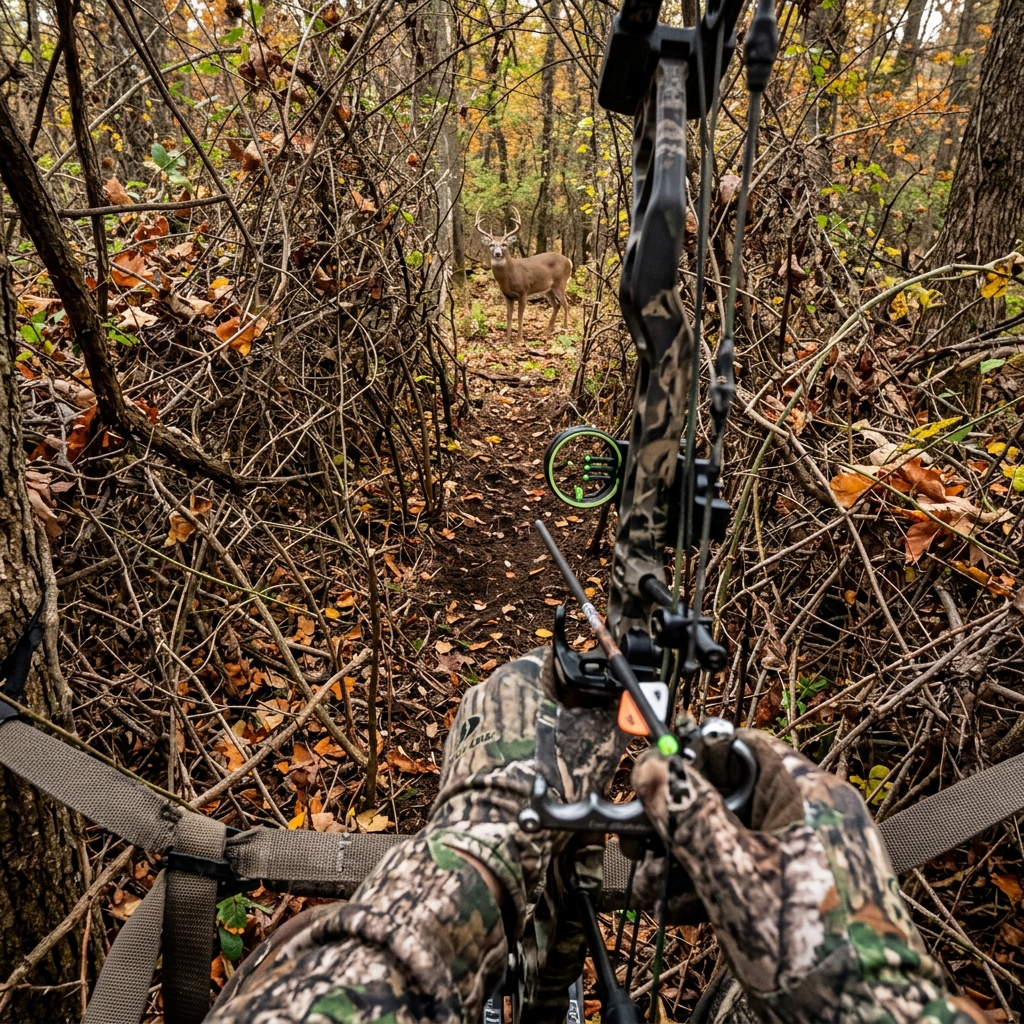
Every bowhunter knows the nightmare: a mature buck broadside at 20 yards, a clean release—then the tink of carbon hitting a pencil-thick twig you never saw. The arrow deflects, the season changes in half a second. Clearing shooting lanes is the boring work that prevents that moment. Done right, you remove only what you must. Done wrong, you advertise your stand like a clear-cut billboard.
Why Do Tiny Twigs Ruin Perfect Shots?
Arrows and broadheads are fast; they’re not invincible. A stem the diameter of a pencil can:
- Deflect impact by feet at the target
- Cause premature broadhead opening (mechanical)
- Send a pass-through into dirt instead of vitals
Rifle hunters care too—branches can throw a .30-cal enough to wound at 80 yards—but archery inside 40 yards is where lane work pays the most.
Range every expected shot window from the stand. If your 25-yard trail has two crossing shoots, clear those corridors—not the entire compass rose.
What Is the V-Funnel Lane Design?
You don’t need a highway. Huge openings look man-made and mature bucks skirt them.
V-funnel concept:
- Narrow near the tree (just enough to draw and settle)
- Wider at the expected deer distance (18–30 yards for most bow setups)
- Natural edges that still break your silhouette
Window trimming: Leave peripheral leaves that hide you while keeping a clean tunnel through the vitals zone. If you can see a deer’s feet and chest clearly along the trail, you have enough.
For stand systems that depend on tight cover—saddles and hang-ons—pair lane work with Mastering Saddle Hunting and Ground Blind Strategies.
Which Tools Should You Carry for Quiet Lane Work?
Match tool to cut:
| Tool | Best for | Notes |
|---|---|---|
| Hand pruners | Finger-to-thumb stems | Quiet, precise |
| Ratchet loppers | 1–1.5 inch limbs | Less fatigue |
| Folding hand saw | 2–4 inch branches | Clean cuts |
| Pole saw | Overhead limbs | Watch widowmakers |
| Mini chainsaw | Big jobs preseason | Loud—use off-season only |
Preseason: do the heavy cutting. In-season: pruners and a small saw only. Pack a folding saw on mobile hunts—one obstructing limb appears after leaf-out changes.
When Should You Cut Lanes Relative to Hunting?
Fresh sap smells like disturbance.
Timing guidelines:
- Major lane work: 2–4+ weeks before you hunt the tree
- Prefer cutting after a rain forecast to help wash scent
- Never cut a big limb the afternoon before a sit if you can avoid it
- If you must trim in-season, keep cuts tiny and rub dirt/mud on bright wood
On pressured public land, overcutting is a neon sign for other hunters too. Trim for shots, not Instagram sightlines.
Entry after cutting still educates deer—review What to Do If You Spook a Deer and Whitetail Scent Control.
How Do You Hide the Evidence After Cutting?
Deer notice sudden light gaps and fresh slash.
- Drag cut limbs downwind and away from travel trails—don’t pile them on the trail edge.
- Orient brush piles naturally; avoid perfect teepee stacks beside the tree.
- Face bright cut ends into cover or mud them.
- Check sun angle: removing canopy can spotlight your stand at 7:30 a.m. Leave a shade branch if needed.
- From the ground, look up—does the stand silhouette scream “human”?
Take a photo from the trail height of a deer’s head (~3–4 feet) to verify the lane looks like a natural gap.
How Many Lanes Do You Actually Need?
Most bow stands need 2–4 quality windows, not 360° of openness.
Prioritize:
- Primary trail broadside shot
- Secondary trail or scrape
- Escape lane if a buck skirts high or low
- Weak-side window only if wind variations demand it
Mobile hunters cutting one tree for one sit should clear the single highest-odds lane and leave the rest. Silence and time matter more than perfection.
Climbing stands and saddles change lane needs—see Using a Climbing Tree Stand Safely. Fixed stands deserve more permanent architecture.
What Safety Rules Matter With Pole Saws and Overhead Limbs?
Widowmakers kill and maim.
- Never stand directly under a limb you’re cutting
- Wear eye protection; wood chips and sawdust find eyeballs
- Hard hat isn’t overkill when dropping dead overhead wood
- Stay far from power lines on field edges—assume lines are live
- Use a harness when trimming from the stand; one-handing a pole saw at 18 feet is how falls start (Tree Stand Safety: Harness and Lifelines)
- Keep cuts small enough that the limb doesn’t rip bark strips down the trunk onto your platform
If a dead limb is hung up above your hang-on, pick another tree. No lane is worth a crushed skull.
How Do You Verify Lanes From the Stand Before Season?
Ground trimming lies. Always finish from hunting height.
- Climb with your harness on and weapon haul practiced.
- Draw your bow (or shoulder the rifle) toward each expected shot.
- Have a partner walk the trail with a deer-sized target or hat on a stick at vitals height (~16–20 inches off ground for heart/lung reference on a broadside deer—adjust by body size).
- Mark any twig that intersects the upper third of the target.
- Trim minimally, re-check, then descend.
Do this once in full leaf and once after leaf drop if you hunt both early and late seasons. A lane that’s perfect in September can grow shut with October sprouts or look skylight-naked after frost.
Range tape or a small sewn-in yardage card on the stand helps—know that the trail fork is 22 yards, not “about 20.”
What About Natural Screens and Silhouette Control?
The goal is a tunnel for the arrow, not a spotlight on your torso.
Keep:
- Branches behind and to the sides that break your outline
- A leafy “curtain” you can peek through without backlighting
- Cover between you and the primary downwind approach
Remove:
- Horizontal switches at arrow height in the shooting lane
- Face-slappers at climb height that force noisy movement
- One critical limb that forces a lean past your comfortable form
If removing cover for a lane exposes you to the field, add a few cut branches behind the stand as a backdrop—or choose a different tree 10 yards deeper.
How Do You Maintain Lanes Through a Long Season?
One September cutting session is not enough for a stand you hunt into December.
- Recheck after leaf drop—new sky glare may force you to leave more side cover
- Clip October sprouts that invade the vitals tunnel
- After ice storms, remove hanging widows before the next sit
- Keep a tiny saw in the pack for one emergency twig, not a remodeling project on hunt morning
On shared leases, agree who may cut what. Surprise chainsaw art around someone else’s oak creates camp conflict and deer conflict. Mark trees with a discreet tag and a group map pin.
Keep a season log: date cut, tools used, and whether deer reacted on the next sit. Patterns in your own disturbance teach faster than generic advice. If every “day-after cut” sit goes dead, lengthen your rest interval to 72 hours minimum on that property.
Frequently Asked Questions
Should I clear lanes for rifle season the same way?
You can leave more cover; shots are longer. Still remove twigs in the known 50–100 yard rest windows. Avoid turning a ridge into a pipeline.
How high should I clear vertical space for archery?
Clear from about mid-torso of a deer up through your arrow’s arc. Remember string clearance on the draw—elbow and riser need space too.
Can I use a machete?
It’s fast and noisy and leaves ugly wounds on brush. Prefer saws/pruners for controlled, quiet cuts.
Do hinge cuts double as shooting lanes?
Sometimes—timber improvement can open windows while making browse. Plan carefully so you don’t hinge the exact screening cover you needed. See habitat work in related timber management content on the site when relevant to your property goals.
What’s the biggest lane-cutting mistake?
Clear-cutting a circle around the tree. You gain visibility and lose deer—and gain visitors who found your skylight.
Cut less, cut earlier, and hide the bright wood. Surgical lanes keep arrows honest without telling every buck—and every hunter—exactly where you sit.
Wildsnap • Open beta
Join Wildsnap and try the beta
In the open beta, you turn trail-cam data into actionable insights—free, fast, and simple.
No credit card