
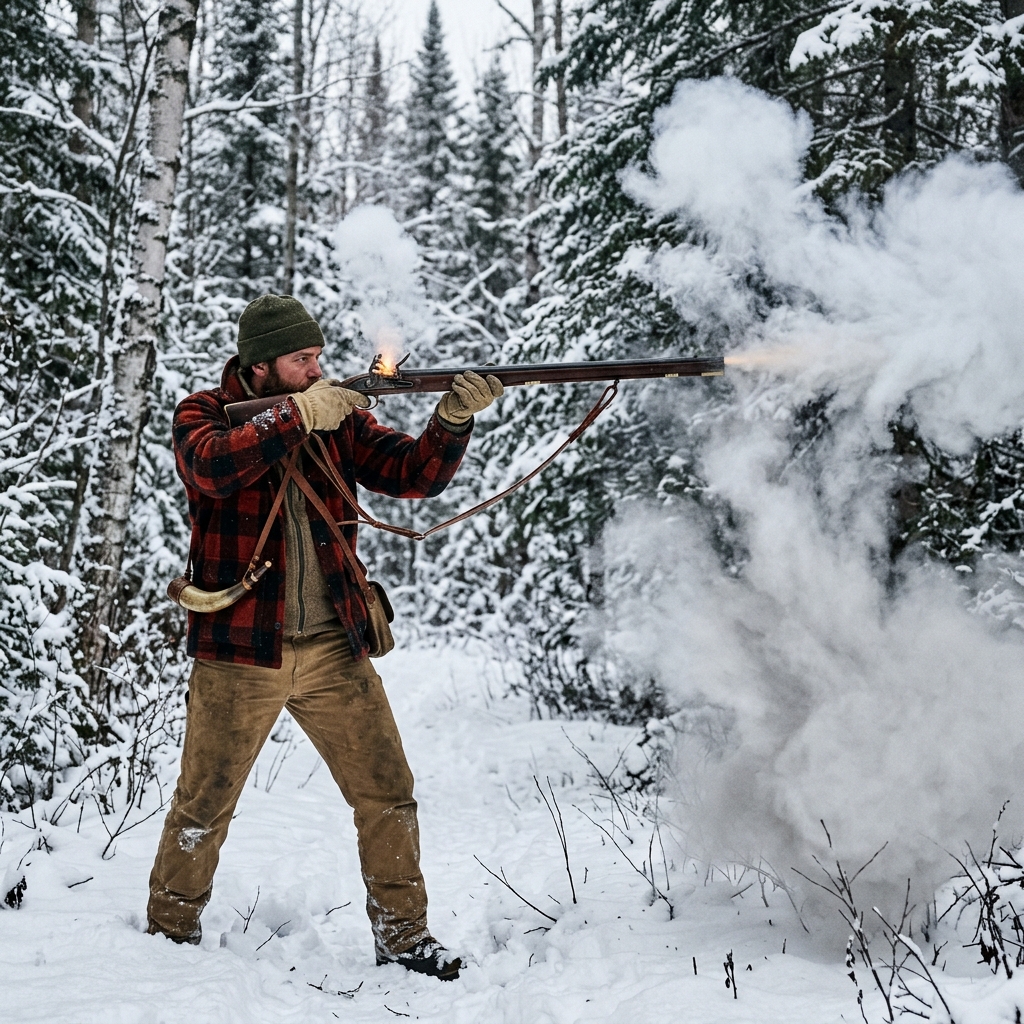
Hunting Whitetails with a Muzzleloader: A Complete Guide to Black Powder
Master muzzleloader deer hunting: inline basics, sabots and pellets, trajectory notes, cleaning habits, hangfire safety, and late-season tactics.
Muzzleloader season sits in a sweet spot for many whitetail hunters: fewer people than opening weekend of gun season, more range than archery, and a one-shot mindset that rewards patience. Modern inlines are far from flintlock nostalgia—but they still demand loading discipline, cleaning habits, and honest ballistics.
This guide covers inline fundamentals, powder and projectile choices, trajectory reality, weatherproofing, cleaning, safety, and how to hunt the season effectively.
Why Hunt Muzzleloaders
- Extended opportunities after archery and before or beside modern firearm seasons (varies by state)
- Encourages closer setups than magnum centerfires
- Excellent late-season tool when deer lock on food
Confirm your state’s legal ignition types, scopes, and powder rules. “Muzzleloader” definitions differ.
Modern Inline Basics
Inline muzzleloaders place the primer (often a 209 shotgun primer) in line with the powder charge for hotter, more reliable ignition than many traditional side-lock designs.
Saboted bullets. A plastic sabot grips the rifling, then sheds in flight so a smaller, aerodynamic bullet flies flatter than an old patched round ball. Common setups pair a .50 bore with a .45-class bullet in a sabot.
Pelletized powder substitutes. Preformed pellets (for example Triple Seven or similar products where legal) make consistent charges easier than measuring loose powder in wind and snow. Two 50-grain pellets for a 100-grain charge is a common starting structure—always follow your rifle manual and component guidelines.
With a quality inline, consistent load, and practiced dope, many hunters ethically take deer inside 150–200 yards. Beyond that, trajectory and energy demand serious range work and perfect conditions.
Trajectory: The Rainbow You Must Know
Muzzleloader projectiles are heavy and relatively slow—often roughly 1,800–2,000 fps depending on load. Zeroed at 100 yards, some 250-grain sabots drop meaningfully by 200.
Non-negotiable practice:
- Confirm point of impact at 50, 100, 150, and 200 (if you will shoot that far)
- Practice from hunting positions, not only a bench
- Recheck zero when you change bullets, sabots, or pellet count
Write drop numbers on tape on the stock. Guessing holdover wounds deer.
Pair late-season sits with late-season whitetail tactics rather than stretching yardage to reach a distant field.
Loading Routine You Can Trust
Develop a identical sequence every time:
- Confirm the bore is clear (ramrod reference mark).
- Seat powder/pellets fully.
- Seat the sabot/bullet firmly against the charge—no air gap.
- Mark the ramrod at the correct seated depth and verify every reload.
- Prime only when you are in position and ready to hunt.
An air gap between powder and projectile is a barrel-failure risk. Seat firmly.
Weatherproofing and the “Fizzle” Problem
Moisture kills ignition. Condensation from warm-to-cold transitions and rain in the muzzle both ruin hunts.
Muzzle tape. A small square of electrical tape over the crown keeps rain and debris out. The bullet blows it off; accuracy impact is negligible for hunting distances when applied smoothly.
Primer discipline. Keep primers dry. Do not leave a primed gun pointed unsafely during lunch breaks in rain without a plan—many hunters remove the primer when leaving the gun in a wet blind temporarily (follow safe handling rules).
Cold batteries and optics. Scopes fog; bring lens cloths. See also general cold-hunt gear habits from surviving opening day gun season pressure hunts—the weather problems overlap.
Cleaning: Same-Day, Every Time
Black powder and many substitutes leave corrosive residues. Waiting until “tomorrow” rusts rifling.
Typical session:
- Remove breech plug if your design allows (follow manual)
- Solvent or hot soapy water patches until clean
- Dry thoroughly
- Light protectant film in the bore
- Clean primer pocket/flash channel
A dirty flash channel is a leading cause of misfires next sit. Clean it.
Hangfire and Range Safety
If you click and nothing happens, keep the muzzle pointed at a safe backstop for at least 60 seconds. Hangfires delay discharge. Do not open the action, look down the bore, or immediately reload.
Other rules:
- Never smoke around loose powder
- Store powder properly away from primers in transport
- Verify unloaded status with ramrod depth when required by camp rules
- Use eye and ear protection on the range; muzzleblasts and caps throw debris
Hunting Tactics for Muzzleloader Season
Deer are pressured and food-focused. Hunt:
- Primary winter food edges on cold fronts
- Escape cover near gun-pressure sanctuaries
- Midweek days when firearm hunters thin out
Keep shots inside your practiced envelope. A 120-yard chip shot on a calm broadside beats a 220-yard hero attempt in mirage and wind.
Shot placement standards still match centerfire ethics—study whitetail anatomy and shot placement and be ready to blood trail if the deer leaves the field.
Load Development Checklist
- Pick one bullet/sabot and one pellet charge for the season
- Work up per manual; watch for pressure signs
- Confirm grouping at 100 yards
- Chronograph if available; at least confirm drop at distance
- Freeze the load—stop tinkering in November
Range Session Plan Before the Season
Dedicate one weekend to a single load. Confirm the breech plug is snug and the scope bases are torqued. Fire a fouling shot if that is part of your accuracy routine, then shoot three-shot groups at 50 and 100 yards from hunting positions—kneeling, sitting sticks, or blind window—not only sandbags. Record average point of impact, not the one flyer you want to believe.
At 150 and 200 (only if ethical for your setup), shoot for confirmation of drop, not tiny groups in a stiff wind. If your 200-yard group will not stay in a kill-zone-sized cluster under field conditions, write “max 150” on the stock and mean it.
Practice speed-loading only after accuracy is settled. A second shot capability matters when a deer steps behind a tree after a miss—but never at the expense of a poorly seated bullet.
Late-Season Sit Strategy With One Shot
Because follow-ups are slow, hunt setups that produce calm, standing presentations: food-edge trails, brassica plot corners, and funnels into cedar cover. Avoid hero shots at walking deer through brush at 180 yards. Let them stop. Use a soft mouth bleat or wait for body language to pause.
Glass carefully before you commit. Steam, blowing snow, and mirage over a dark field mess with holdovers. If you cannot clearly see the shoulder crease, you do not have a shot—regardless of what the rangefinder says.
After the shot, watch the deer as long as possible through the smoke. Mark the last visual before you move. Muzzleloader smoke can hide the first seconds of the reaction that tells you lung vs paunch.
Accessories That Earn Their Weight
- Quality range rod / field ramrod that will not splinter
- Speed loader tubes with pre-counted pellets and bullets
- Dry primer holder you can operate with gloves
- Bore guide and patches in a zip bag
- Small roll of muzzle tape
- Note card with drop dope and load recipe
Leave the five “maybe” bullet boxes at home. Consistency kills deer; curiosity loads wound them.
Traditional Side-Locks vs Inlines
Side-lock percussion and flint guns are rewarding and sometimes required in specialty seasons. They usually mean shorter ethical ranges and more weather sensitivity. If your state allows inlines with 209 primers and scopes, use that advantage—but do not pretend a flintlock shoots like a magnum bolt gun. Match range to ignition reality.
Carry spare flints or caps in a dry container and practice misfire drills on the range until the hangfire wait is automatic. Historical guns demand historical patience; modern inlines demand modern cleaning. Either way, the one-shot mindset is the point of the season.
Travel Days and Hotel Condensation
Driving to a muzzleloader destination with a loaded barrel is often illegal and always unwise. Transport unloaded per law. In hotels, keep the rifle cold and dry—bathroom steam is an ignition killer the next morning. Load at the truck or stand only when you are ready to hunt, and verify seating with the marked ramrod every single time.
Frequently Asked Questions
Do I need a special scope? A tough scope that holds zero under recoil helps. Some muzzleloader-specific reticles include drop references—verify them with your load, do not trust box claims blindly.
Can I leave the rifle loaded overnight? Many hunters do during a multi-day trip if the gun stays cold and dry, but remove the primer for transport and storage safety. Avoid bringing a loaded cold barrel into a warm house where condensation forms inside the bore.
What caliber is best for deer? .50 caliber is the common standard for component availability and terminal performance.
Are traditional flintlocks legal in my season? Depends on the state. Some special seasons allow only certain ignition types. Read the regs.
How often should I fire-cap or foul the barrel before hunting? Follow your rifle’s proven routine. Some shooters fire a couple caps to clear oil from the flash channel before loading a hunting charge—then load carefully and verify seating.
Why did I get a weak, whistling shot? Incomplete powder burn, damp charge, or poor sabot seal. Dry out, clean, and reload with verified components—do not keep hunting with a suspect load.
Muzzleloading rewards the hunter who is deliberate: one clean load, one honest yardage, one well-placed shot. Keep the powder dry and the cleaning patches busy.