
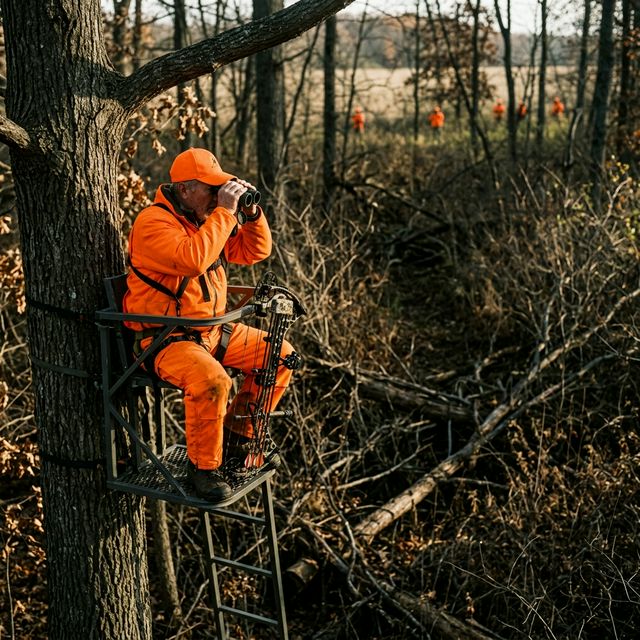
Surviving the 'Orange Army': Tactical Warfare on Opening Day of Gun Season
Turn opening-day gun pressure into opportunity: escape routes, the 10 a.m. push, thick-cover stands, safe target ID, and all-day sit tactics.
Opening morning of firearm season rewrites the woods. Truck doors slam, leaves explode under boots, and deer abandon open food for survival cover. Bowhunters who nursed a property all fall often resent the chaos. Public-land hunters who plan for it can use it.
Mature bucks do not analyze the noise—they leave for the nastiest cover that still feels safe. Your job is to intercept escape routes, outlast the mid-morning exodus, and shoot only when the target is 100% identified.
How Pressured Bucks Flee
When parking lots fill before dawn, bucks abandon primary food and stage in security cover: cattail swamps, briar clearcuts, steep river banks, blowdown thickets—places that hurt to walk through.
They prefer shaded, brushy travel—not skyline ridges—when relocating. Scout those escape arteries before the season: ditch lines between public timber and private sanctuaries, creek crossings, and funnel tips into swamps.
Map this like a pressure forecast. E-scouting plus one boots trip beats guessing at 4:30 a.m. opener.
The 10 A.M. Kick
Most casual hunters quit between 9:30 and 10:30 for cold, boredom, or breakfast. Their walk-out becomes an unintentional drive, bumping bedded deer toward deep cover.
Iron-sit rule. Pack calories, insulation, and bladder discipline for dark-to-dark. The 10 a.m.–1 p.m. window is often the best movement of opening day. Leaving at 10 is volunteering second place.
Bring quiet food. Crunchy wrappers educate every deer you just waited for.
Stand Placement Under Pressure
Open oak flats with 200-yard vistas feel productive and usually fail. Pressured deer hug cover. If you can only see 40 yards through honeysuckle and pine, you may finally be in the right zip code.
Thick-timber ambush. Sit on the edge of the nasty stuff facing the direction pushed deer will enter, with wind considered.
Back-door access. Do not march the same logging road as fifty orange jackets. Use creek approaches, swamp flanks, or long loops that keep your scent off the escape trail—kayak access is a real opener tactic where legal.
Avoid cutting the escape route with your inbound scent cone at 4:30 a.m. Arrive so deer fleeing later run to you, not away from your boot trail.
Weapon and Shot Discipline
Opening day adrenaline creates unsafe shots. Rules:
- Positive identification of the animal and vital zone
- Clear backstop—no skyline shooting over ridges
- Legal blaze orange/pink as required, including walk-in darkness where mandated
- No firing at sound, color flashes, or “I think that twig moved”
If a buck appears at 18 yards in brush with only a partial shoulder visible, wait or pass. A wounded deer in a crowded woods is an ethics and safety problem.
Anatomy still matters with a slug gun or rifle—whitetail shot placement.
All-Day Sit Kit List
- Insulation for motionless hours after a sweaty walk-in (vent, then layer)
- Hot food in a thermos
- Water even in cold weather
- Seat pad / stand comfort that prevents fidgeting
- Rangefinder and known yardage markers in thick cover
- Headlamp with spare batteries
- Drag rope, license, and tags staged for a noon deer
- Blaze orange that remains visible when you sit hunched
Cold management overlaps with late-season skills—late-season tactics.
Private Land vs Public Land Nuance
Private: Neighbors’ pressure still pushes deer. Hunt the sanctuary fringe on your ground, not the food plot every truck can glass.
Public: Expect company. Walk farther, sit longer, and choose cover others skip. Midweek openers (if your season structure allows) are softer—but Saturday is when weaponized pressure shines if you planned for it.
Small parcels need sanctuary discipline—whitetail sanctuaries on small parcels.
Mistakes That Waste Opening Day
- Sitting the pretty oak flat because you can see forever
- Leaving at 10 a.m.
- Walking escape routes on the way in
- Calling/rattling nonstop in a gun circus (often unnecessary)
- Skyline shots without a backstop
- Arguing about “stolen” deer instead of adapting to movement
Opening-Eve Checklist
- Two stand options for opposite winds
- Escape funnel marked and paced for yardage
- Quiet access rehearsed
- Orange and license staged by the door
- All-day food packed
- Agreement with partners on who sits where (avoid bumping each other)
Reading Other Hunters as Terrain Features
Treat the orange army like weather you can forecast. Glass parking lots at first light from a safe, legal vantage if your access allows. Full lots on the east side of a swamp often mean deer will push west into the nasty cover you already chose. Empty lots can mean you arrived first—or that everyone parked at a different trailhead feeding the same funnel.
Listen after legal shooting light begins. Concentrated firing on a ridge tells you where deer are being bumped. Silence in a cattail basin may mean you are already where the survivors plan to hide. Do not move toward every shot; move only when a relocation improves your intercept of the escape geography you mapped in October.
If a group of hunters drives a woodlot toward you unintentionally, stay safe and visible in orange, keep your muzzle disciplined, and be ready for running shots only if they are ethical and legal where you hunt. Many states discourage or complicate running shots—know your law and your skill. A stopped deer in a thicket lane is almost always the higher-percentage opportunity.
Glassing and Listening Without Leaving the Stand
Opening day rewards still hunters who sit. Use binoculars to pick apart brush bombs 60–100 yards out where naked eyes see only walls of stems. Watch for horizontal lines (backs), ear flicks, and shining noses. In thick cover, hearing matters: leaves crunching steadily often means a human; careful, stop-start steps can mean a deer. Train yourself not to raise the gun at every squirrel.
When deer push through at 10:30 a.m., they may come in bunches—does first, then a buck hanging back. Do not empty your attention on the first brown shape. Identify, evaluate antlers if you are selective, and confirm the backstop before the season’s adrenaline writes a bad story.
Backup Spots and Wind Flip Plans
Forecast wind at 4 a.m. is not always wind at 11 a.m. Carry a second stand location—or a climbing setup—for the opposite wind so a front does not strand you. The backup should still be nasty cover, not the pretty oak flat you already rejected. If your primary escape funnel is compromised by a parked truck, execute the backup without emotion. Stubbornness is how openers become photo-of-empty-timber days.
On small private ground, coordinate with partners so two hunters do not pinch the same sanctuary from opposite sides and bump everything onto the neighbor. One carefully hunted fringe beats three people wandering “looking for tracks.”
After You Shoot: Opening-Day Recovery Etiquette
Mark the hit, wait the appropriate time, and announce your tracking intentions when other hunters are nearby and communication is safe. Crowded public woods demand extra muzzle awareness while trailing. If your deer crosses toward occupied stands, pause and make sure people know you are coming through. Bring flagging and a drag plan that does not paint blood across the only trail everyone walks at dark.
If you punch a tag at 10:15 a.m., you can help partners or quietly leave—just do not blow the escape cover your buddies are still hunting unless the recovery requires it. Ethics include the humans sharing the pressure cooker with you.
Youth and Mentor Considerations
Opening day can be overwhelming for new hunters. Choose safer, simpler sits with clear shooting lanes and less crossfire risk. Emphasize identification drills before the season. An unfilled tag with perfect safety habits beats a chaotic morning that teaches bad gun handling under stress.
Bring extra snacks, hand warmers, and a shorter hunt plan if attention spans fade. Leave early rather than force a tired young hunter into unsafe muzzle discipline. The goal is a hunter for life, not a viral opener story.
Frequently Asked Questions
Should I still-hunt opening morning? Risky with many hunters afield. Moving increases safety complexity. If you still-hunt, over-communicate location and wear conspicuous orange. Many hunters are safer and more effective on a carefully chosen sit.
Is rattling useful on opener? Sometimes on private or low-density public, but gunfire and human scent often make calling optional. Being in the right funnel beats being loud.
What time are most bucks killed on opener? Local patterns vary, but mid-morning pushes and late-afternoon relocation are historically productive for hunters who stay afield.
Should I hunt food plots on opener? Usually after the initial panic, mature bucks avoid open plots in daylight. Hunt transitions into security cover instead.
How do I track a hit deer with other hunters around? Mark the hit, wait the appropriate time, announce your tracking lane when safe and legal, and keep firearms pointed safely. Crowded trailing needs extra communication.
What if my spot is taken at 4:15 a.m.? Go to your wind-matched backup. Fighting over a tree in the dark is how openers go wrong.
Opening day is not luck theater. It is pressure geography plus patience. Sit the nasty edge, stay through the walk-out, and keep your finger off the trigger until the deer—and the backstop—are unmistakable.
Wildsnap • Open beta
Join Wildsnap and try the beta
In the open beta, you turn trail-cam data into actionable insights—free, fast, and simple.
No credit card