
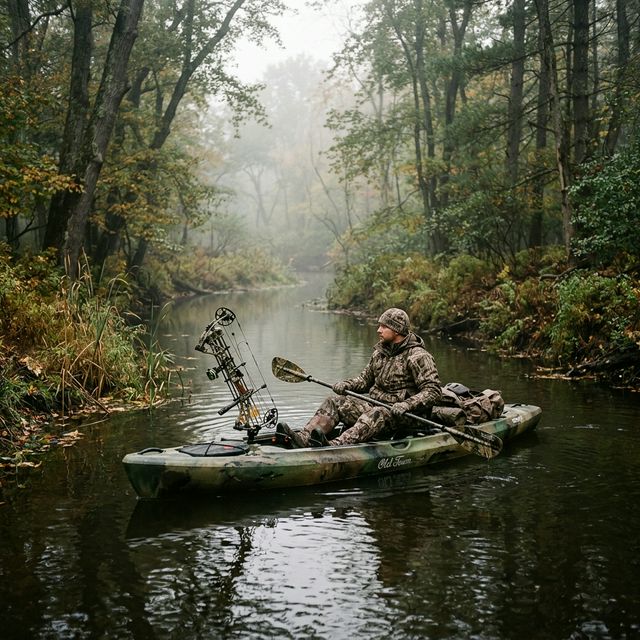
Kayak and Canoe Access: Reaching Unpressured Public Land Bucks
Reach remote public-land bucks by kayak or canoe. Learn scent-free water entry, island bedding tactics, pack-out logistics, and cold-water safety.
On high-pressure public land, the best hunters read maps differently. Roads and trailheads are crowded; water is a secret highway. A kayak or canoe bypasses the human wall along hiking paths and drops you onto oxbow islands, swamp ridges, and creek-bottom timber most boots never reach.
The advantage isn’t macho paddling—it’s zero ground-scent entry into places where mature bucks feel safe moving in daylight.
Why Does Water Access Beat Another Trailhead Walk?
Most hunters radiate from parking lots in predictable cones. Deer pattern that pressure within days of opener.
Water entry flips the script:
- You approach from angles other hunters skip
- You leave little to no interdigital/ground scent trail on the walk-in
- You reach flooded timber and islands too deep for casual wading
- You hunt midweek pockets that look “inaccessible” on a quick phone map
Combine water routes with smart e-scouting—E-Scouting Whitetails—and look for islands, oxbows, and creek bends with bedding cover within 50–150 yards of navigable water.
How Does Scent-Free Water Entry Change Deer Behavior?
Walking deposits skin cells and boot scent for 24–48+ hours on crossing trails. Deer smelling that conveyor belt night after night go nocturnal.
Paddling:
- Keeps your approach odor mostly over water
- Lets you land on a small pad of high ground and climb immediately
- Reduces the “human highway” effect on the main trail network
You still need wind discipline on the stand—Whitetail Scent Control and Understanding Thermals still apply once you’re on dirt.
What Boat Setup Works Best for Deer Hunting?
Kayak pros: Maneuverable, solo-friendly, fits tight channels
Canoe pros: Stable cargo capacity, easier dual paddler pack-outs
Jon boat: Great where motors/regs allow and water is open—less “stealth creek”
Outfit checklist:
- Quiet paddle (drip rings help)
- Anchor or stake-out pole for staging
- Dry bag for clothes/electronics
- Bow and stern lines
- Soft gun/bow case that won’t bang the hull
- Throw bag / whistle / PFD (non-negotiable)
Sit-inside touring kayaks track well on rivers; wider fishing kayaks offer stability for standing when appropriate—but standing to shoot from a kayak is an advanced, high-risk move most hunters should avoid. Hunt from land.
How Do You Pack Out a Deer With a Kayak or Canoe?
A 150–200 lb deer on a 50–70 lb kayak is a physics problem.
Options ranked by stability:
- Bone-out on the island and ferry meat bags in round trips
- Tow a plastic sled (jet-sled style) behind the kayak with a short tow line
- Canoe center-load the deer low, lashed, with two paddlers
- Whole deer on kayak deck—last resort; capsizes happen
Load rules:
- Keep center of gravity low
- Balance left/right before leaving the bank
- Ferry in daylight when possible after recovery
- Never overload past your swim-or-sink judgment—make two trips
Gutless packing pairs well with water exits—Gutless Method Packing Out a Deer—and a frame pack for the bank portage (Choosing a Hunting Pack).
What Safety Rules Matter in Cold Water Season?
November paddling is not July recreation. Cold water can incapacitate in minutes.
Non-negotiables:
- Wear a PFD over camo—every paddle
- Pack a dry bag with spare clothes and fire starters
- Tell someone your put-in, take-out, and return time
- Respect current, strainers (downed trees), and dams
- Treat waders as a drowning risk if you swamp—mobility dies when legs fill
- In ice fringe conditions, reconsider entirely
If water is near 50°F or colder, assume a capsize is a medical emergency rehearsal. Practice re-entry in warm conditions before season.
How Do You Hunt Islands and Swamp Ridges Once You Land?
Landing isn’t the hunt—it’s the door.
- Beach quietly on soft mud or secured wood—not rattling gravel if avoidable.
- Move inland 40–80 yards before hanging to avoid silhouetting on the bank.
- Hunt trails looping the high ground; bucks bed in the center thickets.
- Mind morning thermals rising off water and evening dumps into the wet edges.
- Use mobile gear—saddle or climber—because island trees vary (Mastering Saddle Hunting, Using a Climbing Tree Stand Safely).
Cameras on island scrapes can confirm daylight use without daily paddles—just don’t over-visit. Managing Trail Camera Data helps when you finally pull cards.
What Legal and Ethical Issues Should You Check First?
Before you float:
- Confirm public boundaries—islands aren’t always public even if the water is
- Check motor restrictions, seasonal closures, and waterfowl refuge rules
- Know firearm transport laws for boats in your state
- Avoid blocking ramps; break down gear fast
- Pack out trash—including your partner’s
Nothing burns water-access privileges faster than a messy ramp and a gut pile on a canoe rest.
How Do You Plan Put-Ins, Timing, and Noise Discipline?
Water multiplies sound. A paddle slap at dawn carries farther than you think.
Quiet-water habits:
- Load the boat 100+ yards from the ramp if other hunters are staging—reduce spotlight chaos.
- Pad the hull where bow limbs or rifle barrels rest.
- Time paddling to arrive with 45–60 minutes to hang before legal light when possible.
- Use shorter strokes near the island; ship the paddle quietly.
- On moving rivers, scout daylight first—strainers and sweepers are lethal in the dark.
Mark take-outs on your map app offline. Fog on big water disorients fast; a compass bearing from island to ramp is old-school insurance.
What Hunting Styles Pair Best With Boat Access?
- Mobile saddle/climber kits for unknown island timber
- Short morning sits on trails looping beds, then paddle out before recreational boat traffic
- Midday island sits on unpressured pockets during the rut
- Late-season paddles to standing ag across a river when boat ramps freeze—only with extreme ice caution
If you must leave a canoe overnight, lock it and hide it. Theft and “borrowed” boats are part of public-land reality near popular put-ins.
Pair water access with blood-trailing readiness—wet leaves and swamp mud complicate grids. Review Expert Blood Trailing Tips before you fling an arrow over flooded timber.
How Do You Practice Pack-Outs Before You Need Them?
Do not learn towing a deer sled in the dark after your first island kill.
In September, load the sled with sandbags approximating 60–80 lb, tow it 200 yards on calm water, and practice beach landings. Note how your kayak tracks, how the tow rope fouls, and how fast you fatigue. Adjust rope length—too long and the sled wanders; too short and it taps the stern.
Also practice boarding from a muddy bank with a pack on. Most capsizes happen at the edge, not mid-channel. If you cannot re-enter your kayak in a life jacket in warm training, redesign the system before November.
What Electronics Belong in a Dry Bag?
Phone with offline maps, compact headlamp, small power bank, and a whistle backup. Add a paper map in a zip bag for when batteries die. Mount a simple compass on your PFD zipper so you are not opening the dry bag mid-fog. Electronics fail; bearings do not. File a simple float plan with a friend: put-in, island target, latest check-in time, and what to do if you miss it. Water-access hunts fail safely when someone else knows the plan. Wear clothing you can swim in if forced—cotton hoodie layers under a PFD become dangerous dead weight after a November spill.
Frequently Asked Questions
Is a canoe or kayak better for beginners?
Canoes forgive cargo mistakes; kayaks sneak tighter water. If you’ll tow meat or hunt with a partner, start canoe. Solo stealth creeks favor kayaks.
How far should I paddle to find unpressured deer?
Sometimes 300–600 yards past the first bend is enough. Other systems need 1–2 miles. Watch for bank trails and other boot prints at put-ins.
Can I hunt from the boat?
Possible for some shotgun setups in open marsh, but most whitetail kills happen from trees on land. Use the boat as transport.
What about alligators, snakes, or bears?
Regional hazards are real. Know local fauna, keep meat secured, and don’t clean fish guts into your hunting island bed.
Do water-access bucks only move at night?
If truly unpressured, daylight movement can be excellent—especially midday on islands. Pressure from water hunters exists too; midweek still wins.
Paddle past the crowd, land quiet, and hunt the high ground other people only glass from the wrong bank. Water isn’t a barrier—it’s your unmarked trailhead.
Wildsnap • Open beta
Join Wildsnap and try the beta
In the open beta, you turn trail-cam data into actionable insights—free, fast, and simple.
No credit card