
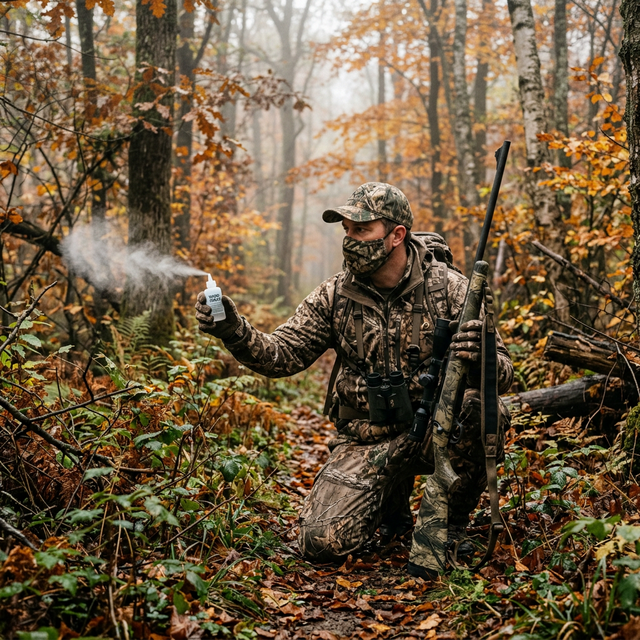
Camouflage Patterns: The Science of What Deer Actually See
Skip camo marketing hype. Learn silhouette breakdown, UV wash mistakes, tree-stand vs ground patterns, and why blaze orange still works for deer hunters.
Every summer, apparel brands launch a new camouflage pattern promised to make you invisible. History disagrees. Hunters killed giant bucks in plaid wool and plain buckskin long before photo-realistic leaves existed. Modern camo helps when it breaks your outline. It fails when it becomes a dark blob—or a UV beacon from the laundry room.
Separate retail storytelling from deer vision and contrast.
Silhouette Breakdown Beats Photo-Realism
Photo-real leaf prints look impressive at arm’s length in a store. At 30–40 yards in timber, tiny leaf clusters often merge into a solid dark mass—the “blob effect.”
More effective patterns usually use macro contrast: larger light and dark shapes that fracture the head-shoulders-torso outline. To a deer, those blocks can read like sky holes and branch gaps instead of a human torso.
What matters most:
- Break the vertical human outline
- Avoid a solid dark torso against a bright background
- Match general tone to your backdrop (sky vs dirt), not Instagram close-ups
Movement and scent still beat fabric. Camo only forgives small mistakes.
Tree Stand vs Ground: Different Backdrops
Where you sit changes what “good camo” means.
In a stand against open sky: Deer look up at your outline on bright gray/white sky. Dark swamp patterns silhouette you like a knot on the trunk. Prefer open, lighter, gray-leaning patterns that mimic sky gaps.
On the ground against timber: Darker, busier patterns can match shadowed bark and leaf litter. Sit with a broken backdrop—trunk, blowdown, brush—not empty space.
Conifer edges and cedar: Deeper greens and darker tones fit; pair with cover tactics from hunting cedar thickets and conifer swamps.
What Deer Actually See
Whitetails are dichromatic. They are weak with long-wave reds/oranges and strong in the blue/UV end of the spectrum. Full detail lives in understanding whitetail deer vision.
Practical takeaways:
- Blue jeans and blue hats are a bad idea—blue pops for deer
- Blaze orange required by law still appears dull/grayish to deer relative to human vision
- Sudden movement and contrast edges give you away faster than the wrong leaf species on a sleeve
The Laundry UV Problem
You can ruin excellent camo in one wash. Many household detergents add optical brighteners that make fabric fluoresce under UV. Deer-sensitive vision makes that glow more obvious at dawn and dusk.
Fix it:
- Wash hunting clothes in UV-free, scent-conscious detergents made for hunting apparel
- Skip fabric softener sheets that add fragrance and residues
- Air dry; store in a clean tote, not next to the gas can
Scent systems matter alongside vision—see whitetail scent control.
Blaze Orange and Real Safety
Camouflage hides you from deer; blaze keeps you visible to people with firearms. Follow your state’s hunter orange or blaze pink rules during firearm seasons—often around 400 square inches visible.
Orange does not “ruin” bowhunting ethics on shared land during overlap seasons; it prevents tragedy. Pair required blaze with pattern pieces that still break your outline (vest over camo jacket, not a solid dark hoodie alone).
Motion, Noise, and the Rest of Invisibility
Pattern choice is maybe 10% of concealment. Rank the rest higher:
- Wind and thermals first
- Slow hands and head
- Quiet fabric (avoid noisy shells in still October woods)
- Face and hands covered or painted—bare skin flashes
Ground blinds add fabric walls; pattern on your jacket matters less if the blind windows are dark caves. See ground blind strategies and tree stand placement and concealment.
Buying Less and Hunting More
A practical wardrobe:
- One lighter open pattern for stands/sky
- One darker timber/ground set
- Rain shell that is quiet, not necessarily hyper-detailed
- Base layers chosen for temperature, not camo print
Spend leftover budget on rangefinder practice, scent discipline, and stand sites. A $400 jacket cannot fix a stand on the wrong wind.
Fabric Noise, Sheen, and Hardware
Pattern is only one visual problem. Hard-shelled rain gear that sounds like potato chips in 40°F stillness will bust more deer than the wrong leaf print. Choose quiet fleece or soft shells for timber sits. Matte fabrics beat glossy logos that flash sun. Cover metal buckles and zipper pulls that glint when you turn.
Face nets and gloves matter more than sleeve pattern. Bare hands moving near your face are a high-contrast signal. If you hate full masks, use a light face covering and keep head turns slow. Sit with a broken backdrop—never on the open edge of a green field skyline unless you have a blind.
Seasonal Pattern Rotation
Early season green timber differs from gray November oaks. You do not need six matching suits, but swapping a greener set for a bark/gray open pattern after leaf drop helps on stands against sky. Snow camo is situational—half-snow woods often look wrong in solid white. Break white with darker layers or natural cover instead of buying a gimmick print you wear three days a year.
Wash and store each set so early-season sweat smell does not contaminate late-season layers. Vision and scent are separate problems that stack when ignored together.
Ground Blind and Natural Cover Synergy
If you hunt from a blind, interior shadow matters more than exterior print. Darken the inside, keep hands and face out of window light, and avoid sticking a logo-bright cooler where sun hits. Your jacket pattern is secondary when the blind itself is a black cave with a moving pale face in the window.
Outside blinds, build natural brush the week you hang, then leave it alone so deer habituate. Fresh-cut green limbs the morning of a hunt can create scent and visual flags. Dead wood and existing vegetation usually hide better than a sudden fort.
Test your setup: have a partner walk the approach trails at deer height while you sit. If they spot you instantly at 40 yards, fix backdrop and outline before you blame the camo brand. Most “pattern failures” are skyline and movement failures.
Finally, accept that scent and wind beat fabric every time. A perfect macro pattern on the wrong wind is just expensive advertising for your location.
Budget Hierarchy: Where Money Matters
If your budget is limited, spend first on:
- Quiet, weather-appropriate layers
- UV-free wash routine and scent storage
- Face/hand cover
- Pattern that roughly matches stand vs ground use
Spend last on limited-edition leaf prints. A $40 quiet fleece in the right tone with good backdrop beats a $300 photo-real jacket on a skyline. The industry sells anxiety; the woods reward outline control and wind discipline.
Borrow a friend’s contrasting jacket and glass each other at 40 yards in your hunting spot. That one exercise teaches more than another product video.
Checklist Before You Buy Another Jacket
Before you spend on a new pattern, run this checklist:
- Can I sit without skylining against open sky?
- Are my face and hands covered?
- Is my fabric quiet at 40°F?
- Did I wash without UV brighteners?
- Is the wind right for the sit?
If any answer is no, fix that first. Camo is the last 10%. Hunters who obsess over leaf species while ignoring wind become easy to glass—by deer and by other people. Buy fewer jackets, hang better stands, and move like you mean to stay unseen.
Quiet movement and a broken backdrop will hide you better than any leaf print. Master those, then let pattern choice be a small refinement—not the foundation of your hunting system.
Frequently Asked Questions
Do deer see camo patterns the way humans do?
No. They lack full human color vision and rely more on contrast, motion, and outline. Macro breakup usually beats tiny photo leaves at hunting distances.
Is solid clothing useless?
Not useless—especially broken by natural cover—but patterned contrast helps when you must sit more exposed. Solid dark against sky is a common failure.
Should I match the exact tree species in my woods?
Not necessary. Tone and macro breakup matter more than whether the print is “oak” or “pine.”
Can I wear blaze orange in a tree stand?
Yes when required or when firearm hunters are afield. Deer do not process orange the way humans do; other hunters do.
Does washing camo in baking soda help?
Unscented, brightener-free approaches help more than gimmicks. The key is avoiding UV optical brighteners and heavy fragrances.
True camouflage is outline control plus wind discipline. Master movement and scent first; then pick a pattern that does not turn you into a dark knot against the sky.