
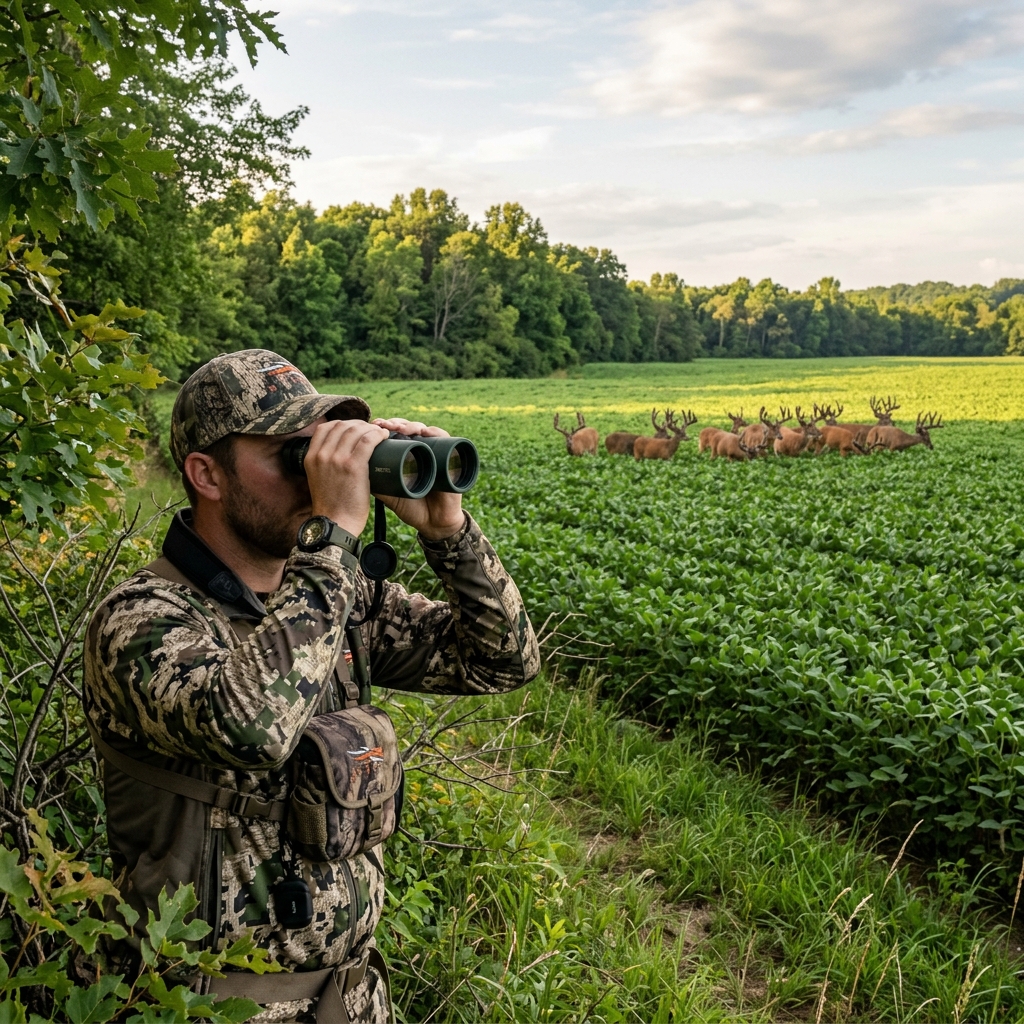
Summer Velvet Scouting: Glassing Bachelor Groups
The best time to build your fall hit list is in the heat of July and August. Learn exactly how to glass velvet bachelor groups and map out early-season patterns.
While the temperatures are mathematically safely in the 90s, most casual hunters are effectively at the beach. But for the serious whitetail fanatic, this is strictly scouting season. In July and August, bucks are at the absolute peak of their antler growth and their social behavior. They dependibley…
They form “bachelor groups”—small bands of bucks that feed openly in bean fields and clover plots during the last hour of daylight. This is the best time of year to see every mature buck on your property.
When Do Whitetail Bucks Form Bachelor Groups?
Bucks typically begin forming these social groups in late spring after their antlers begin to sprout. They remain in these groups throughout the summer because their testosterone levels are low and they aren’t yet competing for breeding rights. Being in a group provides more “eyes and ears” to watch for predators during a time when their velvet antlers are soft and vulnerable.
What is the Best Time of Day to Glass for Summer Bucks?
The “golden hour” is the only thing that matters.
- The Window: From 7:30 PM until dark.
- The Strategy: Set up on a high vantage point overlooking a major food source (like a soybean field or a lush hay field). Use a high-quality spotting scope or 10x42 binoculars to “pick apart” the edges of the timber.
Observation Distance: The goal is to see the deer without them seeing you. Stay in your truck or hide behind a fence row several hundred yards away.
Do Bucks Stay in the Same Area After They Shed Velvet?
This is the million-dollar question. Typically, once a buck “peels” his velvet in early September, his testosterone levels spike and his social dynamic shifts. The bachelor groups break up.
However, summer scouting still tells you three things:
- The Inventory: Which bucks survived.
- The Preferred Food: Which fields or plots are attracting the most activity.
- The Entry Point: Where the bucks are entering the field. Even if they shift their bedding, they will often use the same topographic “lines” to move towards food in the early season.