
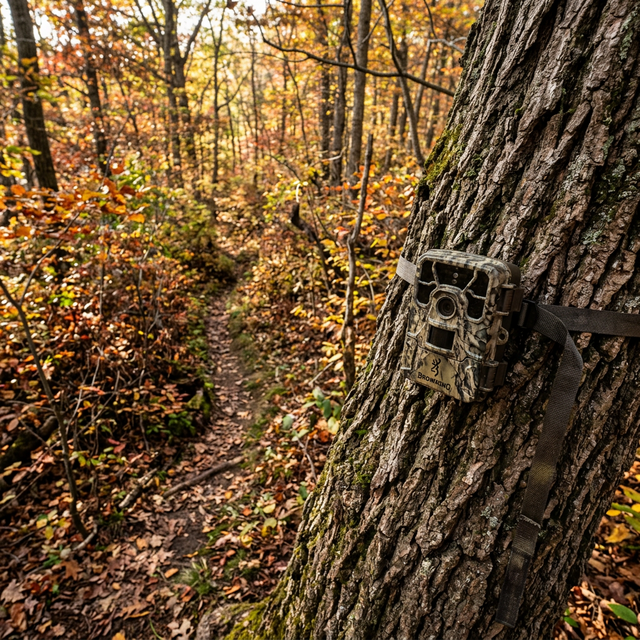
Trail Camera Placement: Advanced Tactical Strategies for the Rut
The whitetail rut fundamentally rewrites the biological rules of deer movement. Learn how to abandon stagnant food plots and aggressively deploy your trail cameras into high-traffic communication hubs and intense micro-funnels to intersect roaming giants.
During the heavily anticipated November rut, the entirely predictable early-season biological patterns of local whitetail deer are violently shattered. A massive, heavily patterned mature buck that reliably visited a specific soybean field precisely at sunset every evening in September will inexplicably completely abandon his core survival physical sanctuary. He will begin aggressively wandering miles entirely out of his biological home range, purely heavily driven by an overwhelming biological imperative to locate receptive estrus does.
At Wildsnap, our aggressive camera scouting teams fundamentally understand that checking standard field-edge trail cameras during the explosive late-October and early-November rut is mathematically a massive waste of tactical time. If you strictly leave your expensive cellular cameras sitting passively over a dead clover plot, you will successfully capture incredible photos of anxious yearling spikes and feeding fawns, but you will completely mathematically miss the transient, highly aggressive older-age-class giants.
To surgically intersect a cruising five-year-old buck, you absolutely must fundamentally radically alter your physical camera positioning. Here is our expert-level breakdown of heavily specialized trail camera deployment for the aggressive rut.
1. The Primary Communication Hubs
A cruising mature buck does not have the actual biological time or physical energy to aimlessly walk in random circles looking blindly for a receptive doe. He heavily relies precisely on the local established network of physical scent communication explicitly.
- The Primary Community Scrape: The absolute most mathematically lethal physical location for a rut-phase trail camera is a primary, active community scrape mathematically located securely deep inside a protected hardwood bottom. You are not explicitly looking for tiny, isolated “frustration” scrapes violently blown out along open field edges; you are explicitly hunting for massive, six-foot-wide dirt depressions physically situated under a heavily chewed licking branch where biologically every single doe in the entire local herd actively deposits her physical urine.
- The Scent-Checking Downwind Setup: Cruising bucks rarely physically walk directly into the middle of a doe bedding area; doing so fundamentally creates too much physical noise and heavily alerts the matriarch doe to their aggressive presence. Instead, a mature buck will strategically mathematically cruise explicitly 60 to 80 yards dead downwind of the heavily used bedding thicket, silently using his highly advanced olfactive radar to aggressively scent-check the entire massive area for the specific pheromones of estrus. You must set your cellular trail cameras precisely on this downwind, biological travel corridor.
2. Micro-Funnels and Geographic Pinch Points
During the rut, a wandering buck mathematically wants to cover the maximum possible physical square footage while strategically expending the absolutely lowest amount of physical survival energy. He actively physically relies strictly on major geographic features to actively funnel his cross-country travel.
- The Deep Creek Crossing: One of the most phenomenally consistent, historically lethal physical locations for intersecting a rut-crazed giant is a deep, vertical-banked river or impassable, heavy swamp channel featuring exactly one shallow, heavily eroded physical crossing point. Every single aggressive biological organism physically traveling through that specific square mile of heavy timber MUST mathematically physically utilize that single, wet rocky ford.
- The Barrier Intercept: If a massive, impassable eight-foot high chain-link commercial fence, a steep limestone cliff, or a heavily traversed modern interstate highway physically cuts violently through a block of public timber, it creates an absolute biological wall. You must aggressively hike down the physical edge of this impenetrable barrier until you miraculously locate the single, tiny physical opening—a compromised section of broken fence or a gentle dip in the cliff line. Suspending a trail camera directly over this specific geographic anomaly guarantees massive, highly concentrated biological traffic.
[!CAUTION] SCENT CONTROL: The Contamination Risk of Camera Checking
The absolute greatest tactical error made during the rut is aggressively, visibly physically walking in to manually check your SD cards exactly during the heavily critical pre-rut timeframe.
- The Cellular Mandate: We explicitly mandate the rigorous utilization of high-quality cellular trail cameras heavily during the rut. Manually trampling perfectly through a pristine, silent hardwood funnel exactly on November 5th to physically swap an SD card violently leaves a massive, terrifying human scent trail perfectly across the exact ambush location you intend to hunt.
- Sterile Handling: If you legally must utilize traditional, manual SD card cameras, you absolutely must strictly treat the physical SD card and the plastic camera housing exactly like a lethal biohazard. Exclusively wear heavy rubber physiological gloves exactly when touching the device, rigorously spray the housing heavily with premium ozone-based scent elimination spray, and legally physically enter and completely exit the physical camera site entirely via a heavily flowing creek bed whenever strictly mathematically possible.
Deploying tactical trail cameras aggressively heavily during the rut strictly basically inherently absolutely demands actively ignoring standard early-season biological food sources and proactively focusing intimately on massive geographic physical terrain bottlenecks and intense dense communication hubs.