
Trail Camera Tech: Maximizing Battery Life and Solar Setups
Stop 'soaking' your cameras with human scent dependibles................. every time you check them. Learn how to use lithium batteries and solar panels for months of maintenance-free scouting.
The biggest downside to modern cellular trail cameras is the battery consumption. Because these cameras are constantly searching for a signal and beaming high-resolution images to your phone, they can eat through a set of alkaline batteries in weeks.
Every time you go into the woods to change batteries, you leave human scent and risk spooking the very deer you’re trying to scout. The solution? High-tech power management.
Are Lithium Batteries Worth It for Trail Cameras?
The short answer: Yes, absolutely. While lithium batteries are twice as expensive as alkalines, they offer several massive advantages:
- Cold Weather Performance: Alkaline batteries rely on a chemical reaction that slows down in freezing temperatures. Lithium batteries are unaffected by the cold.
- Consistent Voltage: An alkaline battery’s power drops steadily as it’s used. A lithium battery stays at full power until the moment it dies.
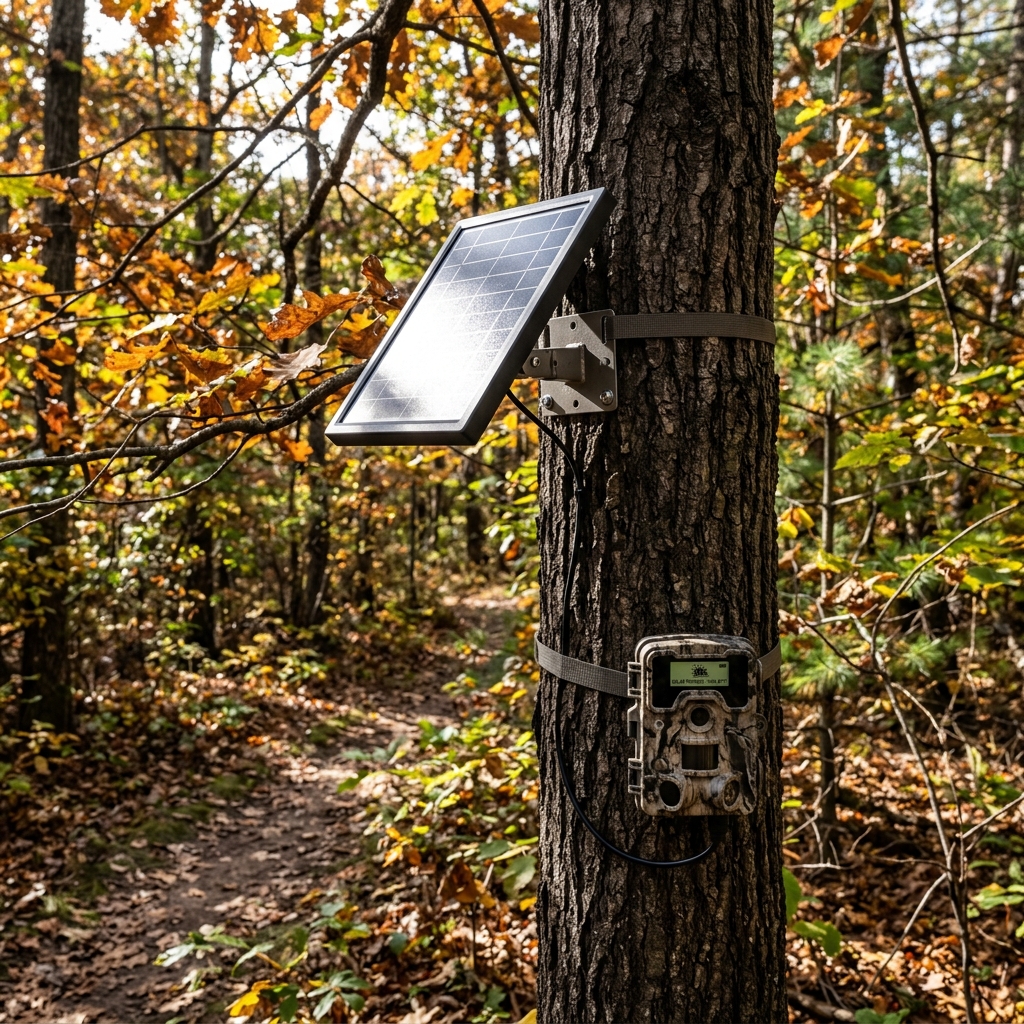
Solar Panel Strategy: For the ultimate “hands-off” scouting setup, a solar panel is a must. Most panels come with a long cord, allowing you to mount the camera in the shade (to prevent “false triggers” from heat) while placing the panel high in a nearby tree where it can catch 4-6 hours of direct sunlight.
Maximizing the Settings
Beyond hardware, your camera’s settings play a huge role in battery life.
- Reduce ‘Check-In’ Frequency: Instead of having the camera “Instant Transfer” every photo, set it to batch upload twice a day.
- Lower Video Quality: High-definition video is a massive power drain. Stick to high-res photos for long-term battery conservation.