
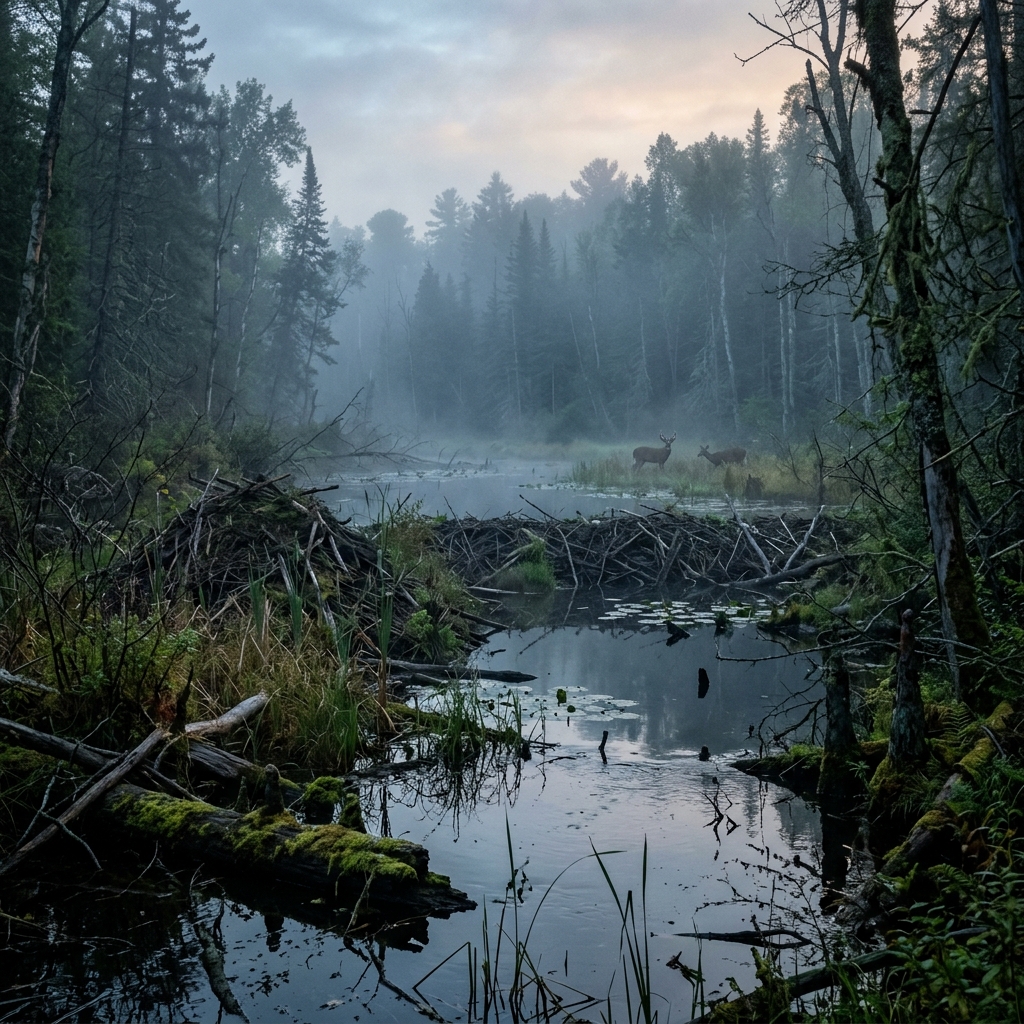
Water Traps: Hunting Beaver Ponds, Swamps, and Sloughs
Hunt beaver dams and swamp sloughs as dry-crossing funnels. Master scent over water, kayak access to islands, and safety around unstable dams and pathogens.
In Midwest bottoms and Northeast timber swamps, water steers deer as hard as fences and ag edges. A new beaver pond can turn bland flat woods into a predictable funnel overnight. To a mature buck, a dam is not debris—it is a dry bridge across thigh-deep muck he would rather not swim in November.
Control the crossing, and you control a piece of the swamp.
Why Deer Prefer the Dam
Whitetails can swim, but they conserve calories. Freezing belly-deep crossings lose to a packed mud-and-log walkway when one exists.
Funnel geometry:
- A 30–50 yard dam concentrates traffic from a wide wet area into a few feet of usable path
- Tracks, droppings, and rubs often stack on the high-ground abutments
- A stand 15–25 yards downwind of the dry crossing is a classic bow set
Think of it as a man-made (beaver-made) version of creek crossing logic.
Reading the Whole Wetland System
Do not only hunt the dam. Map:
- High-ground islands inside the flood
- Spillways and secondary crossings after high water
- Trails where cattails meet hardwood edges
- Escape routes bucks use when pressured from dry logging roads
Island bedding and edge funnels overlap swamp buck tactics and hunting cedar thickets and conifer swamps.
Thermals and Scent Over Water
Standing water changes scent behavior. Cool, heavy air pools on the surface and can slide down the creek channel for hundreds of yards—alerting deer you never see.
Stand rules:
- Prefer crosswinds that push scent out of the basin, not down the ditch
- Sit higher when possible; low stools in evening bottoms are scent traps
- Recheck milkweed often; wetland thermals flip hard at dusk
Thermal fundamentals: understanding thermals.
Access: Kayaks, Waders, and Back Doors
The swamp’s best feature is the barrier it puts in front of lazy hunters.
Access options:
- Kayak/canoe — silent glide to interior islands; zero boot trail on the approach (kayak and canoe access hunting)
- Chest waders — cross channels that boot hunters will not
- Frozen edges — late season ice can open or close routes; test every step
Enter on high wind days when splash and brush noise bury in white noise—same idea as aggressive swamp entries in swamp buck tactics.
Stand Placement Details That Matter
Practical checklist:
- Confirm the crossing is still used after the latest rain (water levels move trails)
- Clear one quiet lane; do not skyline yourself on a lone tree in open marsh
- Plan the shot before a deer is mid-dam—animals linger briefly on abutments
- Mark a dark exit that does not walk the dam after last light if deer feed nearby
Cellular cams on abutments beat weekly boot checks—cellular trail cameras.
Pack-Out and Shot Discipline
Dragging through muck is miserable. Favor pass-throughs and short blood trails. Mark blood high on cattails; water can erase ground spots. Trailing protocol: expert blood trailing tips.
If recovery runs long in mild weather, remember meat spoilage limits.
Safety: Dams, Cold Water, Pathogens
Beaver dams collapse. Logs shift. Black water hides stakes.
Non-negotiables:
- Probe every step with a staff before committing weight
- Treat dam tops as unstable bridges, not sidewalks
- Wear a PFD when paddling cold season water
- Never drink untreated pond water—Giardia (“beaver fever”) and other pathogens thrive here
- Keep open cuts out of stagnant water; pack antiseptic
Hypothermia after a wader flood is a real emergency. Carry fire starters in a dry bag.
Seasonal Timing in Wet Country
- Early season: Edges with soft mast near water
- October: Mast flats on the dry rim while dams still funnel travel
- Rut: Bucks cruise abutments scent-checking doe traffic
- Late season: Thermal islands and the shortest line to remaining food
Rut lockdown in thick cover can push bucks deeper into wet sanctuaries—hunting the rut lockdown phase.
Water Level Changes and Crossing Shifts
Beaver ponds are not static. Heavy rain can flood a dam and force deer to new crossings on higher ground. Drought can open mudflats deer will not trust. Recheck abutments after every major weather event before you trust last month’s stand.
Secondary spillways and old abandoned dams often become the new pinch. Walk the shoreline looking for fresh tracks entering cattails. If the main dam is stacked with hunter scent, the quiet secondary crossing 150 yards away may be the real X. Mark multiple winds for each crossing so you are not one-and-done when the forecast flips.
Gear List Tailored to Wet Country
Standard timber kits fail in beaver country. Prioritize:
- Chest waders with a belt and repair kit
- Wading staff marked for depth
- Dry bag with spare insulation layers
- PFD for paddle approaches
- Extra socks in a waterproof sack
- Bright flagging that stays visible in cattails for blood trailing
Test gear in daylight before a dark morning insert. The first time you learn your waders leak should not be 200 yards from an island bed at 5:10 a.m.
Night Navigation and Exit Discipline
Swamps disorient after dark. Mark your exit with reflective tacks on the way in, and never assume you will “just follow the dam back.” Flooded timber looks identical in a headlamp. A floating GPS track plus reflective markers prevents a cold swim.
Exit timing matters. Climbing down into a splashy shoreline while deer stand on the abutment educates the crossing for days. Wait for full dark, or use a canoe extract that never walks the dam.
If you shoot a deer across the pond, stop and plan recovery like a water operation—not a dry-ground drag. Boats, sleds, and partners turn ugly pack-outs into manageable work. Ego solo drags through chest-deep muck are how hypothermia stories start.
Shot Angles on Narrow Crossings
Deer on dams often present steep quartering angles or frontal views as they pick their footing. Pre-select the yardage marker on the abutment where you will take a broadside or quartering-away shot—and pass on the rest. A low-percentage frontal at 22 yards over water is a great way to lose a deer in lily pads.
Clear one primary lane and one emergency lane. Do not create a highway of cut brush that screams “stand here.” Expect the animal to pause when leaving the dam onto high ground; that pause is frequently your best angle.
After the shot, watch longer than usual. Deer that pile up in water create recovery hazards. Wait for expiration when safe, then approach with staff, partner, and a plan to keep firearms and bows dry and controlled.
Integrating Swamps Into a Larger Season Plan
Do not only hunt beaver ponds in November desperation. Scout them in late summer when water is low and walking is easier. Mark dams, islands, and abutments, then leave until winds and season phases match.
Use swamps as pressure-escape valves when dry ridges get pounded on opening weekends. A midweek evening on a quiet dam can outperform a crowded oak flat. Combine swamp crossings with nearby mast on the dry rim for hybrid sits—deer often feed on oaks then cross water to bed on islands.
Keep a dedicated dry bag of swamp gear so you are not reinventing the kit under a headlamp. Prepared hunters treat wet country as a primary plan, not a last resort.
Frequently Asked Questions
Will deer swim if I block the dam with scent?
They may swim or shift to another crossing. Play wind so scent misses the approach, and do not stand on the dam itself.
How do I find beaver ponds on a map?
Look for sudden ponds on creeks in satellite view, chewed aspen/willow, and topo flat spots that hold water. Ground-truth after storms—dams blow out and rebuild.
Are morning hunts viable?
Yes when thermals and access allow you to reach the stand without pushing the island. Many hunters still prefer evenings with falling light on the crossing.
Can I hunt the dam during gun season?
Yes if legal and safe—wear required blaze and be sure of backstops. Other hunters may walk dams too; arrive early.
What boots work best?
Knee boots fail in beaver country. Chest waders with a belt, or a boat approach, are the real tools.
Embrace the muck on purpose. Hunt the dry crossing, keep scent out of the ditch, and use water as a gate the crowd will not open. The bucks that live here did not get old by walking logging roads at noon.
Wildsnap • Open beta
Join Wildsnap and try the beta
In the open beta, you turn trail-cam data into actionable insights—free, fast, and simple.
No credit card