
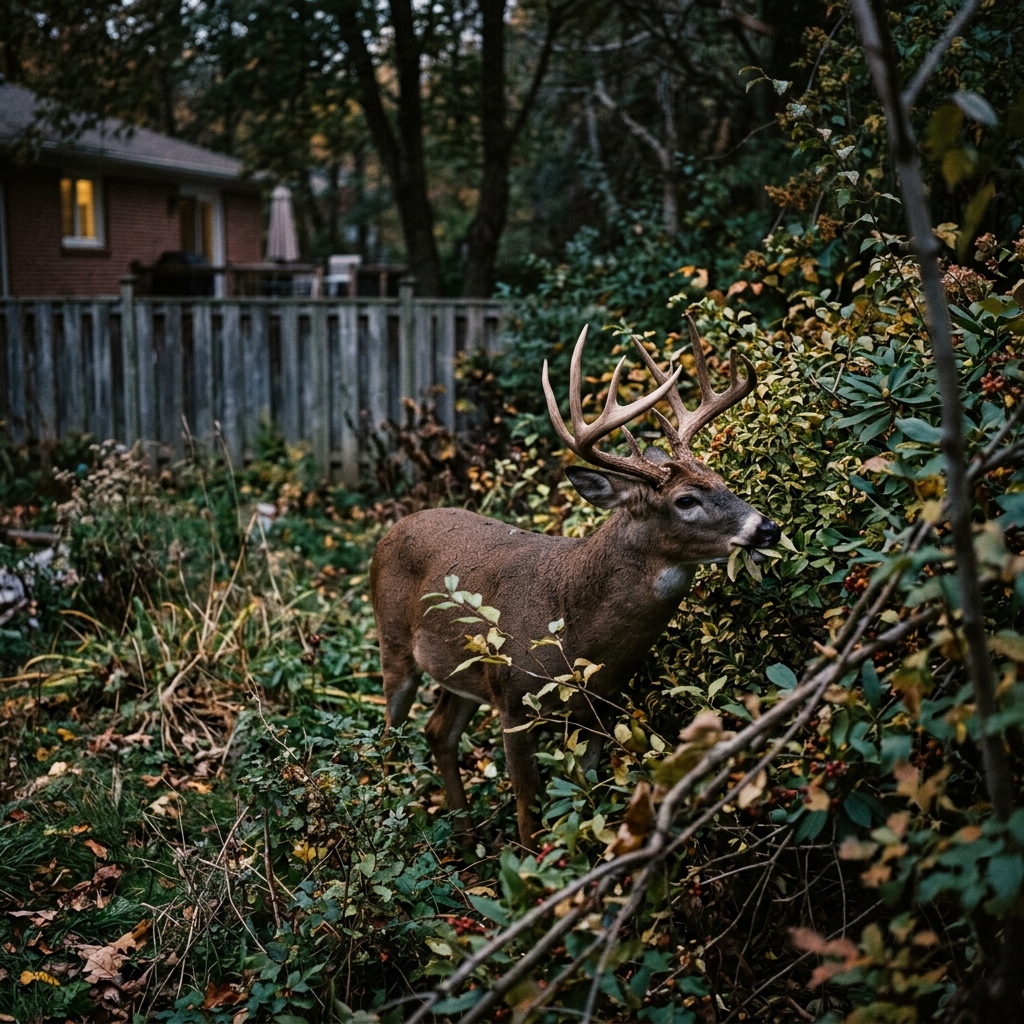
Managing Nuisance Deer: The Aggressive Necessity of Depredation Tags and Urban Hunts
Learn how depredation tags and urban archery programs work, who qualifies, and how ethical hunters help reduce crop damage and herd numbers.
In many parts of the United States, whitetails are no longer only a “big woods” animal. They thrive in suburbs, greenbelts, and farm edges—often past the land’s comfortable carrying capacity.
Unchecked numbers drive vehicle collisions, crop loss, landscape damage, and higher risk of disease pressure such as Chronic Wasting Disease (CWD) and tick-borne illness in people. State agencies respond with nuisance and depredation programs that let landowners and vetted hunters remove deer outside (or beyond) normal season structures. Participation is conservation work, not just “extra hunting.”
What Is an Agricultural Depredation Tag?
When deer hammer soybeans, corn, orchards, nurseries, or hay, losses can reach thousands of dollars in days. A herd of 40 to 60 deer can wipe out vulnerable plantings overnight on small acreage.
A depredation tag (also called a damage permit or kill permit) is a state-issued authorization allowing landowners—or hunters they designate—to remove deer when damage is documented. Rules vary by state, but the management goal is usually the same: reduce antlerless deer that drive population growth.
How programs typically work
- Landowner documents damage (photos, acreage, crop type, dollar estimates).
- Agency issues a set number of tags, often doe-focused.
- Hunters fill tags under permit conditions: dates, weapons, reporting, and carcass handling.
- Many seasons run in summer heat or late winter when crop pressure peaks and recreational seasons are closed.
Farmers rarely have time to sit every evening. Trustworthy local hunters become the field team. Meat often goes to the landowner’s freezer or donation networks such as Hunters for the Hungry.
Urban and Suburban Archery Programs
Suburbs act like predator-free sanctuaries: limited firearms hunting, rich landscaping forage, and fragmented cover. When city parks and backyards exceed carrying capacity, browse lines appear and deer-vehicle crashes climb.
Many municipalities run urban archery or sharpshooting contracts. Bowhunters who join these programs should expect:
- Weapon limits: compound, crossbow, or both—rarely centerfire rifles inside city limits.
- Proficiency tests: common standards are 4- to 5-inch groups at 20 to 30 yards from elevated or ground positions.
- Earn-a-buck or doe quotas: harvest antlerless deer before any buck opportunity.
- Shot-angle and recovery rules: no shooting toward houses, roads, or property lines; mandatory recovery plans.
- Hours and access: often evening-only on mapped parcels with written permission.
If you hunt tight lots and small woodlots, tactics from suburban bowhunting and small woodlot strategies transfer directly.
Ethics, Optics, and Community Relations
Nuisance hunts happen in view of neighbors who may not hunt. Your conduct decides whether programs survive.
- Park legally, keep voices down, and never display firearms or bows casually in driveways.
- Recover every animal quickly; use lights and help when needed.
- Dispose of gut piles per local rules—often off-site or buried, never beside a playground trail.
- Share venison when appropriate; food banks turn management into community benefit.
- Report harvests on time. Late paperwork can kill a landowner’s future permits.
Treat every sit like you are representing hunters to a city council that can shut the program down with one vote.
Tactics That Work on Depredation Hunts
These hunts often occur when deer patterns differ from November:
- Food first: beans, sweet corn, orchards, hostas, and arborvitae draw predictable evening movement.
- Short sits: 90 minutes before dark can outperform all-day sits in 90°F weather.
- Ground blinds and elevated portables: many urban trees are poor for climbers; brushed ground blinds shine in fence corners.
- Quiet access: enter from the house side or mowed path so you do not bump deer off the crop edge.
- Doe groups: focus on adult does; removing yearling bucks does little for long-term reduction.
Summer heat demands hydration and a fitness baseline even on short walks—dragging in humidity is harder than it looks.
Legal and Safety Checklist
Before you accept a tag, confirm:
- Written landowner permission and a copy of the permit in your pack
- Legal shooting hours and weapon restrictions for that exact parcel
- Tagging, sealing, and reporting deadlines (often 24 hours)
- CWD rules if your zone requires sampling—see our CWD guide
- Backstop and house proximity for every shot lane
- Local transport and carcass disposal rules
Never assume regular deer-season laws automatically apply to a damage permit. Read the packet.
Common Mistakes on Nuisance Hunts
- Treating a doe tag like a trophy hunt and passing mature antlerless deer
- Setting up on the field edge with no wind plan in swirling suburbs
- Ignoring neighbor politics and creating complaints
- Poor shot selection through chain-link, decks, or thin brush
- Failing to have a freezer or donation plan before the first kill
- Overhunting one backyard until deer go fully nocturnal, then blaming “no deer”
Timing Through the Year
| Season | Typical role of nuisance hunting |
|---|---|
| Late spring–summer | Crop protection; orchard and garden defense |
| Early fall | Bridge into regular seasons; urban archery openers |
| Post-season / winter | Damage permits on farms; herd reduction after recreational pressure |
Coordinate with the landowner’s regular hunters so you do not stack pressure on the same 10 acres every night. Pressure management ideas from hunting leases apply even on small farm permits.
Working With Landowners and Agencies
Depredation success is half shooting and half relationship management.
- Answer calls and texts the same day—farmers hire reliable people, not ghosting hobbyists.
- Ask where damage is worst this week; crop preference shifts as fields mature.
- Offer to help with fencing repairs or carcass removal when appropriate; goodwill renews tags.
- Keep a harvest log: date, sex, GPS or field name, shot distance, meat destination.
- If the agency requires samples (CWD, age), carry kits in the truck so you never skip compliance.
Urban programs often include mandatory orientations. Take them seriously. One reckless arrow toward a patio can end hunting access for an entire neighborhood association.
Summer Heat Logistics for Crop Protection
Many agricultural tags are filled in July and August.
- Hunt the last 90 minutes of light when deer step into beans or sweet corn.
- Use shaded access and hydrate—heat exhaustion on a drag is common.
- Prefer elevated portables or brushed blinds on fence corners with safe backstops toward open fields, never houses.
- Expect mosquitoes and humidity; quiet mesh face covers help without adding scent bombs of bug spray on clothing (treat gear ahead of time).
- Have coolers and ice ready before the shot; 85°F air spoils meat fast—quarter and chill within the first hour when possible.
Document before-and-after browse pressure with phone photos for the landowner’s next permit application. Hunters who help with paperwork get invited back.
Field Notes and Practical Numbers
Use these benchmarks to keep decisions concrete rather than vague:
- Log every sit with date, wind direction, temperature, and deer observations—patterns appear after 8 to 12 recorded hunts on the same property.
- Limit first-time pressure on a hot pin to one quality sit, then rest at least 24 to 48 hours unless the rut calendar demands otherwise.
- Carry a short checklist in your phone notes so gear and safety steps do not depend on memory at 4:30 a.m.
- Revisit your plan weekly during the season; crops, pressure, and breeding phases change the right answer.
- When in doubt, choose the option that leaves mature deer less educated for the next sit—longevity beats one burned encounter.
These habits compound across a season and across years on the same ground.
Frequently Asked Questions
Are depredation tags only for does?
Most programs prioritize antlerless deer. Some permits allow bucks; many do not. Always read the specific authorization.
Can I sell the meat from a nuisance deer?
Generally no. Wildlife meat is not a commercial product. Use it, gift it legally, or donate through approved channels.
Do I need a regular hunting license too?
Often yes—plus the damage permit. Some states waive portions for the landowner. Verify before you hunt.
How many deer should a suburban program remove?
Agencies set targets from local density, crash data, and habitat. Hunters fill assigned tags; they do not invent quotas.
Is spotlighting or baiting allowed on damage permits?
Sometimes, under strict permit language—never assume. Illegal methods on a “special” hunt still bring charges.
Depredation and urban archery programs put skilled hunters where biologists need help. Show up prepared, shoot carefully, report honestly, and you protect crops, neighborhoods, and the long-term future of hunting access in crowded landscapes.
Wildsnap • Open beta
Join Wildsnap and try the beta
In the open beta, you turn trail-cam data into actionable insights—free, fast, and simple.
No credit card