
Barometric Pressure and Deer Movement: Fact vs. Fiction
Does a rising barometer mean better deer hunting? Learn the inHg ranges, pre-storm feeds, cold-front timing, and how to track pressure trends in the field.
Ask a veteran where to be in the woods and you will often hear “rising barometer.” Temperature and wind get the headlines, but atmospheric pressure—the weight of the air—shows up in campfire lore as a secret movement switch. Some of that lore holds up. Some of it oversells a single number. The useful approach is to treat pressure as one reliable piece of a larger weather puzzle, not a magic forecast.
Does Barometric Pressure Affect Deer Movement?
Likely yes—indirectly and as part of broader weather change.
Deer do not read inches of mercury, but they sense approaching systems. Rapid pressure drops often precede storms. Rapid rises often follow cold fronts. Those same fronts bring temperature swings, wind shifts, and cloud-cover changes that strongly influence feeding schedules. Biologists and hunters debate how much pressure alone matters versus the package of cues that travel with it. In the field, the practical answer is simple: moving pressure paired with a temperature drop is worth rearranging your work calendar.
When pressure is high and stable under blue-bird skies after a front, daytime movement can be good—but the hours into and just after the change frequently outproduce the pretty day everyone waits for.
What Is the Best Barometric Pressure for Deer Hunting?
Hunters commonly cite roughly 30.00 to 30.40 inHg as a productive band for daylight activity in many U.S. regions. Treat that as a guideline, not a law.
More useful than a static number:
- Rising after a front: Clear skies, falling temperatures, and a climbing barometer after a cold front often mean deer on their feet.
- Rate of change: A jump of 0.05 to 0.10 inHg in a few hours draws more attention than a flat 30.20 all week.
- Local normals: Coastal and mountain baselines differ. Learn what “high” means on your hunting unit, not only what a national blog quotes.
Combine pressure with a 10 to 15°F cool-down and you have one of the strongest sit-all-day excuses of the season. Our broader weather and deer activity guide covers temperature swings and wind in more depth.
Do Deer Move When the Barometer Is Dropping?
Often they do—especially before the storm arrives.
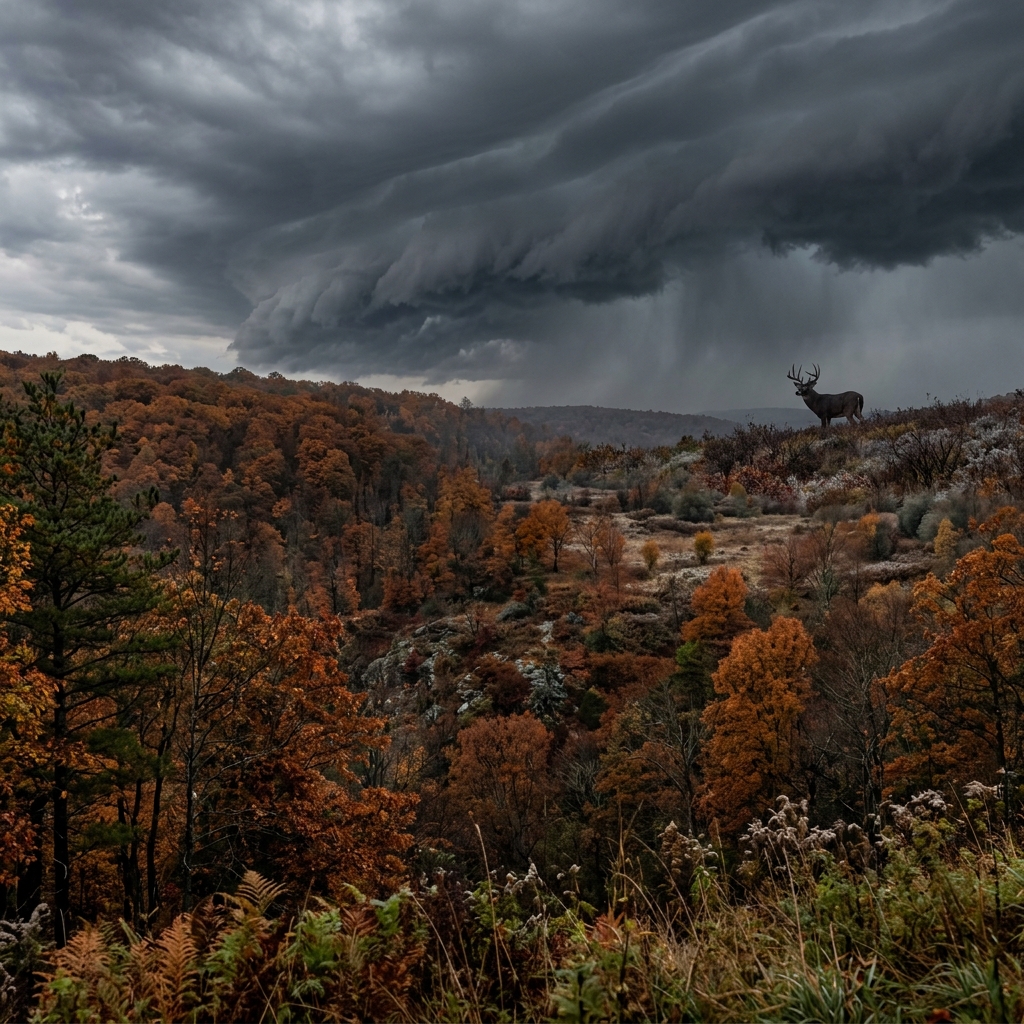
A falling barometer usually signals an approaching low. Whitetails are survival feeders. Many hunters report a pre-storm feeding window in the final 2 to 6 hours before hard rain or snow, when deer load up ahead of bedding through the worst weather.
Tactics for a dropping glass:
- Hunt primary food—beans, corn, oak flats, brassicas—not deep bedding guesses.
- Get in early; the frenzy can happen midday, not only at dusk.
- Be ready to climb down if lightning enters the picture; metal stands are not shelters.
- After the storm locks in with driving rain and chaos, movement may crater until the system passes.
The drop is an opportunity. The violent peak of the storm is often a safety and comfort problem more than a hunting problem.
Cold Fronts, High Pressure, and the Day-After Myth
A classic mistake is waiting for the gorgeous calm day after a front while skipping the messy transition.
Productive sequence many hunters target:
- Pre-front feed as pressure falls
- Flash cool-down as the front arrives (temperature crash of 10 to 20°F)
- Rising pressure and northwest winds as high pressure builds behind the front
- Secondary peak the following morning in food and staging cover
Blue-bird afternoon two days later can still be fine—especially in the rut—but do not sleep through stages 1 through 3. If you only get one vacation day, take the front, not the postcard.
How to Track Pressure in the Field
You do not need a handheld aviation barometer, though they work.
Options:
- Smartphone apps with station pressure and trend arrows (HuntStand, onX, weather services)
- GPS units with barometric altimeters (Garmin and similar)
- Home weather stations if you live near your ground
- Handwritten log: date, time, inHg, temperature, wind, and deer seen
Focus on trend, not obsession over hundredths. Note whether pressure is rising, falling, or flat over 6, 12, and 24 hours. After a season of notes, your local “hot” patterns become obvious.
Trail cameras make excellent pressure labs. Tag photo bursts against weather logs. Platforms like WildSnap that correlate activity with weather help you see whether your bucks actually move on rising glass—or only when that rise pairs with a temperature crash.
Pressure Plus Wind, Moon, and Human Traffic
Pressure rarely acts alone.
- Wind: A rising barometer with 25 mph gusts may shift deer to leeward cover rather than shut them off completely.
- Temperature: A rising barometer during an unseasonable warm-up can still produce sluggish midday sits.
- Moon and solunar charts: Secondary at best for most whitetail hunters; do not skip a front for a “major feed” that falls at 2:00 a.m.
- Human pressure: A perfect 30.30 rising Wednesday often beats a perfect Saturday. Pair weather timing with weekday hunting strategy.
Stand choice should match the event. Pre-storm: food. Post-front mornings: trails from bedding to leftover food. Rut: scrapes and does still matter more than decimals on a glass.
Building a Simple Pressure Playbook
Use this field checklist:
| Trend | Likely deer response | Where to sit |
|---|---|---|
| Fast drop | Pre-storm feed | Food sources |
| Crash + cold | Daylight surge | Trails and staging |
| Steady rise | Continued movement | Bedding-to-food |
| Flat high, warm | More nocturnal | Evenings only / wait |
| Violent storm peak | Bedded / safety risk | Stay safe |
Keep stands ready for both SW pre-front winds and NW post-front winds. Access routes planned during summer scouting—see velvet bachelor glassing—pay off when you only have a two-hour window to cash a front.
Logging Your Own Pressure Database
Generic “30.20 is magic” advice fails without local notes. Build a simple season log:
- Date and stand
- Pressure (inHg) at sit start and end, plus 12-hour trend
- Temperature change over the prior 24 hours
- Wind speed/direction and whether thermals behaved
- Deer seen, sex/age class, and time of sighting
- Human pressure notes (truck count at the ramp, voices, etc.)
After 20 to 30 sits you will see your unit’s real triggers. Some properties light up on the pre-storm drop; others shine on the first crisp morning behind a front. Camera grids accelerate the lesson. Tag photo bursts against the same weather fields. If WildSnap (or your own spreadsheet) shows mature buck daylight clustered on rising pressure plus a 12°F drop, stop debating forums and hunt that combo.
Do not ignore solunar apps entirely if you enjoy them—but never skip a documented front for a “minor feeding period” at noon under a rising warm-up. Pressure and temperature are primary; lunar tables are optional seasoning.
Finally, safety: hunting the leading edge of storms means lightning plans, rain layers that stay quiet, and the discipline to climb down when thunder closes in. A perfect barometer reading is worthless if you are the tallest metal object on the ridge. Cross-check severe weather the same way you cross-check wind for stand placement.
Regional Nuance and Microclimates
A barometer reading that means “hunt now” on open Illinois crop ground may mean less in steep Appalachian hollows where thermals and fog dominate deer schedules. Coastal humidity, mountain elevation, and desert Southwest swings all change how fronts feel on the ground. Use published inHg ranges as a starting template, then let your log rewrite the rules for your county.
Microclimates matter inside a single farm. Creek bottoms can hold warmer air and delayed pressure feel compared with ridge tops. If your best buck beds on a north slope, the post-front temperature crash may hit him harder and earlier than deer on a sunny south browse line. Place stands with that nuance in mind rather than assuming the whole property reacts in unison.
When forecasts disagree—phone app vs truck dash vs home station—trust trend direction over absolute decimals. A unit that climbs from 29.85 to 30.15 is telling you more than an argument about whether the true station pressure is 30.22 or 30.28.
Frequently Asked Questions
What barometric pressure is best for deer hunting?
Many hunters prefer roughly 30.00–30.40 inHg, especially when pressure is rising after a cold front. Trend and temperature change usually matter more than any single reading.
Should I hunt when the barometer is falling?
Yes—particularly in the hours before a storm when deer often feed heavily. Prioritize food sources and watch lightning safety.
Is barometric pressure more important than wind?
No. Wrong wind ruins a sit regardless of pressure. Use pressure to pick when to hunt; use wind to pick where.
Do I need special apps to track pressure?
Any reliable weather app with pressure trend works. Consistency in logging your hunts matters more than the brand.
Why did I see nothing on a “perfect” high-pressure day?
Deer may have moved overnight, shifted to leeward cover, or locked down from human pressure. High pressure is a positive factor, not a guarantee—especially midsummer heat or post-rut lock-down.
Know which conditions actually trigger daytime activity
Connect your cameras and see which conditions really trigger movement — not guesswork.
No credit card
Wildsnap • Open beta
Know which conditions actually trigger daytime activity
Connect your cameras and see which conditions really trigger movement — not guesswork.
No credit card