
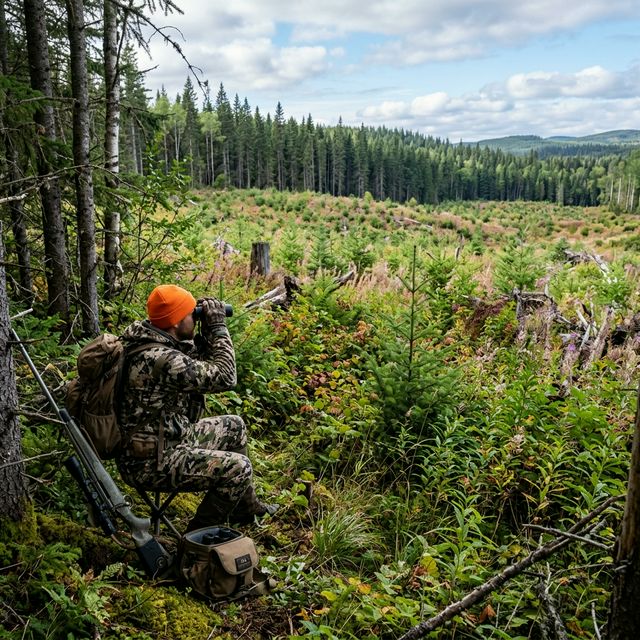
Hunting Clear-Cuts and Logging Roads: Mastering the Thick Stuff
Fresh clear-cuts look ugly to hunters but are whitetail paradise. Learn age-class timing, logging-road ambushes, and early successional cover tactics.
A commercial clear-cut can look like a war zone—slash piles, stumps, and a wall of briars. To a mature buck, that same mess is food and security. When the canopy comes down, sunlight hits the forest floor and triggers early successional habitat: stump sprouts, blackberry, pokeweed, and dense saplings that deer use hard for years.
Hunters who only sit oak flats and open timber often walk past the best daylight bedding on the property. The thick stuff is harder to access quietly, but that difficulty is exactly why older bucks live there. Pair satellite history with on-the-ground e-scouting so you know the cut’s age before you hang a stand.
Why Clear-Cuts Hold Deer
Removing the canopy does two things at once:
- Food explosion — high-protein browse and soft mast in one place.
- Security cover — visual walls that stop human sight lines at 20–40 yards.
Deer do not need a pretty woods. They need calories and a place where they hear you before you see them. A 4- to 6-foot regenerating cut delivers both. Compare that with closed-canopy pole timber, where the understory dies and deer mostly travel through rather than live.
The Year 3 to 7 Sweet Spot
Not every cut is equal. Age class decides whether bucks bed there in daylight or only feed after dark.
Years 1–2: Open buffet
Fresh cuts grow green fast, but they feel exposed. Mature bucks often feed there at night and bed in adjacent timber. You can still hunt edges and skid trails, especially in the early season, but do not expect midday beds in the middle of a wide-open year-one cut.
Years 3–7: Primary bedroom
By year four, regenerating brush is often 4–6 feet tall. Blackberry, saplings, and slash create a visual wall. Bedded deer can hear movement at 50+ yards while staying hidden. This is the prime window for hunting clear-cuts as bedding and daytime staging cover.
Years 10+: Pole-timber desert
Once new trees hit roughly 20 feet and the canopy closes, low browse dies. Briars fade. Deer stop using the interior as a primary bedding hub and shift to younger cuts or edges. Always check historical imagery—many “thick” cuts on a topo map are already past peak.
Reading Logging Roads and Skid Trails
The hardest part of a 5-year-old cut is getting in without sounding like a bulldozer. Deer solve that problem for themselves: they use compacted logging roads and skid trails as low-resistance routes through slash and briars.
What to mark on your map
- Main haul roads that still hold a path of least resistance
- Skid-trail “hubs” where three or four trails meet
- Soft edges where the cut meets uncut timber
- Wet seeps or residual hardwood pockets inside the cut
Intersections inside the cut are natural checkpoints. During the rut, cruising bucks scent-check does bedded in the thicket by working these trails. For bedding theory that applies here, see whitetail bedding areas.
Stand Placement: Edge Ambush, Not Road Center
Do not hang on the open road itself. A mature buck stepping into the lane will pick up a skylined silhouette immediately.
Better setup:
- Set 15–20 yards into the mature timber edge overlooking the road or hub.
- Use the dark timber shadow to break your outline.
- Keep one or two clear shooting lanes into the trail without clearing a highway of brush.
- Enter from the downwind timber, not through the loudest part of the cut.
If you must cut lanes, keep them narrow and purposeful—see practical guidance in cutting shooting lanes.
Pinch Points and Funnels Inside Cuts
Natural funnels still exist in ugly ground. Look for:
- Narrow gaps between slash piles where deer must pass single-file
- Fence lines or property boundaries cutting through the cut
- Creek crossings that force deer onto firm ground
- Residual oak or pine islands that deer bed against
These pinch points let you hunt one small area instead of wandering acres of identical briars. Mark them on satellite first, then confirm with boot leather on a quiet weekday.
Seasonal Timing Inside Cuts
- Early season: Focus on green browse edges and soft mast near the cut perimeter. Morning sits on trails leading back to timber bedding can be strong.
- October: Pressure and changing food can push bucks deeper into regenerating cover. Midday sits near hubs pay when the woods are quiet.
- Rut: Hunt trail intersections and doe bedding edges. Bucks will grid the thicket; you want the downwind seam, not the center.
- Late season: If the cut still holds browse above the snow line, use it as a food-to-cover connector. Older pole timber cuts lose value fast once the understory is gone.
Pine-country hunters should also compare tactics in pine plantations—similar logic, different grid layout.
Access and Noise Control
Move slowly. Wet mornings after rain are quieter than frosty leaf days. Rubber boots help in muddy skid trails. Stop every few yards inside regenerating cover—deer bed close, and jumping one can educate a whole pocket.
Practical access tips:
- Park farther away and use timber edges rather than walking the open haul road in daylight if pressure is high.
- Hang stands midday when deer are bedded deeper, or use a mobile saddle setup so you are not stuck in a bad wind.
- Mark exit routes that keep your scent out of the cut’s core.
If you use an e-bike on private land where allowed, ride the haul road only when deer are bedded and dismount well before the stand—see e-bike access tactics for noise and scent rules.
Trail Cameras in Early Successional Cover
Cellular or SD cameras on skid-trail hubs reveal age-class movement without daily intrusion. Set cameras chest-high on residual trees at trail intersections, not on open roads where they are easy to spot.
Check cards on a schedule that does not pattern your entry. One midweek pull beats daily walks that leave human scent on every hub.
Tick and Safety Reality in Early Successional Cover
Dense 3- to 7-year cuts are prime blacklegged (deer) tick habitat. Low cover and white-footed mice create a perfect larval host environment. Walking thigh-high briars loads ticks onto clothing fast.
- Treat boots, pants, and outer layers with permethrin at least 24 hours before the hunt (not only DEET on skin).
- Do a full-body tick check after every scout or sit.
- Wear eye protection when pushing slash—springy branches cause a lot of facial injuries in low light.
- Watch footing around slash piles and hidden holes from stumps and equipment ruts.
Lyme and related illnesses are a real season-long risk in this habitat. Treat clothing and checks as non-negotiable, not optional “early season” habits. Hang outer layers in sunlight after hunts when possible—ticks desiccate faster on treated fabric that dries completely between sits.
Frequently Asked Questions
How do I tell a cut’s age without asking the landowner? Use historical satellite imagery in OnX, Google Earth, or similar. Compare canopy openness year to year. Head-high regenerating brush with heavy briars usually lands in the 3–7 year window.
Should I still-hunt the middle of a thick clear-cut? Rarely. Noise and scent contamination push deer out. Hunt edges, hubs, and timber transitions. Save interior pushes for snow tracking or very specific recovery situations.
Are clear-cuts good for evening food-source sits? Year 1–3 cuts can be strong evening feed if browse is green and pressure is low. Older bucks often stage in timber and enter late—set on the transition, not the open center.
What wind do I need for a logging-road hub? A wind that keeps your scent in the timber or parallel to the road—not blowing into the cut where bedded deer live. If the wind dumps into the thicket, hunt a different edge.
Do deer bed in slash piles? They bed near dense visual cover and thermal protection. Slash can help, but regenerating stem density and adjacent timber matter more than any single pile.
How long does a cut stay prime after logging? Most regions peak roughly years 3–7, then decline as canopy closes. Exact timing depends on species mix, soil, and whether the landowner replants pine versus natural regen.
Ugly woods grow big deer. Learn the age class, hunt the roads from the timber shadow, and treat the thicket like the sanctuary it is.
Wildsnap • Open beta
Join Wildsnap and try the beta
In the open beta, you turn trail-cam data into actionable insights—free, fast, and simple.
No credit card