
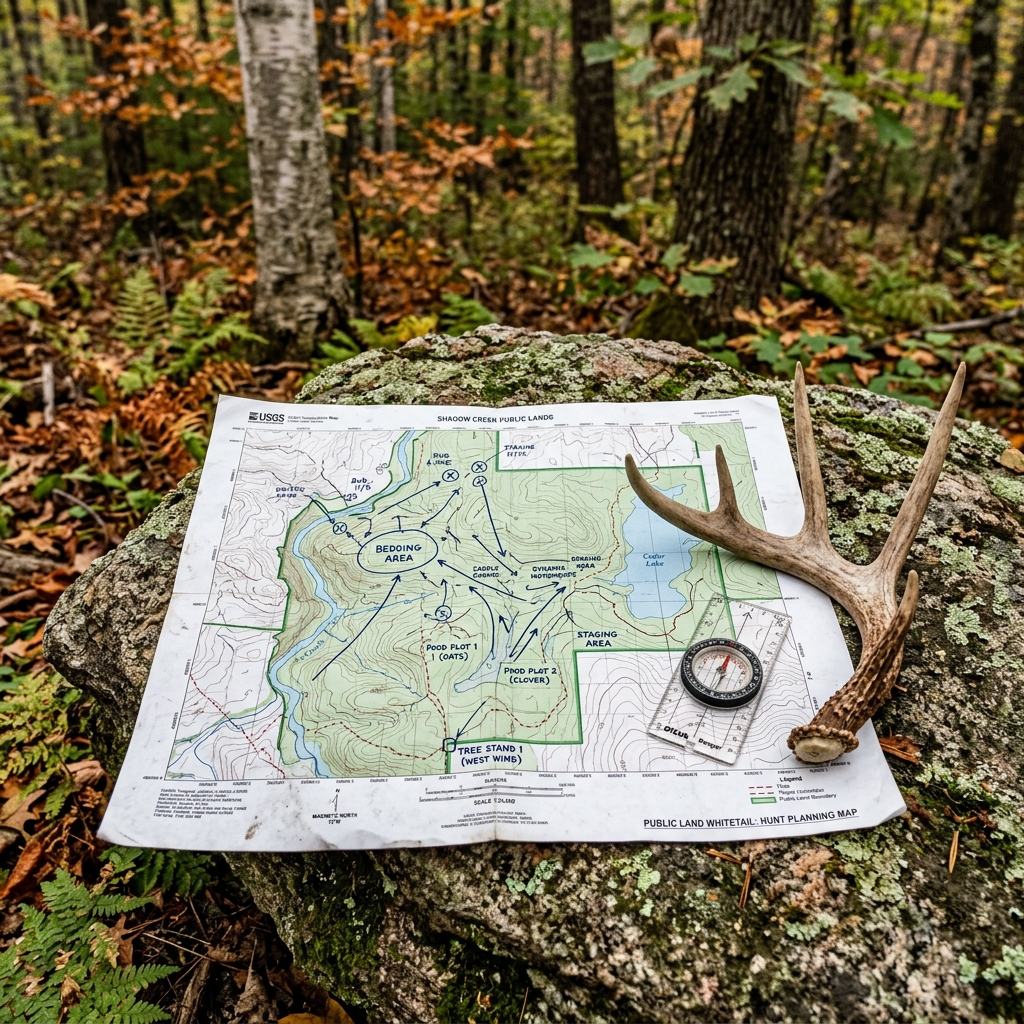
How to Mathematically Pattern a Mature Buck on Highly Pressured Public Land
Pattern mature public-land bucks with continuous camera soaks, micro-funnels, weather correlation, and one-strike mobile sits—without educating the sanctuary.
Public-land deer hunting is a game of inches. The gap between a close encounter and a punched tag usually comes down to zero-intrusion intel—knowing when and where a pressured buck moves without educating him while you learn.
Random scouting burns ground. Continuous camera data, wind discipline, and mobile stand decisions give you a pattern you can hunt once—then move on before the parking-lot crowd finds the same funnel.
Why Public-Land Bucks Break Patterns Faster
Mature bucks on state and federal parcels deal with constant intrusion: weekend traffic, orange armies, and scent on every logging road. They respond by:
- Shifting to micro-cover most hunters walk past
- Moving in short daylight bursts, often midday
- Using wind as a security blanket relative to trailheads
- Abandoning any funnel that gets hunted twice in a week
Your job is not to “own” a spot. Your job is to confirm a pattern remotely, strike once under matching conditions, and leave the sanctuary intact.
The Continuous Soak Methodology
The biggest amateur mistake is walking in to pull SD cards every week. Each trip dumps ground scent that lasts days and teaches bucks that humans patrol that trail.
The 60-day rule: hang primary cellular cameras in early August and leave them alone until late October when possible. A continuous soak covers velvet shedding, bachelor breakup, and early scrape activity without you in the bedroom.
Soak guidelines:
- Hang during a warm, dry day when deer are least concentrated in that cover
- Use lithium batteries or solar so you are not forced back for power
- Mount on micro-funnels, not the obvious two-track everyone scouts
- Review data daily on your phone—never with weekly hikes
For gear and intrusion tradeoffs, see cellular trail cameras for deer hunting.
Targeting Micro-Funnels Instead of Logging Roads
Ignore wide primary roads where boot traffic is highest. Focus cameras and sits on micro-funnels—narrow, high-stem-count strips between swamp and ridge, steep saddles, creek bends, and brushy fence remnants inside timber.
Characteristics of daylight-safe funnels:
- Cover so thick you cannot walk upright without noise
- Topography that forces deer into a 20–40 yard choke
- Off the path from parking lots by at least 0.5–1 mile of rough travel
- Wind that lets a buck scent-check the approach while staying hidden
Mark three candidate funnels. Hunt the one with the strongest daylight history under matching wind—not the one that looks best on a map.
Weather Correlation and the Kill Window
A cellular camera is a forensic tool when you pair timestamps with weather.
Every daylight buck photo should get notes for:
- Wind direction and speed
- Temperature trend (rising vs. falling)
- Barometric pressure trend
- Precipitation in the prior 24 hours
Mature bucks are slaves to security wind. If a target buck only daylights a draw on a stiff northwest wind, that stand is a northwest-only sit. Hunting it on any other wind teaches him you exist.
Cross-check patterns with broader movement science in white-tailed deer activity and weather.
The Midday Security Window
On hard-hunted public land, focus hours on the 11:00 AM–2:00 PM midday push. Many mature bucks wait until amateur hunters climb down for lunch, then cruise bedding edges and scrapes while the woods go quiet.
How to hunt midday well:
- Arrive mid-morning via a silent route that never bumps beds
- Stay through the lull even when boredom hits
- Pack calories and layers so you are not forced down at noon
- Climb down only after the window closes or a clean opportunity passes
All-day sits on cold fronts remain deadly, but midday-specific hangs often outperform sunrise sits when parking lots fill before daylight.
Mobile Hunting: One Strike, Then Relocate
Public-land patterning fails when hunters fall in love with one tree. Use a mobile kit—saddle or lightweight hang-on, sticks, and a minimal pack—so you can set within 50–80 yards of fresh sign the same afternoon you confirm a pattern.
Strike protocol:
- Confirm 3+ daylight events under similar wind/weather
- Hunt the next matching forecast day only
- If you bump the buck or see him nocturnal-only after pressure, abandon that funnel for 7–14 days
- Shift to the next micro-funnel on your map
Over-hunting a confirmed pattern is how public giants go fully nocturnal for the season.
Camera Security, Batteries, and Theft Reality
Premium cellular cameras are expensive and tempting. Protect the investment:
- Mount 9–12 feet high with a steep downward angle—thieves rarely look up
- Use lithium AA batteries exclusively for long soaks; alkalines leak and die early in cold
- Steel boxes and python cables stop crimes of opportunity
- Avoid pointing cameras at other hunters’ stands
More security detail lives in securing trail cameras on public land.
Turning Photos Into a Hunt Plan
Do not react to a single 4:00 PM photo by rushing in at daylight the next morning. Build a macro trend over 2–3 weeks:
| Signal | What it means | Action |
|---|---|---|
| Same wind on 4+ daylight hits | Security wind locked | Hunt only that wind |
| Daylight fades after weekend | Pressure response | Hunt Tuesday–Thursday |
| Scrapes freshen overnight only | Nocturnal shift | Move closer to bedding fringe |
| Midday cluster 11–1 | Lunch-hour mover | All-day or late-morning sit |
Organize images so target bucks are easy to filter. Managing trail camera data keeps the noise from drowning the signal.
Access Routes That Do Not Blow the Pattern
Even perfect camera intel dies if your walk-in parallels the buck’s daylight trail. Build access like a separate project from stand selection.
Principles:
- Park at secondary lots when primary lots fill with weekend traffic
- Use water, ditches, and noisy gravel to hide foot scent when they lead to the right wind side
- Never crest the final ridge until you are within a short, quiet final approach
- Exit downwind of bedding even if it adds 200 yards
On pressured parcels, the last 150 yards determine whether the midday window still exists when you settle. If you cannot approach without crossing fresh tracks pointed at your funnel, pick another day or another micro-funnel.
Scout access in summer with a mapping app, then confirm once in daylight boots. Do not invent a new path on opening morning in the dark.
Reading Pressure Calendars on Public Land
Public patterns are calendars as much as maps. Expect:
- Friday evening / Saturday morning: highest intrusion near roads
- Sunday afternoon: residual scent and displaced deer
- Tuesday–Thursday: best odds for daylight mature movement on many parcels
- Holiday weeks: treat like weekend pressure even midweek
If your target buck daylights a funnel on Thursday northwest winds but goes nocturnal after Saturday, do not hunt that funnel on the next Saturday hoping he “comes back.” Hunt the next Thursday with matching wind, or move deeper into cover the crowd will not walk.
Keep a simple county-level note of school breaks and opener weekends for neighboring states if your parcel draws non-local traffic. Pressure forecasting is part of patterning.
Backup Funnels and the Three-Spot Roster
Never arrive with only one tree in mind. Maintain a roster of three micro-funnels ranked by daylight history:
- Primary — highest daylight correlation, hunted only on perfect matches
- Secondary — similar cover, slightly more pressure-tolerant
- Escape — farther walk, used when lots are full or primary wind fails
Mobile gear makes the roster real. If you only own one heavy lock-on a mile from the truck, you will force bad sits. A saddle or light hang-on turns the roster into same-day decisions.
Frequently Asked Questions
How long should I soak cameras before hunting? Aim for 45–60 days of untouched soak on primary sanctuary cameras when season timing allows.
Is midday really better than dawn on public land? Often yes under heavy pressure. Many mature bucks daylight after the morning crowd leaves.
How many times should I hunt the same funnel? One to two carefully timed sits is ideal. A third sit usually costs more than it gains unless sign explodes.
Do I need cellular cameras? They are the best tool for continuous soaks, but disciplined SD-card soaks with rare checks can still work if you accept less real-time data.
What wind should I hunt? Whatever wind appears most often on your target buck’s daylight photos—usually the wind that lets him scent-check the direction hunters approach from.
Patterning a public-land giant is woodsmanship plus data. Protect the sanctuary, correlate weather, strike once under matching conditions, and let the pattern—not hope—tell you when to move in.
Confirm seasonal patterns from your cameras
Find patterns and time your hunts right when your camera history tells you what happened — and when.
No credit card
Wildsnap • Open beta
Confirm seasonal patterns from your cameras
Find patterns and time your hunts right when your camera history tells you what happened — and when.
No credit card