
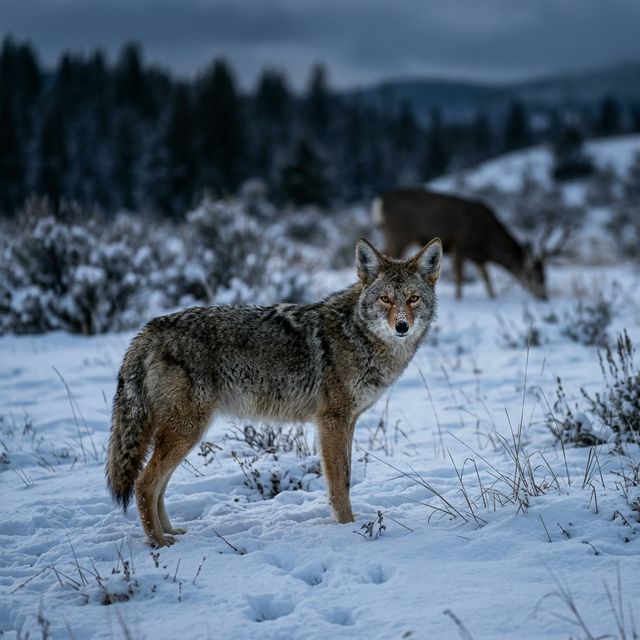
Predator Impact: How Coyotes and Wolves Scientifically Affect Whitetail Herds
Coyotes and wolves reshape deer herds through fawn recruitment and fear—why cover beats random control, plus safer night-recovery habits for hunters.
Whitetails and apex predators play a hard game of survival chess. Trail cameras make predation events vivid, but the metric that actually moves your local herd is fawn recruitment—how many fawns survive into fall—not any single bloody scene in the snow.
Understanding coyotes and wolves helps you manage habitat, set realistic expectations, and stay safer on night recoveries.
Fawn Recruitment: The Number That Matters
Coyotes are social opportunists. Across much of North America they are a leading cause of neonate fawn mortality in the first 4–6 weeks of life.
Healthy herds can often absorb 40–50% fawn loss when habitat quality is high. When cover is thin and food is poor, the same predation pressure can stall growth or drive declines.
What to watch on your property:
- Late-summer doe:fawn ratios on cameras and glassing
- Daylight doe behavior near fawning thickets
- Coyote frequency on the same trails during May–July
Camera timelines help separate anecdote from trend—see managing trail camera data.
Cover Beats Random Predator Removal
Thick early-successional fawning cover—high-stem-count thickets, native warm-season grasses, briars, and brushy edges—hides fawn scent and blocks visual detection better than sporadic winter coyote shooting.
Practical habitat priorities:
- Plant or protect dense nesting/fawning cover blocks of several acres when possible
- Connect bedding to food with brushy travel corridors
- Avoid mowing or spraying fawning cover in May–June
- Leave blowdowns and edge thickets instead of “cleaning” every acre
For grass-based bedding and fawning structure, read planting native warm season grasses. Edge food without sacrificing cover pairs well with poor man’s food plots.
Wolves and the Landscape of Fear
Where wolves are established, deer often change where they live more dramatically than raw kill counts alone suggest.
Documented behavioral shifts include:
- Avoiding deep “timber traps” with poor escape routes
- Spending more time near open ag edges and human buffers
- Altering bedding distribution under sustained pressure
This landscape of fear can reduce over-browsing in some interior pockets while concentrating deer—and hunter opportunity—elsewhere. Local outcomes vary by snow depth, alternate prey, and wolf density. Treat wolf country as a behavior problem as much as a mortality problem.
Busting Common Predator-Control Myths
Shooting one coyote in December rarely saves fawns dropping in May.
Compensation effect: coyotes are resilient. When packs are reduced casually, surviving females often produce larger litters, and floaters fill empty territories. Sustained, legal, targeted management during denning seasons can have local effects; random winter shooting usually does not.
Silver-bullet thinking: predator control without habitat work leaves fawns exposed. Habitat without any legal predator management may still struggle in extreme coyote densities. Most private lands should lead with cover and food quality.
Camera confirmation ≠ crisis: nightly coyote photos on a scrape do not automatically mean your herd is collapsing. Track recruitment across years before overreacting.
What Hunters Can Do on Private Land
Focus on levers you control:
| Lever | Action | Why it helps |
|---|---|---|
| Fawning cover | NWSG, thickets, no May mowing | Hides neonates |
| Edge diversity | Hinge cuts, shrub edges | Escape routes |
| Food quality | Plots + native browse | Doe condition → fawn vigor |
| Pressure | Limit spring ATV traffic near cover | Reduces disturbance |
| Legal take | Follow state seasons/methods | Local tool, not cure-all |
On public land, you mostly vote with habitat advocacy and ethical harvest rather than landscape-scale predator programs.
Night Recoveries and Personal Safety
Predation is not only a population topic—it is a recovery hazard.
During a night blood trail you are dragging a scent plume through dark timber. Coyote packs may shadow; in wolf country the stakes are higher.
Safety protocol:
- Use high-lumen lighting and mark the trail
- Do not track alone in known wolf territory when avoidable
- Carry legal personal protection consistent with local law
- Stay alert for unnatural daytime boldness (possible disease)
- Never handle dead predators without gloves; think rabies and parasites
If you bump predators off a carcass, prioritize your exit and return at daylight when legal and safe.
Using Cameras to Study Predators Without Obsession
Cameras on fawning cover edges, creek crossings, and winter kill sites can show predator timing. Use them to:
- Time when coyotes work your ridges relative to fawning
- Confirm whether wolves (where present) use the same funnels as deer
- Avoid over-checking cover during peak fawn vulnerability
Do not let predator photos hijack every hunt plan. Deer still respond first to wind, food, and human pressure. Weather still drives movement—see white-tailed deer activity and weather.
Winter Predation and Late-Season Deer Behavior
Deep snow changes the math. Coyotes and wolves gain advantage when deer post-hole and burn energy on poor browse. Hunters see more chase events in January, then assume summer fawn losses must be catastrophic. Separate the seasons.
Winter predation mainly removes:
- Compromised or wounded deer
- Underweight fawns entering winter
- Adults trapped in poor escape cover during crust conditions
You cannot plant your way out of a historic snow year overnight, but you can improve winter thermal cover and browse ahead of time—conifer thickets, hinge-cut edges, and standing grass that does not flatten. Late-season hunting pressure stacked on top of predator pressure can shove survivors onto neighboring parcels; give sanctuary bedding a break when snow is deep and deer are already stressed.
Working With Biologists and Neighbors
Private land does not exist in a vacuum. Coyote home ranges ignore fence lines.
Productive steps:
- Ask state biologists for local fawn recruitment estimates and known predator studies
- Coordinate legal trapping seasons with neighbors instead of random weekend shooting
- Share camera evidence of dens or travel only with people who will act legally and discreetly
- Support habitat programs (CRP, state cost-share) that fund cover at scale
Neighborhood drama helps neither deer nor hunters. A calm, habitat-first message wins more partners than blaming every missing fawn on a single coyote photo.
Trail Camera Ethics Around Denning Season
Spring camera soaks near suspected dens can document predators—and also disturb them into moving closer to fawning cover elsewhere. If you monitor:
- Use cellular units and stay out
- Avoid repeated scent-heavy visits in April–May
- Do not clear brush to “get a better den shot”
Curiosity is not management. If your goal is fawn survival, protect cover quietness during peak neonate weeks more aggressively than you chase predator content for social media.
Doe Condition Going Into Fawning
Predator pressure hits hardest when does enter spring thin. Winter browse quality, late-season hunting stress, and mineral access indirectly change fawn survival before a coyote ever appears.
Land managers should track:
- Body condition on late-winter cameras
- Browse lines on preferred shrubs
- Whether sanctuary cover exists within a short walk of winter food
A fat doe hiding a fawn in switchgrass outperforms a stressed doe in open pasture every time. Habitat work is prenatal care for the herd as much as it is anti-predator armor. Connect winter habitat thinking with late winter habitat management when you plan off-season projects.
Recruitment is a year-round systems problem: food, cover, pressure, and predators. Fixing only the teeth usually disappoints.
Keep notes across years so one harsh winter or one loud coyote week does not rewrite your whole management plan. Trends over three seasons beat panic over three photos. When neighbors want a simple villain, share recruitment counts and cover maps instead of arguments—habitat partnerships last longer than blame cycles, and they put more spotted fawns on the ground by July.
Frequently Asked Questions
Do coyotes kill adult bucks often? They take more fawns and compromised deer. Healthy adult bucks are harder prey, though deep snow and weakness change odds.
Will trapping save my deer herd? Targeted, legal programs can help locally; habitat usually returns more per hour invested for private landowners.
How do I know if recruitment is low? Compare late-summer fawns per doe across multiple years via glassing and cameras. One bad year is noise; three is a trend.
Should I plant switchgrass for predators or deer? For deer—dense cover protects fawns and holds bucks. Predator reduction is a side effect of better hiding cover.
Are wolves always bad for hunting? They complicate patterns and can lower density, but they also reshape where deer spend daylight. Adapt stands to new edges and escape cover.
Respect the balance. Improve fawning habitat first, understand recruitment math, and treat apex predators as part of the woods—not a cartoon villain.
Build a cleaner history of your herd
Spend less time sorting and more time seeing what matters—when detections are organized by time and class.
No credit card
Wildsnap • Open beta
Build a cleaner history of your herd
Spend less time sorting and more time seeing what matters—when detections are organized by time and class.
No credit card