
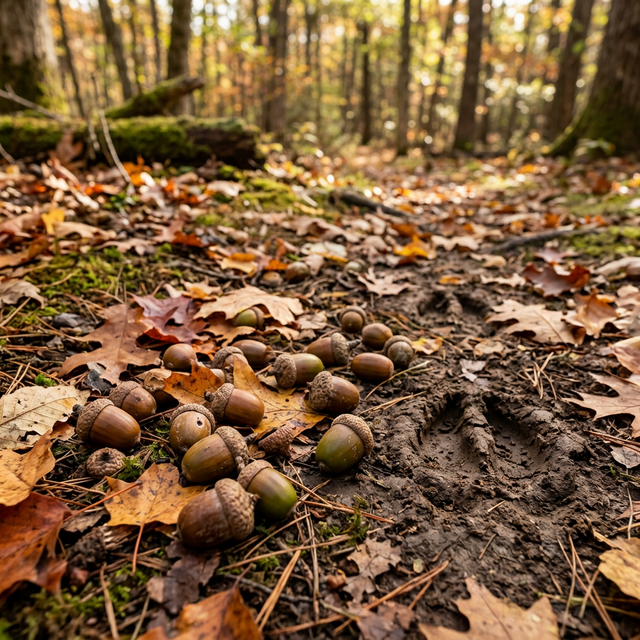
Hunting Abandoned Homesteads: Secret Magnets for Mature Whitetails
Old farmsteads hide apples, cellars, and soft edges mature bucks love. Learn eco-scouting clues, periphery stands, and well hazards before you hunt.
Deep in public forests and forgotten private corners sit the quiet remains of old farms: abandoned homesteads. Barns may be gone, but the biological disturbance remains—non-native ornamentals, ancient fruit trees, compacted lanes, and sunken cellar holes that still shape how deer use the ground.
These spots concentrate food and odd security cover in a sea of “normal” timber. Mature bucks learn them. Hunters who only glass oak flats often walk past a lilac patch that marks a century-old kitchen door. Start with maps and e-scouting, then confirm soft mast timing with guides like fall food sources and persimmons and soft mast. On pressured public ground, pairing homestead edges with patterning a public-land buck keeps you from burning a one-acre magnet in a week.
Why Homesteads Still Pull Deer
Historic farms permanently changed soil and plant communities:
- Fruit trees and berry shrubs deer still seek in October
- Edge habitat where clearing met woodlot
- Stone foundations and cellars that block wind and hide bedded deer below grade
- Old lanes that remain the path of least resistance through thick regen
Even a dozen deformed apples under one survivor tree can pull deer off pattern because the scent and sugar are rare and concentrated. Homesteads behave like micro food plots that nobody planted this decade—and mature bucks remember them year to year.
Eco-Scouting: Clues That Mark Old Sites
You will not efficiently grid 10,000 acres on foot. Look for botanical and structural anomalies.
Lilacs, roses, and ornamentals
Settlers planted lilacs and hardy roses near porches. Finding a purple bloom patch or dense domestic rose in otherwise native hardwoods is a homestead flag.
Ancient orchards
Gnarled apple, pear, or plum trees—often half-choked by timber—still drop fruit. Note aspect and competing canopy; trees with a little sun drop more usable fruit.
Foundation and cellar signs
Straight lines of stone, brick scatter, rusty fence, and rectangular depressions mark homes and root cellars. Cellar holes can hold reclusive bucks in storms—360° wind protection and a bed below the visual plane of the surrounding woods.
Map tells
Rectangular forest openings on old imagery, abrupt fence lines, and dead-end two-tracks often point to historic clearings. County historical maps and old USGS sheets help on public land.
Stand Placement on the Periphery
Finding fruit next to a chimney does not mean hanging over the apples. Mature bucks scent-check openings from cover.
Downwind cruising edge
Set roughly 30–40 yards downwind of the primary tree or clearing, inside the brush where a buck paces before committing. You want the check, not only the open feed.
Faded wagon roads
Compacted historic lanes stay easier walking for decades. Deer use them as quiet corridors into the homestead. Ambush bends and where the lane pinches between thickets.
Bedding-adjacent afternoon sits
If a cellar hole or nasty regen holds beds, evening movement toward fruit can be short. Get tight to the first trail—without skylining on the foundation edge. Review bedding area principles before crowding a sanctuary bed.
Seasonal Timing Around Old Orchards
- September–early October: Early drops and soft mast; bucks may still be patternable daylight feeders
- Peak drop weeks: Highest traffic—hunt the best wind only to avoid burning the spot
- Post-drop: Deer still revisit scent and leftover fruit; combine with nearby hard mast
- Late season: Cellars and foundations matter more for thermal/security than calories if fruit is gone
Trail cameras on lanes beat cameras hanging over the open grass where deer only appear after dark.
Rut Hunts at Forgotten Farmsteads
During the rut, homesteads become doe concentration points—and bucks know it. Cruisers may not eat the apples; they circle the orchard edge checking scent. All-day sits on a downwind lane can beat mid-day food-plot logic if does still feed the clearing at dawn and dusk.
Mock scrapes or natural sign along the lane into the homestead sometimes heat up when fruit fades and breeding intensity rises. Do not overcall in tight cover; one or two soft grunts when you see a hesitant buck is enough.
Access Without Educating the Spot
Homesteads are small magnets. One sloppy entry ruins a week.
- Approach on the faded lane only when wind is right
- Hang and check cameras midday
- Keep a single primary stand and one backup wind option
- Avoid repeated walks across the orchard floor
Treat it like a limited food plot: quality sits over frequent sits.
Permission, Boundaries, and Private Land
Many homesteads sit on private acreage with unclear old deeds. Get written permission before you hang stands or cut lanes. Stone walls and barbed wire still mark boundaries—hunt only the ground you are authorized to use.
If you find a homestead on public land, note access trails others use. The best orchard on the forest is worthless if you cannot reach it without crossing posted ag.
Historic Hazards: Wells, Cisterns, Collapse
Old farms hide lethal holes. Hand-dug wells and cisterns can sit under grass mats or thin leaf cover—20–40+ feet deep in some regions.
Safety protocol:
- Move slowly when scouting new foundations.
- Probe ahead with a stout walking stick every step in tall grass.
- Treat flat, out-of-place stones as possible covers—edges may collapse.
- Never jump stone walls you cannot see behind.
- Keep kids and dogs tight to you on exploratory scouts.
- Mark confirmed hazards on your GPS so night recoveries do not end in a fall.
Rusty wire, open root cellars, and rotten well curbs are part of the package. Excitement does not cancel physics.
Public Land Etiquette and Legality
- Know artifact and structure rules—removing historic materials is often illegal
- Do not damage remaining walls for shooting lanes
- Pack out trash; leave gates and fences as found
- Confirm baiting/feeding rules if fruit trees tempt you to “enhance” the site
Hunt the history; do not loot it. Report open wells or unstable structures to land managers when appropriate—they may not know a hazard exists until a hunter probes the foundation edge.
Combining Homesteads With Hard Mast
The best setups stack soft and hard mast. An old apple tree 200 yards from a white oak ridge lets deer shift between calories as drops peak at different weeks. Scout both and hang on the trail that connects them—not in the open between.
When apples finish early, keep hunting the lane—bucks still scent-check and cruise past cellar bedding on the way to acorns. Photograph each survivor tree after leaf-out so you know which gnarled apple actually drops versus which only blooms—wasting peak weeks on a sterile tree is a common homestead mistake.
Document wind directions that work at each stand pin. Homestead magnets are small; a stand that is perfect on a west wind may be unhuntable on south wind. Two trees on opposite sides of the same lane often beat one hero hang that only works two days a season. Treat each site as a multi-season asset: year one scout and camera, year two hunt only prime winds at peak drop, year three adjust when travel shifts to connecting hard mast.
Frequently Asked Questions
How do I find homesteads on a map first? Look for rectangular clearings on historical imagery, odd fence grids, dead-end spurs, and place names. Then search those pins for lilacs, fruit trees, and stonework on foot.
Should I hunt over the apple tree or the trail to it? Trail and downwind edge first. Open orchard floors are often night-only for mature bucks.
Are pear trees as good as apples? Any concentrated soft mast helps. Apples are classic; pears, plums, and old grape tangles can be local winners. Hunt what is dropping.
Is a cellar hole safe to hunt over? Scout it in daylight, mark hazards, and sit the exit trail—not the hole lip. Unstable stone and hidden drops make the depression itself a poor stand site.
Can I trim competing trees to help an old apple produce? On private land with permission, careful daylighting can improve fruit. On public land, cutting rules vary—check regulations before sawing.
Why do I only see does on camera at the homestead? Mature bucks often circle downwind after dark. Move the camera to a lane 40 yards back in cover, lower height, and reduce flash if legal—then adjust the stand to match.
Watch for lilacs in the oak woods, hunt the downwind edge—not the open grass—and probe every step near old stone. The biggest buck on the section already knows when those forgotten apples hit dirt.
Wildsnap • Open beta
Join Wildsnap and try the beta
In the open beta, you turn trail-cam data into actionable insights—free, fast, and simple.
No credit card