
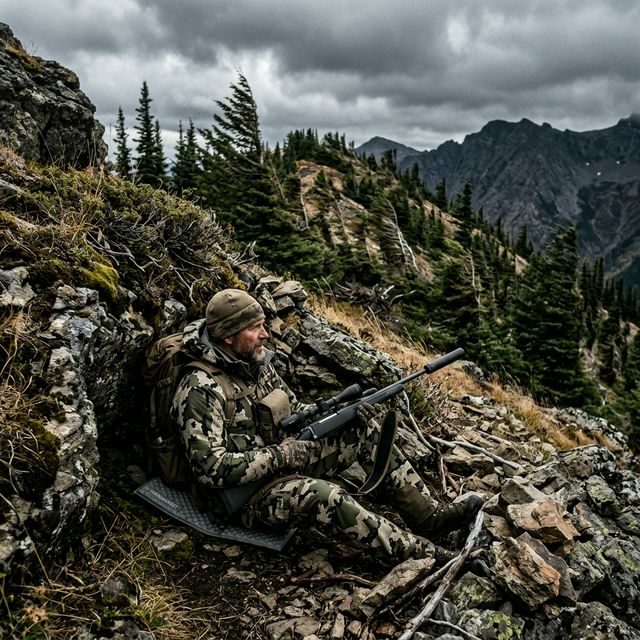
High Wind Whitetail Tactics: Do Deer Actually Move When the Trees Sway?
Deer still move in high wind—they shift to leeward cover. Learn ridge tactics, ground stalking advantages, stand cutoffs, and widowmaker safety rules.
The old line says deer shut down above 15 mph. Plenty of hunters sleep in. Camera and collar data tell a sharper story: deer keep moving in high wind—they change where they move.
Learn leeward topography, quiet pockets, and when to abandon elevated stands. A blustery day can become your best sit of the month—or your safest ground stalk. The hunters who figure out wind geography while everyone else stays home often see mature bucks in cover that feels dead calm while the ridgetop sounds like a freight train.
The Sensory Blackout
A buck’s defenses are nose, ears, and eyes. At 20–30 mph, the woods turn chaotic.
- Hearing: Roaring canopy and clashing branches mask footsteps—his and yours
- Scenting: Swirls and shear make directional scent messy
- Vision: Everything moves, so motion detection gets noisier
Feeling exposed, deer relocate to places where senses work again: leeward slopes, thick pockets below the crest, and sheltered creek bends. They do not simply starve in a briar ball for three days.
Research on GPS-collared whitetails consistently shows reduced activity on open ridgetops and field edges during sustained high wind, but maintained or even increased movement in sheltered terrain. The deer did not vanish—they moved to where the wind noise dropped by half and they could trust their nose again.
Weather context beyond wind is covered in white-tailed deer activity and weather and barometric pressure.
The Leeward Ridge Strategy
Golden rule: hunt the protected side.
If wind screams from the northwest:
- Skip bald ridgetops and open field edges
- Drop onto south/east-facing leeward slopes
- Favor thick cover roughly one-third of the way down from the crest—classic calm pockets
In that band, wind often roars overhead while the bench stays quieter. Rising or wrapping currents can also pull scent from below into a bedded buck’s nose—great for him, dangerous for a sloppy entry from below.
Map work: Draw wind arrows on every ridge you hunt. Pre-select 2–3 leeward stands per major wind so you are not inventing a plan in the dark. On a 400-foot ridge, the difference between ridgetop and leeward bench can be 15 mph versus 6 mph at ground level.
Look for terrain features that create natural wind breaks:
| Feature | Why it works |
|---|---|
| Bench below crest | Overhead wind, quiet understory |
| Creek bend with bluff | Wind skips over the depression |
| Dense cedar thicket | Needles and tight spacing dampen gusts |
| Pine plantation edge | Uniform canopy blocks shear |
Understanding how thermals interact with wind on slopes helps you predict scent flow during midday lulls. See understanding thermals for the full picture on broken topography.
Ground Hunting Advantage on Windy Days
High wind is prime time to leave the tree.
Why still-hunting works:
- Visual cover: Moving branches hide your own motion
- Acoustic forgiveness: Twigs and leaves are louder in calm air than in a roar
- Scent dilution: Fast horizontal wind spreads odor—still play the wind, but pinpointing gets harder for deer
Move slower than you think you need to in thick cover; speed up slightly only in noisy, open understories where the wind already owns the soundscape. Tactics detail: still-hunting and spot-and-stalk.
Glass leeward edges from afar first when terrain allows. Spot bedded or feeding deer, then plan a contour approach.
A practical still-hunt pace on windy days: one step, pause 5–10 seconds, scan, repeat. In cedar swamps or pine plantations where wind noise masks your footfall, you can cover 200–300 yards per hour. In open hardwoods with gusty crosswinds, cut that rate in half.
Focus on leeward benches where deer bed within 80 yards of a food source. Windy mornings often keep bucks in those pockets until midmorning feeding urges override comfort. A slow contour stalk along a leeward edge at 9:30 a.m. can produce shots that calm-day stand hunters never see.
Stand Hunting: When It Still Makes Sense
Not every windy day requires a stalk.
Good elevated sits in wind:
- Timbered leeward funnels with solid trees
- Creek-bottom edges protected by bluffs
- Soft edges on the downwind side of thick cover
Bad elevated sits:
- Isolated exposed trees on ridges
- Pines shedding large deadwood overhead
- Any tree swaying enough to swing your platform like a pendulum
If you stay elevated, shorten sessions, wear a harness always, and have a firm cutoff speed. More in tree stand safety.
The best windy-day tree stands share three traits: a live hardwood or pine with a trunk diameter over 14 inches, location in a leeward funnel rather than an exposed edge, and a shooting lane that does not require leaning into gusts to make a shot.
Set a personal wind cutoff before the season starts. Many experienced hunters exit climbers and hang-ons when sustained speeds exceed 20 mph, or when gusts hit 30 mph regardless of average. Write the number down and honor it—rationalizing “just one more hour” in a swaying stand is how injuries happen.
Matching Wind Speed to Tactics
| Sustained wind | Deer tendency | Hunter move |
|---|---|---|
| 8–12 mph | Normal travel | Standard wind-based stands |
| 13–18 mph | Shift toward leeward | Hunt protected slopes/edges |
| 19–25 mph | Tight to quiet pockets | Ground hunt or safest leeward timber |
| 25+ mph / gusty storms | Minimal exposed travel | Often cancel elevated; safety first |
Local timber type matters. Dense cedar may feel calmer at higher speeds than oak ridgetops. A 22 mph day in a northern white cedar swamp can still be huntable on the ground; the same speed on an open Appalachian oak ridge is a safety hazard above ground.
Pay attention to wind direction changes during frontal passages. A buck bedded on the leeward side at dawn may find that same pocket on the wrong side of the wind by afternoon as the front passes. Have a backup leeward stand mapped for the post-front wind direction before you leave the truck.
Entry Routes and Scent on Swirly Days
Wind on broken topography swirls. Reduce risk:
- Enter from above when thermals/wind suggest scent lifts over beds
- Avoid climbing through the exact pocket you will hunt
- Use louder conditions to mask entry—but do not confuse noise cover with scent immunity
- Carry milkweed or micro-powder to read swirls near the stand
If powder shows chaos within 30 yards of the tree, climb down and move. A heroic sit in a blender educates the whole hillside.
On swirly days, favor afternoon hunts when thermals have stabilized somewhat and you can approach from a ridge above bedding with scent blowing away from deer below. Morning entries into creek bottoms during high wind often push scent into every pocket on the hillside.
Rubber boots and minimal sweat production matter more on windy days because you may cover more ground stalking. Plan a route that keeps you off the leeward bench until you are ready to hunt it, not hiking through it on the way in.
Widowmakers and Structural Safety
Romantic “tough it out” stands kill people in wind events.
- Exit elevated stands when sustained winds exceed roughly 20–25 mph (sooner in weak trees)
- Watch for widowmakers—dead limbs that break without warning
- Inspect straps and cables; cyclic swaying stresses hardware
- Keep boots on dirt in severe forecasts; meat is not worth a crushed stand
Ground hunting is not only tactical—it is often the responsible choice.
Before every windy-season hunt, scan your stand tree from three angles looking for dead limbs, hung branches, and cracked forks above your platform. Wind accelerates failure of wood that looked fine in August. If you would not walk under that limb in a parking lot, do not hang beneath it with a rifle in your lap.
Check stand straps and carabiners at the start of wind season. Nylon webbing that sat through summer heat cycles can stiffen and crack. Replace anything with fraying, UV chalking, or corrosion on metal components.
Frequently Asked Questions
Do deer really move in 25 mph wind? Yes, especially on leeward terrain and in short feeding bursts. Open ridgetop traffic usually drops.
Is mornings or evenings better in high wind? Both can work. Midday stalks on leeward beds are underrated when all-day wind keeps deer tucked in predictable pockets.
Should I use calls in high wind? Soft grunts get swallowed by noise. Save calling for lulls or skip it and rely on movement/cover.
Can I trust a wind app alone? Apps give regional direction. Ridges create local shear—verify on site with powder or milkweed.
What caliber or bow setup changes in wind? For firearms, mind drift on longer field shots. For bows, keep shots closer; wind moves arrows more than egos admit.
When should I just stay home? Electrical storms, extreme gusts that make walking unsafe, or ice-loaded canopy. Discretion is woodsmanship.
When the forecast turns ugly, think geography, not cancellation. Find quiet leeward pockets, stay mobile when stands are unsafe, and let other hunters gift you empty woods.
Know which conditions actually trigger daytime activity
Connect your cameras and see which conditions really trigger movement — not guesswork.
No credit card
Wildsnap • Open beta
Know which conditions actually trigger daytime activity
Connect your cameras and see which conditions really trigger movement — not guesswork.
No credit card