
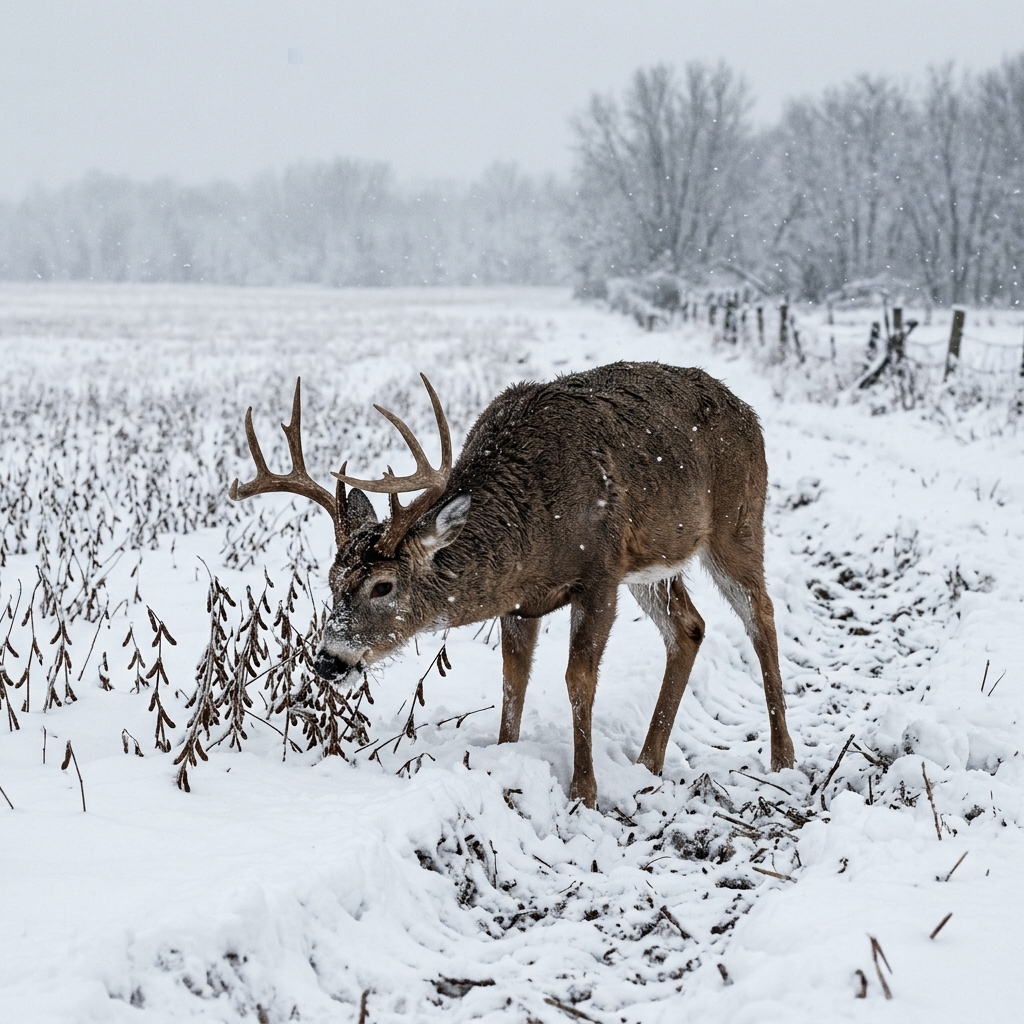
Post-Rut Recovery: Hunting Late Season Food Sources like a Professional
Hunt post-rut bucks on brassicas, standing beans, corn, and browse. Focus warm beds to food trails in the last daylight hours when calories rule movement.
By late December and January, November chaos is over. Mature bucks may have burned 20–30% of body weight chasing and fighting. Biology collapses to one problem: stay warm and eat enough to survive. Late-season hunting is calorie math—find the best food closest to thermal cover and intercept the short trail between them.
Forget all-day rut sits. Hunt the furnace.
What Deer Eat After the Rut
Green summer forage is gone. High-value winter foods include:
Brassicas (turnips, radishes)
After hard frost, starches convert toward sugars—the “ice cream phase.” Deer dig through several inches of snow for sweetened leaves and bulbs.
Standing soybeans and corn
Fat, carbs, and protein in unharvested fields become the center of the winter map when available.
Woody browse
In big woods without ag, tips of maple, dogwood, and cedar matter. Hinge-cuts drop browse to mouth level—see timber stand improvement and hinge cutting.
Leftover mast
Weathered red oak acorns and waste grain still draw when plots are buried.
More habitat context: late winter habitat management and locating fall food sources for what may still remain.
Thermal Bedding to Food: The Short Line
Energy conservation rules. Deer bed in wind-blocking thermal cover—cedar, pine, dense CRP, south-facing brush—and take the shortest safe path to calories.
Hunt the transition:
- Trails packed in snow between cover and food
- Inside corners where cover meets standing crops
- Leeward edges that block prevailing winter wind
Cedar detail: hunting cedar thickets and conifer swamps. Broader late playbook: late season whitetail tactics.
Hunt Afternoons, Not Frozen Mornings
Morning marches into destination fields bump deer that fed all night. Late season favors the last 1.5–2 hours of light as temps drop and hunger wins.
Tactics:
- Arrive early enough to settle without skylining on snow
- Face the bedding cover, not just the field middle
- Pick winds that blow into open areas deer will not enter until dark
- On the coldest snaps (single digits), expect earlier movement
Weather Windows That Force Daylight
Best predictors:
- First severe cold front after a mild spell
- Falling mercury into teens and below
- Fresh snow that makes trails readable and concentrates deer on open food
Glass from afar when possible. Snow reveals whether bucks still use your trail or shifted to a neighbor’s standing beans overnight.
Pressure Discipline on Small Food Sources
A five-acre brassica plot can be ruined in two noisy sits. Rotate stands, hunt edges, and leave sanctuaries alone. Micro-plot pressure rules in poor man food plots still apply when the plot is one of few green things left.
Public hunters: find overlooked browse pockets and cut corn far from pull-offs. Ease of access predicts hunting pressure better than food quality alone.
Gear: Layers, Blinds, and CO Safety
Late season is a clothing system problem—see cold weather layering. Enclosed blinds make all-day observation possible but create carbon monoxide risk with propane heaters.
Rules:
- Crack a window for continuous airflow
- Never sleep with a heater running in a sealed blind
- Know CO symptoms (headache, nausea, confusion) and get out immediately
Recovery in Deep Cold
Cold helps meat—good news versus September heat (meat spoilage limits). Snow helps blood trailing but steals body heat from you. Carry dry gloves, a headlamp, and a sled plan before you shoot.
Shed scouting after season closes uses the same winter maps—spring shed hunting guide.
Snow Tracking as a Daily Intel Tool
Fresh snow turns late season into a readable book. Glass destination fields at first light from a distance to see what exited, then pick afternoon stands on the trails with the largest tracks heading back to cover. Avoid walking those trails midday and filling them with your boot scent.
After a skiff of new snow midday, you can confirm whether deer shifted to a different standing bean field overnight. Mobility beats stubborn loyalty to last week’s brassica plot when the herd votes with their feet. Carry a rangefinder—snow glare ruins distance guesses.
Energy Management for the Hunter
You cannot hunt well if you are miserable. Stage hand warmers, high-calorie snacks, and a silent thermos. Climb down if shivering becomes uncontrolled—hypothermia ruins judgment and shot execution. Late season is won by hunters who stay sharp for the last 20 minutes, not those who tough out six frozen hours already defeated by noon.
Reading Browse Lines and Cedar Edges
When ag is gone, walk cedar edges looking for a visible browse line and fresh nipped twigs. Deer yards announce themselves with droppings, trails, and barked saplings. Hunt the downwind side of the travel line from yard to the best remaining food—sometimes a neighbor’s standing corn a half-mile away.
Do not push into the yard core repeatedly. Late-winter stress plus human pressure creates mortality. Hunt the edge, glass from afar, and leave the thermal core alone except for a rare, perfect-wind sit.
If you manage private land, hinge-cut in late winter after season to build next year’s pantry, and protect a sanctuary block from November through January. Late-season success is often decided by habitat work you did (or did not do) two years earlier.
Stand Choices: Blind vs Open Timber
Snow and wind make open timber sits brutal. Pop-up blinds or box blinds on the downwind field edge help you stay effective into the final minutes. Brush them early so they are part of the scenery. Set shooting sticks and range sticks before the season so you are not moving when a buck steps out at 4:40 p.m.
Timber trail sits closer to bedding can work on perfect winds during extreme cold when bucks move earlier. Keep those sits rare. The late-season edge is fragile; one busted bed-to-food line can shift a buck to nocturnal for the rest of the season.
Always tell someone your stand location in deep cold. Solo late-season hunting raises stakes if you fall or get stranded after dark.
Calorie Mapping in One Afternoon
Spend one post-rut afternoon doing nothing but mapping calories:
- Drive or glass every standing crop within a mile
- Walk brassica and rye plots for fresh dig marks
- Note cedar/pine thermal blocks with trails exiting toward food
- Pin the shortest lines between warm beds and best food
- Pick two afternoon stands with opposite workable winds
That single inventory beats a week of random frozen sits. Late season is not mysterious—it is logistics. Deer go where calories are efficient. Your job is to arrive on the connecting trail before they do, dressed for the cold, and disciplined enough to wait for the right animal on the right wind.
When the mercury crashes, trust the short trail between thermal cover and calories. Dress for the last twenty minutes, pick the downwind intercept, and let hunger—not rattling sequences—bring mature bucks into daylight.
Late season rewards the hunter who inventories food first and freezes second. Map calories, pick the short trail, and sit the final light when the furnace demands daylight movement. Stay sharp for that window and the hardest month of the season becomes one of the most predictable.
These details sound small, but stacked together they separate hunters who adapt weekly from hunters who repeat empty sits. Build the habit of updating pins, winds, and food ranks every time you leave the truck.
Frequently Asked Questions
Do bucks still chase does in late December?
Some second-rut activity occurs with doe fawns coming into estrus, but food still dominates most movement. See deciphering the second rut.
Should I rattle late season?
Light tickling near food occasionally works; big rattling sequences are lower percentage when bucks are calorie-focused and pressured.
Are mornings ever worth it?
Rarely on destination fields. Exceptions: trailing snow-fresh tracks into cover with a partner and extreme caution—or hunting travel between two beds mid-morning on rare warm-ups.
What if all crops are harvested?
Shift to browse, hinges, south-facing slopes with residual mast, and any brassicas that remain. Deer yards in conifers become the map.
How close can I set up to bedding?
Close enough to see the exit trail in last light, far enough that entry does not bump the bed. Often 75–150 yards depending on cover density and snow crunch.
Late season rewards hunters who dress for the cold, sit the short trail, and let hunger pull mature bucks into daylight. Find the carbs, watch the mercury drop, and be there when the furnace needs fuel.